
Last Updated on November 15, 2026
The 30-Second Answer: the best material for saucepans for most kitchens is tri-ply stainless steel with an aluminum core.
- Best overall: tri-ply (clad) stainless steel. It heats evenly, works on every cooktop including induction, and lasts for decades.
- Best for eggs, oatmeal and sticky sauces: nonstick, as a second pan.
- Best for slow-simmered sauces: enameled cast iron, which holds steady heat.
Avoid thin, single-layer stainless or bare aluminum; they scorch milk and sauces. Compare every material.
A note on this guide: The heat and material figures in this guide come from published material data, manufacturer specs and FDA guidance. Our team is testing saucepans in The Kitchenware Journal lab, and we will add our hands-on results and photos very soon.
Choosing the best material for saucepans matters because a saucepan does slow, wet cooking: sauces, grains, custards, soups and reheating. The material decides whether that heat spreads evenly or scorches the bottom, whether it works on your cooktop, and how long the pan lasts.
This guide compares the best material for saucepans side by side, explains the trade-offs of each, and recommends a proven saucepan for every material.
In this guide
Saucepan Materials Compared
| Material | Heat conductivity | Induction | Reactive with acids | Upkeep | Lifespan |
|---|---|---|---|---|---|
| Tri-ply stainless steel | Good (aluminum core) | Yes | No | Easy, dishwasher safe | Decades |
| Single-ply stainless | Poor, hot spots | Usually | No | Easy | Decades |
| Copper (lined) | Excellent | No, unless bonded base | No when lined | Polishing | Decades |
| Hard-anodized aluminum | Very good | Only with steel base | No (sealed surface) | Moderate | Years |
| Nonstick (PTFE) | Depends on base | Some models | No | Easy, hand wash | 3 to 5 years |
| Ceramic nonstick | Depends on base | Some models | No | Easy, hand wash | 1 to 3 years |
| Enameled cast iron | Slow, holds heat | Yes | No | Hand wash | Decades |
| Bare cast iron | Slow, holds heat | Yes | Yes, with long acidic simmers | Seasoning | Generations |
For reference, copper conducts heat about 25 times better than stainless steel, and aluminum about 13 times better. That is why the best stainless pans wrap an aluminum or copper core inside the steel.
How to Choose the Best Material for Saucepans
- Even heat: milk, chocolate and thick sauces burn at hot spots. A thick base or clad construction prevents scorching.
- Cooktop fit: induction needs a magnetic base. Hold a magnet to the bottom; if it sticks, it works. Consumer Reports explains more.
- Non-reactive surface: tomato, wine and citrus sauces can react with bare aluminum, unlined copper and bare cast iron.
- Weight: a 3-quart saucepan full of liquid is heavy. Cast iron adds several pounds more.
- Dishwasher safety: stainless is the easiest; nonstick and cast iron need hand washing.
Stainless Steel
Clad (tri-ply or 5-ply) stainless steel sandwiches an aluminum or copper core between layers of steel. You get the even heat of aluminum with a tough, non-reactive cooking surface that goes in the dishwasher and works on induction.
Single-ply stainless with a thin disc on the bottom is cheaper but heats unevenly up the sides. For sauces and grains, clad construction is worth paying for.
Copper
Copper reacts to heat changes instantly, which is why pastry chefs use it for caramel and custards. Cooking copper is lined with stainless steel or tin, because bare copper reacts with acidic foods. It is expensive, needs polishing and does not work on induction without a bonded steel base.
Hard-Anodized Aluminum
Hard-anodizing hardens and seals aluminum, so it is light, heats quickly and evenly, and no longer reacts with acidic food. Many nonstick saucepans use a hard-anodized body. Most need a bonded steel plate to work on induction.
Nonstick and Ceramic
PTFE nonstick and ceramic coatings make oatmeal, rice and scrambled eggs easy to clean up. Keep heat at low to medium, avoid metal tools, and expect to replace the pan every few years as the coating wears. The FDA explains how PFAS such as PTFE are regulated in cookware.
Ceramic nonstick is PTFE-free but usually loses its slickness faster than a good PTFE coating.
Cast Iron and Enameled Cast Iron
Enameled cast iron holds heat beautifully for long-simmered sauces, beans and braises, and the glassy enamel is non-reactive. It is heavy and slow to heat. Bare cast iron is rare in saucepans because long acidic simmers can strip its seasoning. See also our guide to enamel saucepans.
Best Saucepan for Each Material
1. All-Clad D3 Stainless Steel 3-Quart Saucepan (Best Stainless Steel)
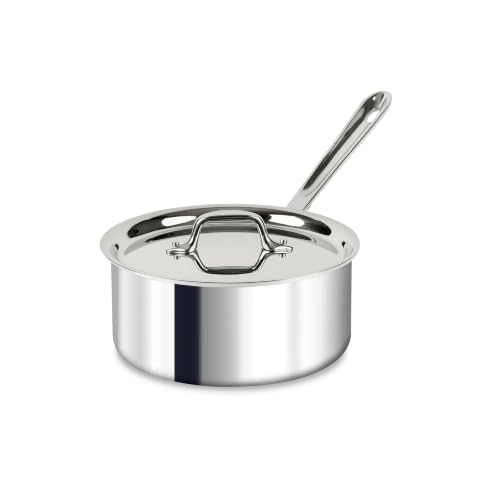
All-Clad’s D3 saucepan is tri-ply stainless steel with an aluminum core, bonded all the way up the sides. It is made in the USA.
Why We Like It
It heats evenly, does not react with tomato or wine, works on induction, and is built to last decades.
Flaws to Know
- Expensive for a single saucepan
- Food can stick without enough fat or liquid
Buy it if: you want one saucepan for life. Skip it if: you need a low-cost starter pan.
2. EWFEN 3-Ply Stainless Steel Saucepan Set (Best Value Stainless Set)
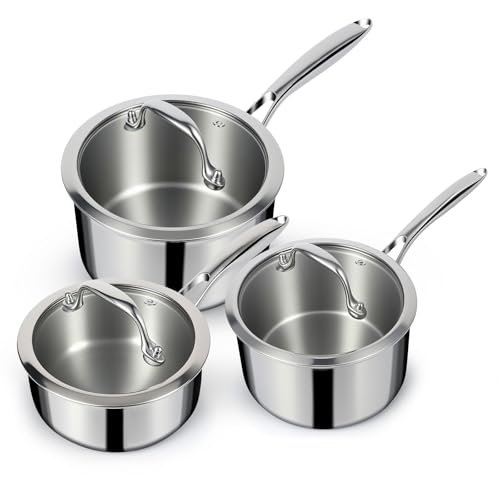
EWFEN’s set includes 1, 2 and 3-quart tri-ply saucepans with lids and stay-cool handles.
Why We Like It
Three clad saucepans for about the price of one premium pan cover small sauces up to grains and soups.
Flaws to Know
- Thinner build than All-Clad
- Lesser-known brand with a shorter track record
Buy it if: you want several clad saucepans on a budget. Skip it if: you only need one pan.
3. Farberware Classic Stainless Steel 2-Quart Saucepan (Best Budget Stainless)

Farberware’s Classic Series is a long-running budget saucepan with a stainless body and an encapsulated base. The listing says it is induction compatible.
Why We Like It
Cheap, sturdy and dishwasher safe, and fine for boiling, reheating and simple sauces.
Flaws to Know
- Base-only heating, so the sides heat less evenly than tri-ply
- Can scorch thick sauces on high heat
Buy it if: you want an inexpensive everyday pan. Skip it if: you make delicate sauces and custards.
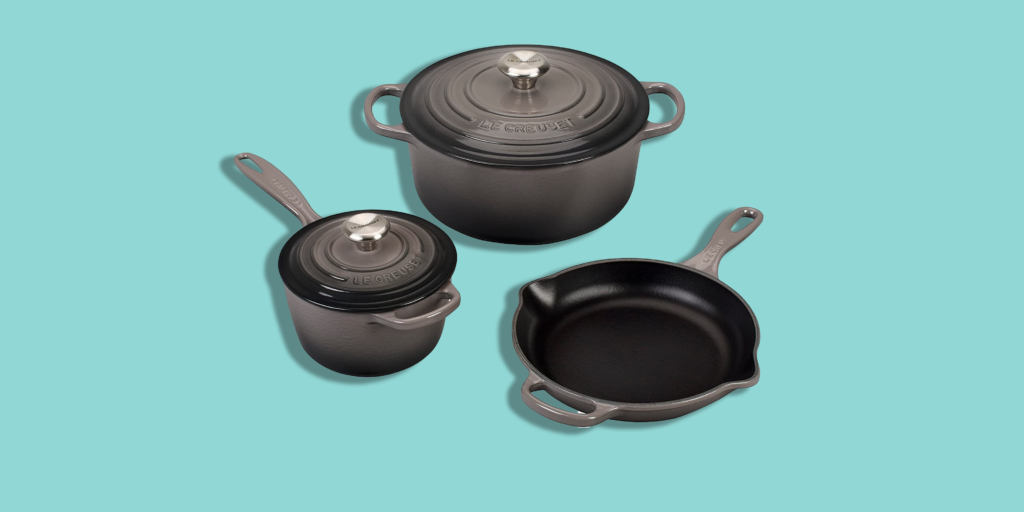
4. Le Creuset Enameled Cast Iron Signature Saucepan (1.75 qt) (Best Enameled Cast Iron)
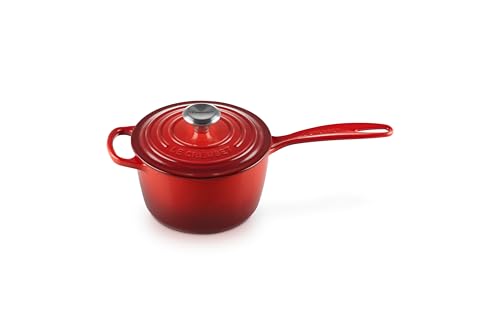
Le Creuset’s enameled cast iron saucepan holds heat for slow sauces and works on every cooktop, including induction.
Why We Like It
Steady, gentle heat is ideal for tomato sauce, polenta and beans, and the enamel will not react with acidic food.
Flaws to Know
- Heavy and expensive
- Enamel can chip if dropped
Buy it if: you love slow-simmered sauces. Skip it if: you want a light, quick pan.
5. SENSARTE 2-Quart Nonstick Saucepan (Best Nonstick)

SENSARTE’s 2-quart nonstick saucepan comes with a lid, and the listing says the coating is PFOA and PFOS free.
Why We Like It
Oatmeal, rice and milk-based sauces wipe right out, which makes it a great second saucepan.
Flaws to Know
- Coating wears over a few years
- Not for high heat or metal utensils
Buy it if: you want an easy-clean pan for sticky foods. Skip it if: you want a lifetime pan.
6. Blue Diamond 2-Quart Ceramic Nonstick Saucepan (Best Ceramic)

Blue Diamond’s ceramic nonstick saucepan is PTFE-free and inexpensive.
Why We Like It
A good choice for anyone avoiding PTFE who still wants easy cleanup.
Flaws to Know
- Ceramic loses slickness faster than PTFE
- Hand wash to extend its life
Buy it if: you want a PTFE-free nonstick saucepan. Skip it if: you want maximum coating life.
For sizes and care, see saucepan sizes, budget saucepans, how to clean a saucepan and how to clean a burnt saucepan bottom.
UK, Canada and EU Buyer Notes
- UK and Ireland: saucepans are sold by diameter, usually 14, 16, 18 and 20 cm. An 18 cm pan holds about 2 litres, close to a US 2-quart saucepan. Induction hobs are common, so check for the induction symbol.
- Canada: sizes are often listed in both quarts and litres. A 3-quart saucepan holds about 2.8 litres.
- Germany, France, Italy and Spain: search for Kochtopf or Stielkasserolle (DE), casserole (FR), casseruola or pentolino (IT) and cazo (ES). Induction is very common in European kitchens.
- PFAS rules: the EU is reviewing wider restrictions on PFAS chemicals. Look for “PFAS-free” on the label if you want to avoid them.
Frequently Asked Questions
What is the best material for a saucepan?
Tri-ply stainless steel with an aluminum core is the best all-round material. It heats evenly, is non-reactive and works on every cooktop.
Is stainless steel or nonstick better for saucepans?
Stainless is better as your main saucepan because it lasts for decades. Nonstick is a useful second pan for oatmeal, rice and milk-based sauces.
Are copper saucepans worth it?
For precise sauces and candy, yes. For most home cooks, tri-ply stainless gives similar results for much less money and care.
Is aluminum safe for saucepans?
Hard-anodized aluminum is sealed and safe. Bare aluminum can react with acidic foods, so it is better used for boiling water and pasta.
Which saucepans work on induction?
Stainless steel, cast iron and enameled cast iron work. Aluminum, copper and glass need a bonded magnetic base.
How long does a nonstick saucepan last?
Usually 3 to 5 years with gentle use. Ceramic nonstick often lasts less.

Reviewed by Samantha Hickel, Kitchenware Reviewer & Cookware Expert. Samantha has cooked for more than ten years, has reviewed kitchenware for The Kitchenware Journal since 2022, and covers stock pots, saucepans, canning, cake and bread pans, cutting boards and everyday kitchen tools. Our lab tests kitchenware, cutting boards and serving pieces for capacity, durability, stain resistance and ease of care. How we test.
Related guides: Types of Cookware · Saucepan Sizes · Enamel Saucepans · Best Budget Saucepans