Last Updated on July 26, 2026
When you pick up a knife, do you ever wonder why there are so many different types? Each knife is designed for a special purpose, making your cooking or tasks easier and more efficient.
Knowing which knife to use can save you time, effort, and even prevent accidents. You’ll discover the main types of knives and how they can transform your kitchen or workspace. Ready to find the perfect knife for your needs? Keep reading and unlock the secret to smarter cutting!
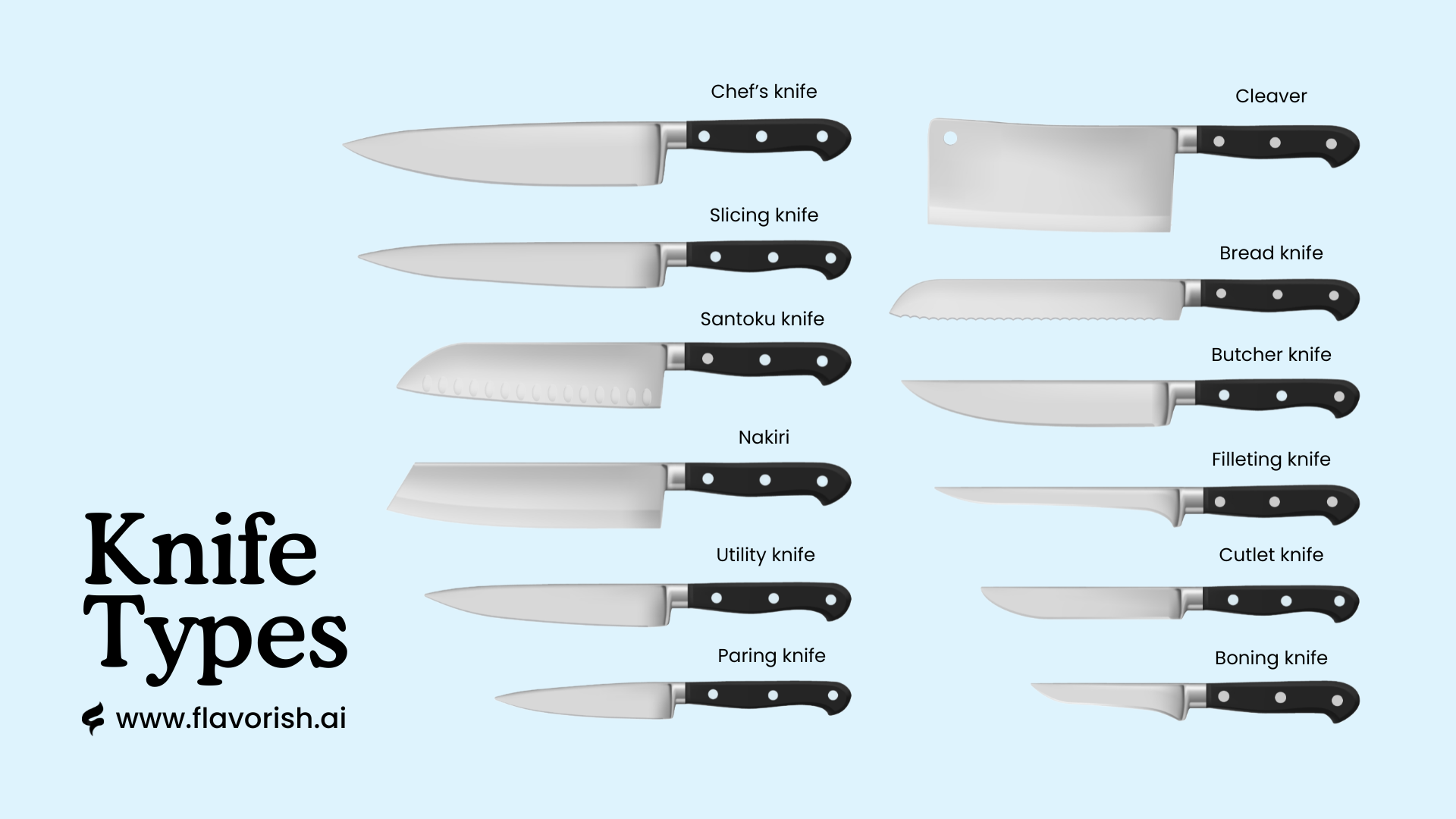
Credit: www.flavorish.ai
Chef’s Knife
The chef’s knife is a must-have tool in any kitchen. It is the most popular and versatile knife for cooking. With its sharp, broad blade, it handles many tasks easily. From chopping vegetables to slicing meat, it does it all.
Features And Uses
The blade of a chef’s knife usually measures 6 to 12 inches. It has a curved edge for smooth rocking cuts. The blade is thick near the handle for strength. The tip is sharp for detailed work. It works well on fruits, herbs, and meats. This knife helps prepare meals faster and cleaner. It is suitable for slicing, dicing, and mincing. The balanced weight helps control each cut.
Choosing The Right Size
Chef’s knives come in different lengths. Smaller blades of 6 to 8 inches suit small hands. They offer better control for delicate tasks. Larger blades, 10 to 12 inches, are good for big jobs. They cut through large vegetables and meats easily. Beginners should try a mid-size, about 8 inches. The knife should feel comfortable and balanced. Hold it to check the weight and grip. The right size improves safety and efficiency.
Paring Knife
The paring knife is a small, sharp knife with a pointed tip. It is designed for tasks that require control and detail. This knife is a kitchen essential for simple, precise cutting. Its size makes it easy to handle and maneuver.
Precision Tasks
The paring knife excels at small, detailed work. It peels fruits and vegetables cleanly. It also trims and shapes food with accuracy. Its sharp blade allows for delicate cuts. The knife fits comfortably in the hand for better control.
Common Applications
Use a paring knife to peel apples or carrots. It works well for deveining shrimp or removing seeds. It helps in slicing small garnishes and herbs. The knife also trims fat and skin from meat. Its versatility makes it a must-have tool.
Serrated Knife
The serrated knife has teeth along the blade edge. These teeth help grip and cut through tough surfaces. The design makes it different from smooth-edged knives. It slices well without crushing soft or delicate food.
This knife is common in many kitchens. It is useful for tasks that need sawing actions. The serrated knife can handle both soft and hard textures. Its unique edge keeps cutting effective for a long time.
Cutting Bread And More
Serrated knives are best for slicing bread. The teeth cut through crust without squashing the soft inside. This knife also works well on tomatoes and citrus fruits. It can cut through skin and flesh cleanly. The sawing motion helps with tough-skinned vegetables. It is perfect for foods with a firm outside and soft inside.
Maintaining The Edge
Serrated knives need less sharpening than smooth knives. The teeth keep the edge sharp longer. Use a special sharpening tool made for serrated blades. Sharpen each tooth carefully, one by one. Avoid using a regular sharpener as it can damage the teeth. Clean the knife after each use to prevent rust. Store the knife safely to protect the teeth from bending.

Credit: nobliecustomknives.com
Utility Knife
The utility knife is a must-have in any kitchen. It stands between the small paring knife and the large chef’s knife. This knife is perfect for many tasks. It has a medium-sized blade, usually 4 to 7 inches long. Its design offers balance and control.
Many cooks rely on the utility knife for everyday cutting jobs. It slices, dices, and trims ingredients with ease. Its shape and size make it very flexible. It works well with vegetables, fruits, and even small cuts of meat. This makes it a true all-rounder in the kitchen.
Versatile Kitchen Tool
The utility knife adapts to different cutting needs. Its blade is sharp enough for precise cuts. It can peel fruits and vegetables gently. The knife also handles tougher tasks, like cutting sandwiches or slicing cheese. Its size fits well in hand, providing comfort and control. This tool fills the gap between smaller and larger knives. This makes it useful for many cooking steps.
When To Use
Use the utility knife when the task is too big for a paring knife. It works well for slicing cucumbers, tomatoes, and apples. It is great for cutting sandwiches and small pieces of meat. The utility knife is ideal for trimming fat or cutting herbs. It comes in handy during meal prep with many ingredients. This knife is perfect for jobs needing precision and a bit more strength.
Boning Knife
The boning knife is a key tool in the kitchen. It helps separate meat from bones with ease. This knife is sharp, flexible, and precise. It comes in handy for many cooking tasks. Understanding its design and use can improve your cooking experience.
Design And Function
The boning knife has a narrow, pointed blade. The blade length is usually between 5 to 6 inches. It is thin to move easily around bones. The blade can be rigid or flexible, based on its use. Flexible blades work well for fish. Rigid blades are better for tougher meat. The handle is designed for a firm grip. This design helps in making clean cuts close to bones.
Handling Meat And Fish
Boning knives are perfect for removing bones from meat and fish. They help cut through joints and separate meat carefully. The sharp tip allows precision in tight areas. The flexible blade bends to follow fish bones. This reduces waste and keeps meat intact. Using a boning knife makes meat preparation faster. It also improves the presentation of your dishes.
Cleaver
The cleaver is a large, heavy knife designed for tough kitchen tasks. It has a thick, strong blade that can cut through bones and dense meat. Many cooks rely on cleavers for their power and durability. They are essential tools in many kitchens worldwide.
Heavy-duty Cutting
Cleavers are built for heavy-duty cutting jobs. Their thick blades handle hard materials like bones and cartilage easily. The weight of the blade helps drive cuts through tough meat. It works like a small axe but with more control. This makes cleavers ideal for butchering and preparing large cuts of meat.
Different Types Of Cleavers
There are several types of cleavers, each with unique features. The Chinese cleaver is broad and flat, good for slicing and chopping vegetables as well as meat. The Western cleaver is heavier with a thicker blade, perfect for chopping bones. Some cleavers have a curved edge for rocking cuts. Others have a straight edge for chopping straight down. Choosing the right cleaver depends on the tasks you need to perform.
Santoku Knife
The Santoku knife is a popular kitchen tool known for its versatility. It is designed to handle many tasks such as slicing, dicing, and chopping. Its name means “three virtues” or “three uses,” reflecting its multi-purpose design. Many chefs and home cooks prefer this knife for its balance and ease of use.
Japanese Influence
The Santoku knife originates from Japan. It reflects the Japanese style of cooking and knife making. The blade is shorter and thinner than many Western knives. It often has a flat edge and a rounded tip. This design helps in precise cutting and quick chopping. The Santoku focuses on efficiency and control in the kitchen.
Comparing To Chef’s Knife
The Santoku knife differs from the classic chef’s knife. It has a shorter blade, usually 5 to 7 inches long. The chef’s knife blade is longer and curves upward. This curve helps with rocking motions while chopping. The Santoku blade is straighter, which suits slicing and push cuts. The Santoku feels lighter and easier to handle for some cooks.
Both knives are versatile, but each fits different cutting styles. The chef’s knife works well for heavy tasks. The Santoku excels in precision and speed.
Fillet Knife
The fillet knife is a special tool for cutting fish. It has a thin, flexible blade. This design helps to cut close to the bone and remove skin easily. Many cooks and fish lovers keep this knife in their kitchen.
Flexibility And Precision
The blade bends to follow fish curves. This makes filleting smooth and clean. Its sharp edge cuts soft flesh without tearing. Precision is key to get perfect slices. The flexibility helps avoid wasting meat.
Best Uses
Fillet knives are great for cleaning fish fast. They work well on trout, salmon, and other fish. Also, they can trim fat or remove skin. Not good for cutting hard vegetables or bones. Best used only for delicate fish tasks.
Steak Knife
A steak knife is a special type of knife designed to cut through cooked meats easily. It has a sharp, pointed blade that helps slice steak and other meats without tearing the fibers. This knife makes eating steak more enjoyable and less messy.
Steak knives come in many styles and materials. They are common in both homes and restaurants. Knowing their uses and how to care for them helps keep them sharp and safe.
Table Vs. Kitchen Use
Steak knives for the table look nice and match the dinner setting. They often have decorative handles and polished blades. These knives are perfect for cutting meat during meals.
Kitchen steak knives are made for heavy use. They may have stronger, simpler designs. These knives help chefs cut meat quickly and cleanly before serving.
Table knives focus on comfort and style. Kitchen knives focus on function and durability. Choosing the right knife depends on where you use it.
Materials And Maintenance
Most steak knives have blades made of stainless steel. This metal resists rust and stays sharp longer. Some knives have serrated edges for easy cutting.
Handles come in wood, plastic, or metal. Wooden handles look classic but need careful drying. Plastic and metal handles are easier to clean.
Clean steak knives by hand to protect the blade and handle. Dry them immediately after washing. Sharpen blades regularly for best cutting performance.
Knife Care Tips
Taking good care of your knives helps them last longer and work better. Proper care keeps blades sharp and safe to use. It also prevents rust and damage. Simple habits can protect your investment and improve your cooking experience.
Sharpening Techniques
Keep your knives sharp by using the right tools. A sharpening stone works well for most knives. Hold the blade at a 20-degree angle and slide it across the stone. Repeat on both sides for even sharpness.
Honing rods are great for daily touch-ups. They realign the blade edge and keep it smooth. Use gentle strokes, starting at the base of the blade to the tip. Avoid using electric sharpeners too often; they can wear down blades fast.
Proper Storage
Store knives safely to protect their edges and prevent accidents. Use a knife block or magnetic strip to keep blades separated. Avoid tossing knives in a drawer where they can bump into other tools.
Keep knives dry before storing to stop rust. Clean and dry them right after use. Proper storage keeps knives sharp and your kitchen safe.
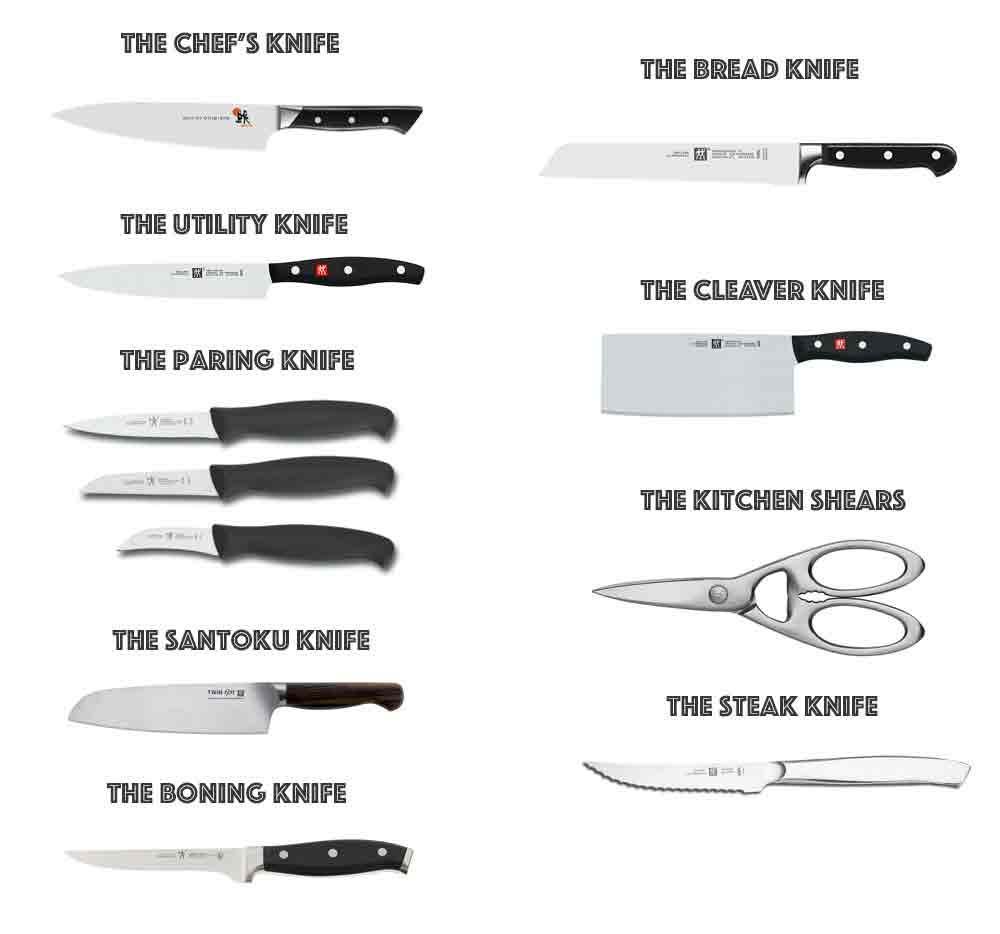
Credit: shouldit.com
Frequently Asked Questions
What Are The Main Types Of Kitchen Knives?
The main types include chef’s knife, paring knife, bread knife, utility knife, and boning knife. Each serves a specific cutting purpose in cooking.
How To Choose The Right Knife For Cooking?
Select a knife based on the task: chopping, slicing, or peeling. Comfort and blade quality also matter for efficiency and safety.
What Is The Difference Between A Chef’s And Utility Knife?
A chef’s knife is larger and versatile for heavy chopping. A utility knife is smaller, ideal for slicing and cutting smaller foods.
Why Are Serrated Knives Important In The Kitchen?
Serrated knives cut through tough surfaces like bread crusts without crushing soft interiors. They are essential for precise slicing of delicate items.
Conclusion
Choosing the right knife makes cooking easier and safer. Each knife type has a special job in the kitchen. Knowing their uses helps you prepare food better. Keep your knives sharp and clean for best results. A good knife set saves time and effort.
Practice using different knives to gain confidence. Enjoy cooking with the right tools by your side. Simple tools, great meals.