

Last Updated on November 13, 2026
The 30-Second Answer: the main types of cookware are pots (stock pot, saucepan, Dutch oven) and pans (frying pan or skillet, sauté pan, griddle, wok), made from stainless steel, cast iron, carbon steel, aluminum with nonstick, enameled cast iron or copper. Most kitchens cook the bulk of their meals with four pieces: a 12-inch skillet, a 3-quart saucepan, a Dutch oven and a stock pot.
- Everyday workhorse: clad stainless steel.
- Searing and oven use: cast iron or carbon steel.
- Eggs and delicate fish: one nonstick pan.
- Slow braises and soups: enameled cast iron Dutch oven.
If you cook on induction, check every piece with a magnet: if it sticks to the base, it works.
A note on this guide: Reviewing a product properly is not easy, and real testing takes time. For now, this guide is research-based, built on manufacturer specs, product details and verified owner feedback. Our team is testing these products in The Kitchenware Journal lab, and we will update this guide with our hands-on results and photos very soon.
Walk down a cookware aisle and you’ll see dozens of shapes and materials. This guide to the types of cookware sorts them into what each pot and pan actually does, which materials suit which jobs, and which ones you can skip.
Our angle is the four-pan rule: before you buy a big set, start with the four pieces most home cooks really use, then add specialty pans one at a time as your cooking calls for them. You’ll spend less and end up with cookware you actually reach for.
In this guide
Types of pots
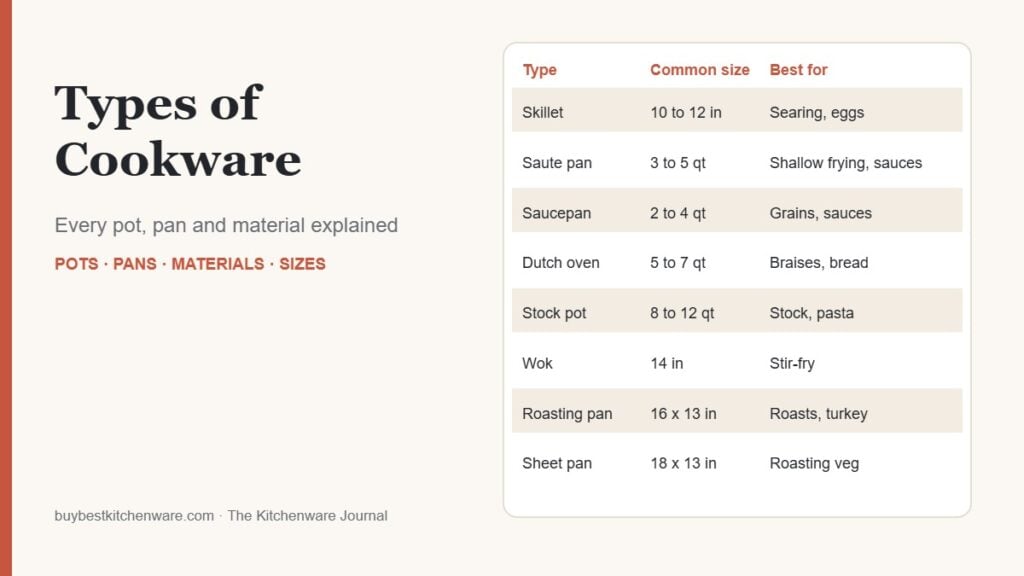
| Pot | Common sizes | What it is for | Our guides |
|---|---|---|---|
| Stock pot | 6 to 20 qt | Stock, soup, pasta, canning, big batches | Stock pot sizes, what stock pots are for |
| Saucepan | 1 to 4 qt | Grains, sauces, reheating, boiling eggs | Saucepan sizes, best saucepan material |
| Dutch oven | 4 to 7 qt | Braises, stews, soup, no-knead bread | Dutch oven size chart, stainless vs cast iron |
| Braiser | 3 to 5 qt | Searing then slow-cooking with the lid on | Pans for braising, oven-safe braisers |
| Pasta pot | 6 to 12 qt | Pasta with a built-in strainer insert | Pasta cookers with strainer lids, pasta baskets |
| Double boiler | 1 to 3 qt | Melting chocolate, custards | Double boilers |
| Multipot | 6 to 8 qt | Pot with pasta and steamer inserts | How to use a multipot |
Sizing help: how big is a 6-quart pot, 5-quart pot size, 4-quart pot dimensions and how stock pots are measured.
Types of pans
| Pan | Common sizes | What it is for | Our guides |
|---|---|---|---|
| Skillet / frying pan | 8 to 12 in | Searing, sauteing, eggs; sloped sides | Types of frying pans, frying pan sizes |
| Saute pan | 3 to 5 qt | Straight sides for shallow frying and pan sauces | Saute pan sizes, 5-quart saute pans |
| Saucier | 2 to 3 qt | Rounded sides for stirring sauces and risotto | Saute pan vs saucier |
| Wok | 12 to 14 in | High-heat stir-frying | How to buy a wok, round-bottom woks |
| Crepe and omelet pans | 8 to 10 in | Thin batters and folded eggs | Omelette pan sizes, crepe pan sizes |
| Roasting pan | 14 to 18 in | Roasts, turkey, brisket | Shallow roasting pans, broiler vs roasting pan |
| Paella pan | 12 to 18 in | Wide, shallow rice dishes | Paella pan sizes |
Types of cookware by material
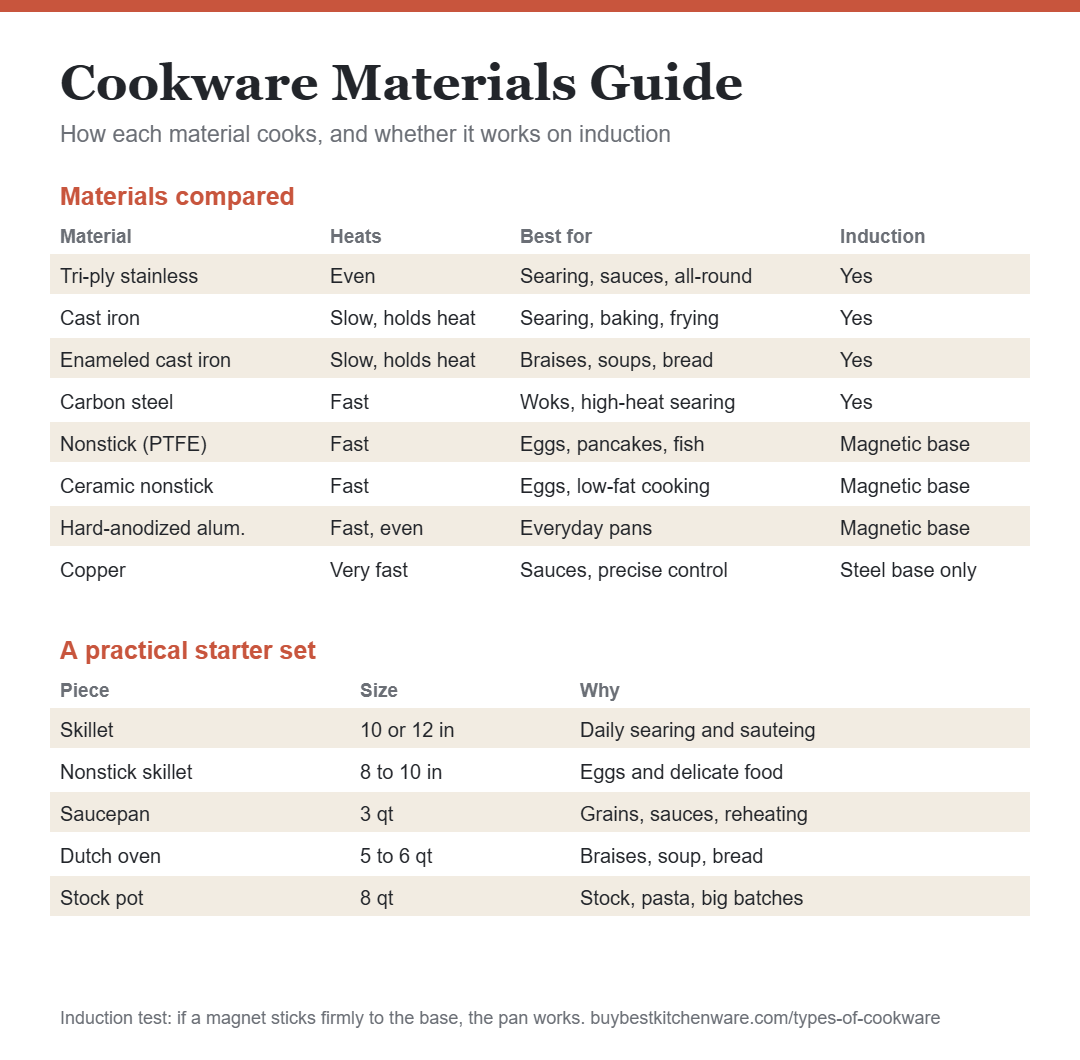
- Tri-ply (clad) stainless steel: an aluminum core sandwiched in steel heats evenly, goes in the oven and lasts for decades. The best all-rounder. Read stir-frying in stainless and eggs in stainless.
- Cast iron: heats slowly but holds heat, ideal for searing and baking. If your pan is flaking, see black coating coming off a cast iron skillet; for vintage pieces, antique Dutch oven identification.
- Enameled cast iron: cast iron with a glass coating, so it does not need seasoning and handles acidic food. The classic Dutch oven material.
- Carbon steel: lighter than cast iron and heats faster; the traditional wok material.
- Nonstick: easy release for eggs and fish. Keep it to low and medium heat, avoid metal utensils and replace it when the coating wears. For a no-PTFE option, see non-toxic crepe pans.
- Aluminum: light and fast-heating; hard-anodized aluminum resists scratches. Are bare aluminum pots safe? See are aluminum stock pots safe.
- Copper: the most responsive heat, at a premium price, and it needs polishing.
Choosing a stock pot specifically? Our guide to the best material for stock pots compares them in detail, and heavy-bottom stock pots explains why base thickness matters.
Types of cookware for your stovetop
Induction cooktops only work with magnetic cookware: if a magnet sticks firmly to the base, it will work (Consumer Reports explains the magnet test). Cast iron, carbon steel and most stainless steel are fine; aluminum, copper and glass need a bonded steel base. Glass and ceramic cooktops need flat, smooth bottoms that will not scratch.
- Best pots and pans for electric cooktops
- Best stock pot for a glass-top stove
- Best woks for induction
- Best omelette pan for induction
- Best crepe pan for induction
Pot and pan comparisons
- Skillet vs saucepan and saucepan vs pot
- Stock pot vs saucepan, vs saute pan, vs steamer and vs pressure cooker
- Saute pan vs braiser, vs sauteuse, vs casserole and chef pan vs saute pan
- Stir-fry vs pan-fry and what pan to use for stir-fry
Cookware for specific needs
- Lighter pans: lightweight pots and pans for seniors, for arthritis, saucepans for weak wrists and pans with removable handles.
- Starting out: pots and pans for college students and for a wedding registry.
- Easy cleanup: dishwasher-safe pots and pans.
- Splurges: the most expensive pots and pans.
Care, storage and lifespan
Good cookware lasts: stainless steel and cast iron for decades, nonstick for a few years. See how long pots and pans last and how long stock pots last. Cleaning guides: a burnt saucepan bottom, saucepans, omelet pans and enamel roasting pans. Short on space? Try organizing pots and pans in drawers or pot and pan storage.
Build Your Starter Kit: The Four-Pan Rule and Beyond
| Piece | Size | What it handles |
|---|---|---|
| Skillet / frying pan | 12 in | Searing, frying, eggs (if nonstick), one-pan dinners |
| Saucepan | 3 qt | Rice, sauces, oatmeal, reheating soup |
| Dutch oven | 5 to 6 qt | Braises, stews, chili, bread |
| Stock pot | 8 qt | Pasta, stock, corn, big-batch soup |
1. DELARLO Tri-Ply Stainless Steel Frying Pan, 12 Inch with Lid (Best Stainless Skillet)
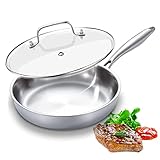
A fully clad 18/10 stainless pan with a lid, oven safe to 650°F per the listing.
Why We Like It
Tri-ply heats evenly, browns well and works on every cooktop, including induction.
Flaws to Know
- Food sticks if you don’t preheat
Buy it if: you want one do-everything pan. Skip it if: you mostly cook eggs.
Key Specs
- Size: 12 in
- Construction: tri-ply, 18/10
2. MICHELANGELO 3 Quart Stainless Saucepan with Lid (Best Saucepan)

An 18/10 stainless saucepan with a tri-ply base.
Why We Like It
Three quarts is the sweet spot for rice, sauces and reheating soup for a family.
Flaws to Know
- Base-clad, so sides heat less evenly
Buy it if: you need an everyday saucepan. Skip it if: you want fully clad cookware.
Key Specs
- Capacity: 3 qt
- Base: tri-ply
3. Amazon Basics Enameled Cast Iron Dutch Oven, 6 Quart (Best Budget Dutch Oven)
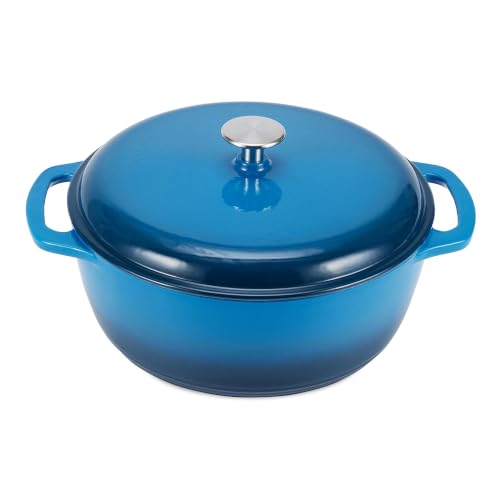
A 6-quart enameled cast iron pot with lid.
Why We Like It
Holds steady heat for braises and soups, and goes from stove to oven to table.
Flaws to Know
- Heavy
- Enamel can chip if knocked
Buy it if: you want a Dutch oven without the premium price. Skip it if: you can’t lift heavy pots.
Key Specs
- Capacity: 6 qt
- Material: enameled cast iron
4. Cuisinart Chef’s Classic 8 Quart Stockpot with Cover (Best Stock Pot)

An 8-quart stainless stock pot with an aluminum-encapsulated base.
Why We Like It
Big enough for a pound of pasta or a batch of stock, at a sensible price.
Flaws to Know
- Base-only cladding
Buy it if: you cook pasta and soups often. Skip it if: you need 12 quarts or more.
Key Specs
- Capacity: 8 qt
- Material: stainless steel
Ready to add more? These three pick up where the starter four leave off.
5. Lodge Pre-Seasoned Cast Iron Skillet, 12 Inch (Best Cast Iron)
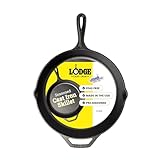
The classic American cast iron skillet.
Why We Like It
Unbeatable for crusty steaks and cornbread, and it lasts generations.
Flaws to Know
- Heavy
- Needs drying and oiling
Buy it if: you sear and bake. Skip it if: you need a light pan.
Key Specs
- Size: 12 in
- Made in: USA
6. Tramontina Professional 10-Inch Nonstick Fry Pan (Best Nonstick)

A heavy-gauge restaurant-style nonstick pan.
Why We Like It
Every kitchen needs one easy-release pan for eggs; thick aluminum keeps this one from warping.
Flaws to Know
- Coating wears in a few years
Buy it if: you cook eggs and fish often. Skip it if: you sear at very high heat.
Key Specs
- Size: 10 in
7. OXO Obsidian Carbon Steel Frying Pan, 10 Inch (Best Carbon Steel)
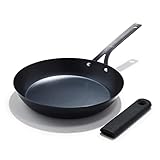
A pre-seasoned carbon steel pan with a removable silicone sleeve.
Why We Like It
Lighter than cast iron with the same searing power, and it gets slicker the more you use it.
Flaws to Know
- Needs seasoning care
Buy it if: you want cast iron performance with less weight. Skip it if: you want zero maintenance.
Key Specs
- Size: 10 in
- Material: carbon steel
8. Tramontina Signature Tri-Ply Clad Stainless 12-Piece Set (Best Full Set)

A fully clad stainless set covering skillets, saucepans, a sauté pan and a stock pot.
Why We Like It
If you’d rather buy once, this set covers the four-pan rule and more in matching, induction-ready pieces.
Flaws to Know
- Big upfront cost
- Some pieces you may rarely use
Buy it if: you’re outfitting a new kitchen. Skip it if: you already own a few good pans.
Key Specs
- Pieces: 12
- Construction: tri-ply clad
Cookware Notes for the UK, Canada and the EU
UK: induction and ceramic hobs are very common, so check that each piece is induction-ready. Sizes are sold in cm: a 28 cm frying pan is close to an 11-inch US pan, 30 cm to 12-inch.
Canada: US sizes and brands are standard. Gas and electric coil ranges are both common, and induction is growing fast.
EU: induction is the norm in many homes. Look for the induction symbol (a coil icon) on the box, and note that a “casserole” in Europe usually means a lidded pot, not a baking dish.
Frequently Asked Questions
What are the main types of cookware?
Pots (stock pots, saucepans, Dutch ovens) and pans (skillets, sauté pans, griddles, woks), in materials like stainless steel, cast iron, carbon steel, nonstick aluminum and enameled cast iron.
What cookware material is best for everyday cooking?
Clad stainless steel. It’s durable, works on any cooktop and handles most tasks, with one nonstick pan on the side for eggs.
What pots and pans do I really need?
A 12-inch skillet, a 3-quart saucepan, a 5 to 6-quart Dutch oven and an 8-quart stock pot cover most cooking.
Is cast iron better than stainless steel?
Cast iron holds heat better for searing and baking; stainless heats more evenly, weighs less and needs no seasoning. Many cooks own both.
How do I know if cookware works on induction?
Hold a magnet to the base. If it sticks firmly, the pan will work on induction.

Reviewed by Nathan Miller, Chief Editor & Kitchen Equipment Expert. Nathan has cooked for more than ten years, has reviewed kitchenware for The Kitchenware Journal since 2022, and covers cast iron and stainless cookware, Dutch ovens, woks, multi-cookers, fermentation gear and measuring tools. Our lab logs fermentation temperatures with a calibrated thermocouple data logger. He previously cooked professionally in restaurants in South Korea, Saudi Arabia and the US. How we test.
Related guides: Skillets: Types and How to Choose · Best Material for Stock Pots · How Long Do Pots and Pans Last? · Baking Equipment List