
Last Updated on November 15, 2026
The 30-Second Answer: an all-glass coffee maker keeps hot coffee away from plastic. The purest options are a Chemex or a glass stovetop percolator; pour-overs and French presses with stainless filters come close.
- Best overall: Chemex Classic 8-Cup, a single piece of borosilicate glass.
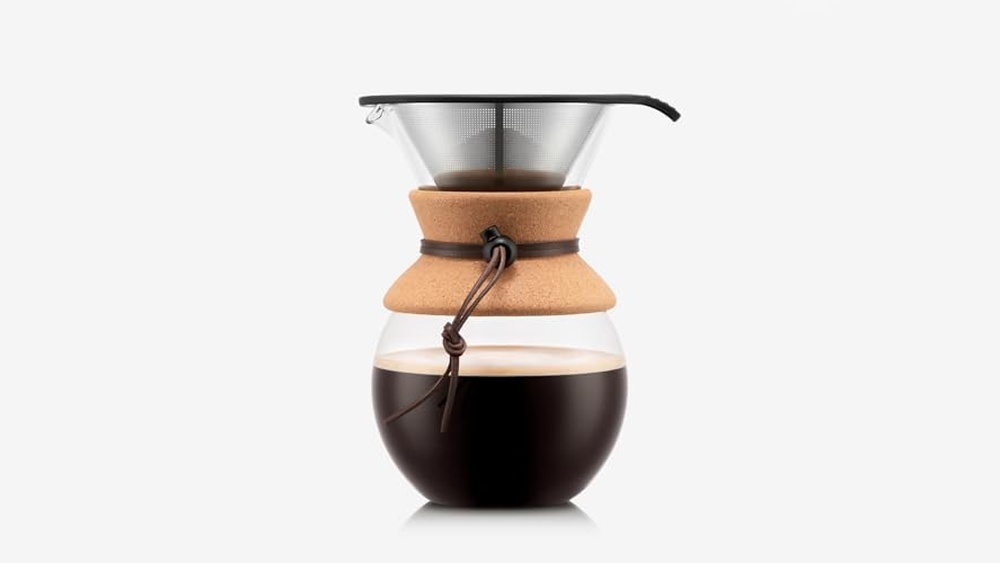
- Best budget pour-over: Bodum 34 oz Pour Over with a reusable stainless steel filter.
- Best stovetop: Café Brew Glass Percolator, 8 cups, with a heat diffuser.
- Best French press: Veken 34 oz, with no plastic touching the coffee.
- Best paper-free pour-over: Cosori 8-Cup with a double-layer stainless filter.
Electric drip machines almost always have plastic water tanks and tubes, so a manual brewer is the way to go if plastic-free is the goal.
A note on this guide: Reviewing a product properly is not easy, and real testing takes time. For now, this guide is research-based, built on manufacturer specs, product details and verified owner feedback. Our team is testing these products in The Kitchenware Journal lab, and we will update this guide with our hands-on results and photos very soon.
Many people switch to an all-glass coffee maker because they do not want near-boiling water running through plastic every morning. Glass does not hold onto old coffee oils or flavors, it is easy to clean, and you can see exactly how your brew is going.
This guide explains which brewers are truly all glass, which have small stainless or silicone parts, and the six best options for pour-over, French press and stovetop brewing. We also cover borosilicate glass, cleaning and buying tips for the UK, Canada and the EU.
In this guide
What Counts as an All-Glass Coffee Maker?
Few coffee makers are 100% glass. In practice, “all glass” means that the coffee only touches glass, stainless steel or paper while it brews. Look at three parts:
- The brewing vessel: should be borosilicate glass, which handles sudden temperature changes better than regular glass.
- The filter: paper, stainless steel mesh or glass. Avoid plastic filter baskets.
- Lids, collars and seals: wood, cork, leather, stainless steel or food-grade silicone are common. Check that no plastic sits in the coffee path.
| Brewer | What touches the coffee | Plastic in the coffee path? |
|---|---|---|
| Chemex | Glass and paper filter | No |
| Glass stovetop percolator | Glass (some have a stainless basket) | Usually no; check the basket |
| Bodum pour-over | Glass and stainless mesh | No (cork or band outside only) |
| Cosori pour-over | Glass and stainless mesh | No |
| Glass French press | Glass and stainless mesh plunger | Depends on model; Veken lists none |
| Electric drip maker | Plastic tank, tubes and basket | Usually yes |
All-Glass Coffee Makers at a Glance
| Coffee maker | Type | Capacity | Filter |
|---|---|---|---|
| Chemex Classic 8-Cup | Pour-over | 8 cups (40 oz) | Chemex paper |
| Bodum Pour Over | Pour-over | 34 oz | Stainless mesh |
| Café Brew Glass Percolator | Stovetop percolator | 8 cups (40 oz) | Built-in basket |
| Cosori Pour Over | Pour-over | 8 cups | Double-layer stainless |
| Veken French Press | French press | 34 oz | Stainless mesh |
| BAYKA French Press | French press | 34 oz | Stainless mesh |
Best All-Glass Coffee Makers
1. Chemex Classic Series 8-Cup Pour-Over Glass Coffeemaker (Best Overall)
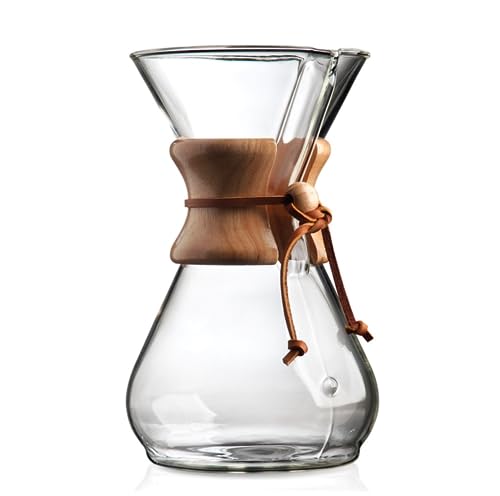
A one-piece borosilicate glass carafe with a wooden collar and leather tie. It has been a design classic since the 1940s.
Why We Like It
The coffee touches only glass and the thick Chemex paper filter, which removes most oils and fine grounds for a very clean, bright cup. Chemex says its non-porous glass will not absorb odors or chemical residues.
Flaws to Know
- Needs Chemex-specific bonded filters
- Narrow neck makes hand washing harder
- Pour-over takes 4 to 5 minutes of attention
Buy it if: you want a plastic-free brewer that makes clean, smooth coffee. Skip it if: you like heavy, full-bodied coffee; a French press suits you better.
Key Specs
- Capacity: 8 cups (about 40 oz)
- Material: borosilicate glass, wood collar
- Filter: Chemex bonded paper
2. Bodum 34 oz Pour Over Coffee Maker (Best Budget Pour-Over)

A borosilicate glass carafe with a reusable stainless steel mesh filter, so you never buy paper filters.
Why We Like It
It costs less than half the price of a Chemex and needs no filters. The mesh lets more oils through than paper, so the coffee has more body.
Flaws to Know
- Mesh filter lets some fine sediment through
- The band around the neck is not glass (it does not touch the coffee)
- Mesh needs a good rinse every time
Buy it if: you want an affordable, filter-free glass brewer. Skip it if: you dislike any sediment in your cup.
Key Specs
- Capacity: 34 oz
- Material: borosilicate glass
- Filter: reusable stainless steel
3. Café Brew Glass Coffee Percolator, Stovetop (Best Stovetop)

A clear glass stovetop percolator that brews up to 8 cups and lets you watch the coffee darken as it perks.
Why We Like It
It is one of the few classic glass percolators still made. It comes with a heat diffuser for electric coil stoves, and the brand lists it as BPA-free.
Flaws to Know
- Percolators can over-extract and taste bitter if left too long
- Use the diffuser and low to medium heat to protect the glass
- Not for induction hobs
Buy it if: you like strong, hot, old-fashioned coffee and want to see it brew. Skip it if: you have an induction stove.
Key Specs
- Capacity: 8 cups (40 oz)
- Material: glass
- Heat source: gas or electric (with diffuser)
4. Cosori Pour Over Coffee Maker, 8-Cup (Best Paper-Free Pour-Over)

A glass carafe with a double-layer stainless steel filter that catches more fines than a single mesh.
Why We Like It
The two-layer filter gives a cleaner cup than most metal filters while still skipping paper. It suits people who brew for two or three.
Flaws to Know
- Still a little more sediment than paper
- Filter takes longer to rinse than a paper toss
Buy it if: you want plastic-free, paper-free pour-over with less sediment. Skip it if: you want the cleanest possible cup; use a Chemex.
Key Specs
- Capacity: 8 cups
- Material: borosilicate glass
- Filter: double-layer stainless steel
5. Veken 34 oz French Press (Best French Press)

A glass French press that Veken designs so that no plastic touches the coffee; the plunger and frame are 304 stainless steel and food-grade silicone.
Why We Like It
French press coffee is full-bodied and easy to make, and this model avoids the plastic lids and filter parts that many cheaper presses use.
Flaws to Know
- Glass beaker can break if dropped
- Some sediment, as with any French press
Buy it if: you want a rich, full-bodied cup without plastic. Skip it if: you want a bright, clean cup; choose pour-over.
Key Specs
- Capacity: 34 oz (1 L)
- Material: borosilicate glass, 304 stainless steel
- Filter: stainless mesh
6. BAYKA French Press Coffee Maker (Budget French Press)
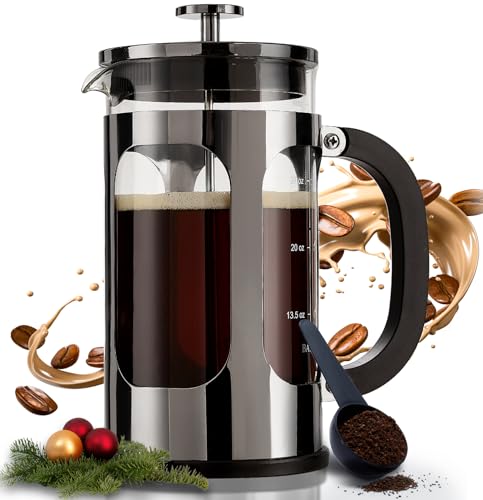
A large 34 oz glass French press with a 304 stainless steel frame and plunger.
Why We Like It
It is an affordable, sturdy press for daily coffee or cold brew. The stainless frame protects the glass and looks good on the counter.
Flaws to Know
- Check the lid design if you want zero plastic
- Some sediment in the last sip
Buy it if: you want a low-cost glass press that also makes cold brew. Skip it if: avoiding every bit of plastic is your top priority.
Key Specs
- Capacity: 34 oz
- Material: glass and 304 stainless steel
- Filter: stainless mesh
Why Borosilicate Glass Matters
Borosilicate glass expands very little when it heats up, so it is far less likely to crack when you pour boiling water into it. Regular soda-lime glass is cheaper but more likely to shatter with sudden temperature changes. Check that the carafe, beaker or pot is listed as borosilicate.
Glass is also non-porous, so it does not hold onto stale coffee oils or flavors the way some plastics can.
How to Brew With a Glass Pour-Over
- Heat water to about 195 to 205°F (just off the boil).
- Use about 1 gram of coffee for every 15 to 17 grams of water; for 4 cups, that is roughly 40 g of coffee to 600 g of water.
- Rinse the paper filter with hot water to remove any paper taste and warm the glass.
- Pour a little water over the grounds and wait 30 to 45 seconds so they can “bloom”.
- Pour the rest slowly in circles over 3 to 4 minutes, then remove the filter.
The Specialty Coffee Association publishes the brewing ratios that most guides use. For French press tips, see how to assemble a French press, and for other brewer styles read our guide to types of coffee makers.
Cleaning and Care Tips
- Rinse the glass right after brewing, before coffee oils dry.
- Remove wood collars and leather ties before washing a Chemex.
- Use a soft bottle brush for narrow necks; avoid steel wool on glass.
- Soak stained glass in warm water with a spoon of baking soda or citric acid.
- Never put a hot glass pot on a cold, wet surface or under cold water.
UK, Canada and EU Buyer Notes
- UK and Ireland: search Amazon.co.uk for a “glass cafetière” (the UK name for a French press) or a “glass pour over coffee maker”. Chemex and Bodum are widely available.
- Canada: the same Chemex, Bodum and Veken models are sold on Amazon.ca. Glass stovetop percolators are harder to find, so check stock before you plan around one.
- EU: Bodum is a Danish brand, so its glass brewers are easy to find in Europe. Glass stovetop percolators do not work on induction hobs, which are common in many EU kitchens.
Frequently Asked Questions
Are there coffee makers with no plastic?
Yes. A Chemex, a glass stovetop percolator and some glass pour-overs and French presses have no plastic touching the coffee. Electric drip machines almost always contain plastic.
Is borosilicate glass safe for coffee?
Yes. Borosilicate glass is non-porous, does not leach flavors and handles boiling water better than regular glass.
Is a Chemex really all glass?
The carafe is a single piece of borosilicate glass. The wooden collar and leather tie sit outside and never touch the coffee.
Can I put a glass percolator on an induction stove?
No. Induction needs a magnetic pan base, and glass is not magnetic. Use it on gas or electric coil stoves with a heat diffuser.
Is there an electric all-glass coffee maker?
Very few exist. Most electric machines use plastic tanks and tubes. Some electric kettles have glass bodies, which you can pair with a glass pour-over.

Reviewed by Randy Howell, Kitchen Appliance Reviewer & Mixer Specialist. Randy has cooked for more than ten years, has reviewed kitchenware for The Kitchenware Journal since 2022, and covers stand mixers, blenders, air fryers, kettles, coffee makers and grill pans. Our lab tests on gas, electric and induction cooktops. How we test.
Related guides: Types of Coffee Makers · How to Assemble a French Press · 15-Cup Coffee Makers · How to Use a Mr. Coffee Maker