
Last Updated on November 23, 2026
The 30-Second Answer: the most common baking pan sizes in US recipes are below, with how much batter each holds.
- 9×13-inch rectangle: 14 to 16 cups, the standard for sheet cakes, brownies for a crowd and casseroles.
- 9-inch round: 8 cups, the standard layer cake pan. Two of them hold about the same batter as one 9×13.
- Half sheet pan (18×13 inches): the standard cookie sheet and roasting pan for home ovens.
Swapping pans? Match the volume, fill pans half to two-thirds full, and start checking for doneness early. See the full chart.
A note on this guide: The sizes and volumes in this guide come from manufacturer specs and established baking references. Our team is testing these pans in The Kitchenware Journal lab, and we will add our hands-on results and photos very soon.
A recipe written for one pan size can fail in another. Too big, and the cake bakes thin and dry. Too small, and the batter overflows or stays raw in the middle.
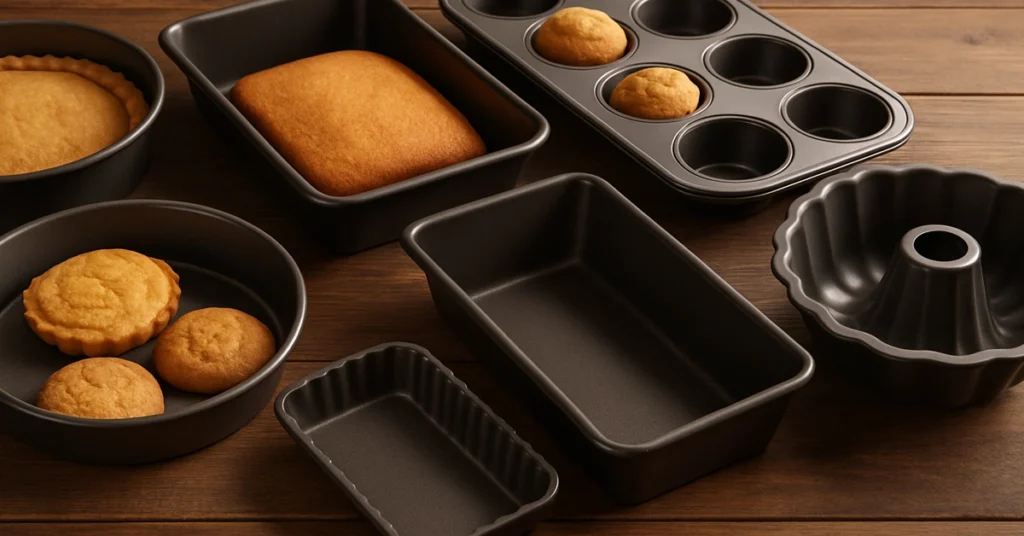
This baking pan sizes guide covers every common pan, how much batter each one holds, metric equivalents, and how to swap one pan for another. At the end, we pick a good pan for each of the most-used sizes.
In this guide
Baking Pan Sizes Chart
| Pan | Size (inches) | Metric | Batter volume |
|---|---|---|---|
| Round cake pan | 6 × 2 | 15 cm | 4 cups |
| Round cake pan | 8 × 2 | 20 cm | 6 cups |
| Round cake pan | 9 × 2 | 23 cm | 8 cups |
| Round cake pan | 10 × 2 | 25 cm | 10 to 11 cups |
| Square pan | 8 × 8 × 2 | 20 × 20 cm | 8 cups |
| Square pan | 9 × 9 × 2 | 23 × 23 cm | 10 cups |
| Rectangular pan | 11 × 7 × 2 | 28 × 18 cm | 10 cups |
| Rectangular pan | 13 × 9 × 2 | 33 × 23 cm | 14 to 16 cups |
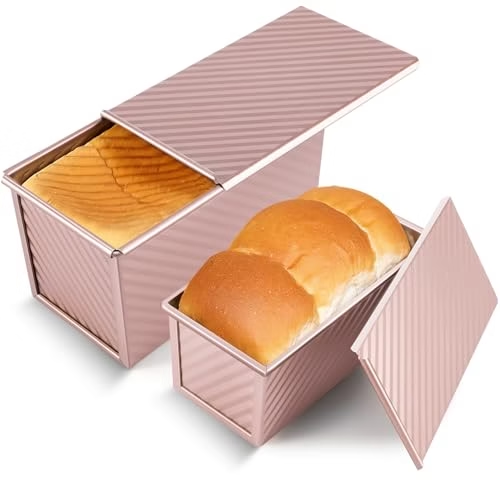
| Loaf pan | 8 × 4 | 20 × 10 cm | 4 cups |
| Loaf pan | 9 × 5 | 23 × 13 cm | 8 cups |
| Springform pan | 9 × 2.5 | 23 cm | 10 cups |
| Springform pan | 10 × 2.5 | 25 cm | 12 cups |
| Bundt pan | 10 × 3 | 25 cm | 10 to 12 cups |
| Tube pan | 9 × 3 | 23 cm | 12 cups |
| Jelly roll pan | 15 × 10 × 1 | 38 × 25 cm | 10 cups |
| Jelly roll pan | 17 × 12 × 1 | 43 × 30 cm | 12 cups |
Volumes are the batter a pan holds when filled to the top, as listed by Sally’s Baking Addiction and other baking references. Fill pans only half to two-thirds full.
Sheet Pan Sizes
| Sheet pan | Size (inches) | Metric | Fits |
|---|---|---|---|
| Full sheet | 26 × 18 | 66 × 46 cm | Commercial ovens only |
| Half sheet | 18 × 13 | 46 × 33 cm | Most home ovens |
| Quarter sheet | 13 × 9 | 33 × 23 cm | Toaster ovens and small batches |
| Eighth sheet | 9 × 6.5 | 23 × 16 cm | Prep, toppings, small toaster ovens |
A half sheet pan is the one size every home kitchen needs. Measure your oven before buying: you need about 2 inches of clearance around the pan for air to circulate. For more options, see our guides to 10 × 10 baking sheets and rust-resistant baking pans.
How to Substitute One Pan Size for Another
- Match the volume first: a recipe for two 9-inch rounds (16 cups) fits one 9×13 pan (14 to 16 cups).
- Common swaps: one 9×13 = two 9-inch rounds = two 8×8 squares. One 9×5 loaf = one 8×8 square = one 9-inch round.
- Scale by area: a 9×13 has about 117 square inches, and an 8×8 has 64. A recipe for 8×8 needs about 1.8 times the batter for a 9×13.
- Adjust the time: thinner batter in a bigger pan bakes faster. Deeper batter in a smaller pan needs longer and sometimes 25°F less heat to keep the edges from overbaking.
- Extra batter: bake it as cupcakes. A standard muffin cup holds about ¼ cup.
How Pan Material Changes Baking
| Material | How it bakes | Adjustment |
|---|---|---|
| Light aluminum | Even, gentle browning | None, the standard most recipes assume |
| Dark nonstick steel | Browns faster and darker | Lower the oven by 25°F (about 15°C) |
| Glass | Slow to heat, holds heat long | Lower the oven by 25°F and watch the edges |
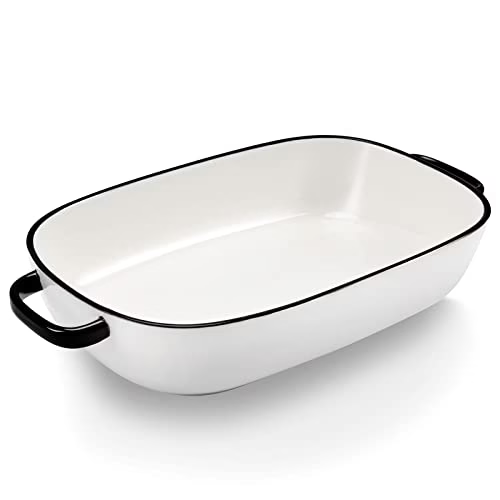
| Ceramic | Like glass, good for casseroles | Lower by 25°F for cakes |
| Stainless steel | Can heat unevenly unless clad | Use parchment for cakes |
Read more in our guide to stainless steel baking pans, or browse our full baking equipment list.
Best Baking Pans for the Most Common Sizes
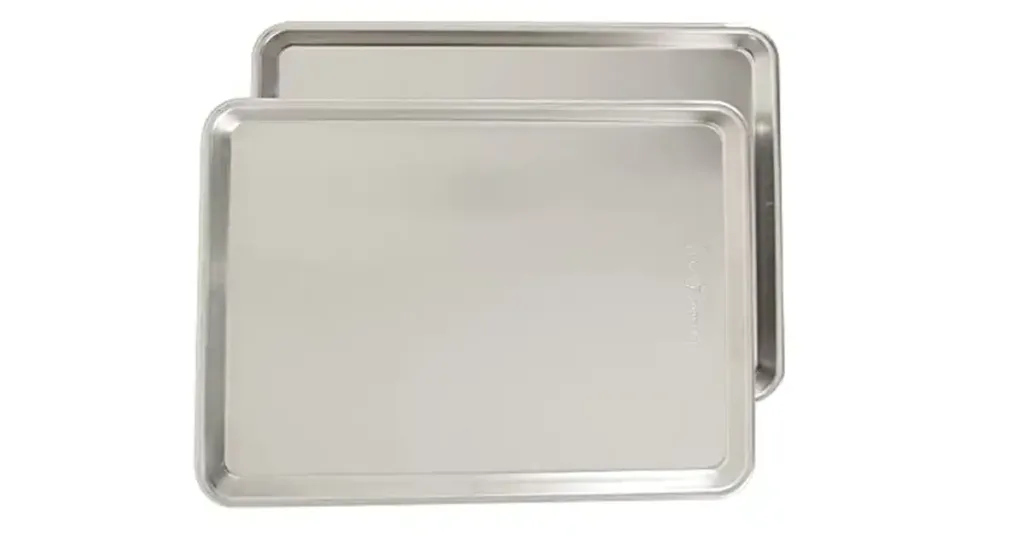
1. Nordic Ware Naturals Half Sheet (Best Half Sheet Pan)

This is the classic 18 × 13-inch half sheet. It is made in the USA from pure aluminum with an encapsulated steel rim that resists warping. This listing is a 2-pack.
Why We Like It
Bare aluminum heats quickly and evenly, so cookies brown on the bottom without burning. It doubles as a roasting pan for vegetables and sheet-pan dinners.
Flaws to Know
- Aluminum discolors over time and is not dishwasher safe
- Acidic foods can react with bare aluminum; line it with parchment
Buy it if: you need one do-everything sheet pan. Skip it if: you want dishwasher-safe bakeware.
2. USA Pan Nonstick 9 × 13-Inch Cake Pan (Best 9 × 13 Pan)
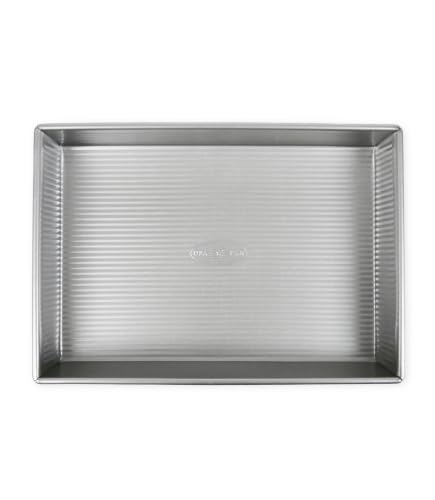
USA Pan’s 9 × 13 is made from heavy aluminized steel with a ridged, nonstick surface that helps cakes release cleanly.
Why We Like It
The heavy gauge resists warping, and straight sides give sheet cakes and brownies clean, square edges.
Flaws to Know
- Hand wash to protect the nonstick coating
- Metal utensils can scratch it
Buy it if: you bake sheet cakes, brownies and bars. Skip it if: you mostly make casseroles; glass or ceramic suits them better.
3. Wilton Aluminum 9 × 2-Inch Round Cake Pan (Best 9-Inch Round)

Wilton’s anodized aluminum round pan is 9 inches wide and a full 2 inches deep, the standard size for layer cakes. It is made without PFAS.
Why We Like It
Light aluminum bakes evenly with flat tops and pale, tender sides, which is what most layer cake recipes are written for.
Flaws to Know
- No nonstick coating; grease and line the base with parchment
- Buy two for a standard two-layer cake
Buy it if: you bake layer cakes. Skip it if: you want nonstick convenience.
4. USA Pan Nonstick 8-Inch Square Pan (Best 8 × 8 Pan)
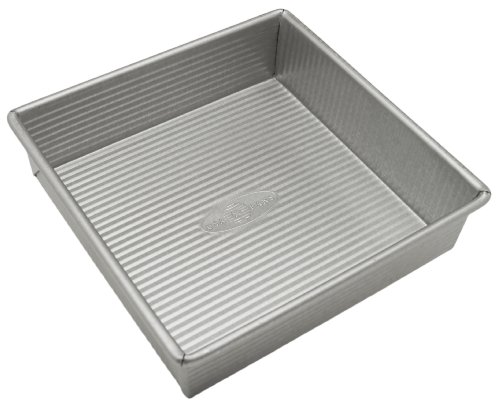
The 8 × 8-inch square is the go-to size for brownies, cornbread and small batches of bars. USA Pan’s version uses the same ridged nonstick steel as its 9 × 13.
Why We Like It
It releases brownies cleanly and is sturdy enough to last for years.
Flaws to Know
- Hand wash recommended
- Smaller than a 9 × 9; check which size your recipe calls for
Buy it if: you bake small batches of brownies or bars. Skip it if: your recipes call for 9 × 9.
5. GoodCook Nonstick 9 × 5-Inch Loaf Pan (Best Loaf Pan)
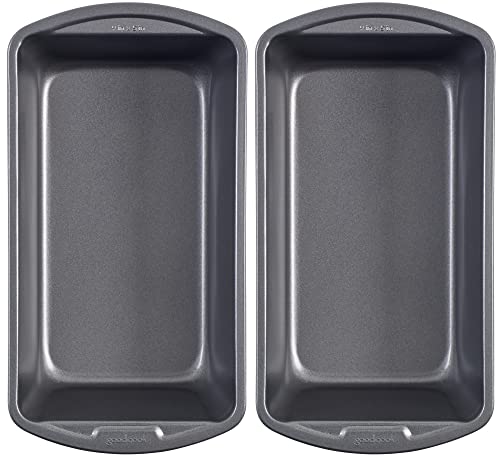
A 9 × 5 loaf pan is the standard size for quick breads and sandwich loaves. GoodCook’s heavy-duty steel pan is an inexpensive, nonstick option.
Why We Like It
It is affordable, releases banana bread and pound cake easily, and suits most US recipes.
Flaws to Know
- Dark nonstick browns faster; lower the oven by 25°F
- Coating wears with metal tools
Buy it if: you bake quick breads and want a budget pan. Skip it if: your recipe calls for an 8 × 4 pan.
6. Wilton Gold Nonstick 12-Cup Muffin Pan (Best Muffin Pan)
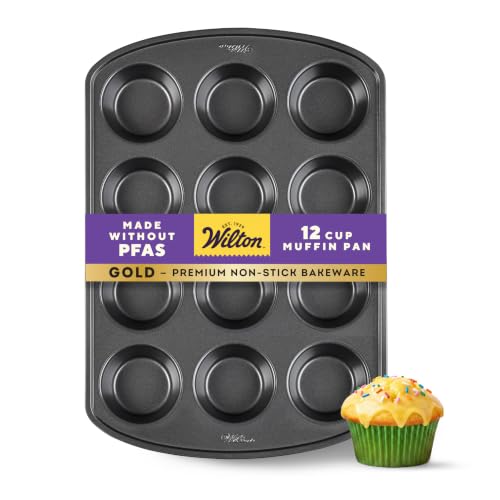
A standard 12-cup muffin pan is the easiest home for extra batter. Wilton’s gold nonstick version is made without PFAS.
Why We Like It
The light gold finish browns more gently than dark nonstick pans, so muffins and cupcakes bake evenly.
Flaws to Know
- Nonstick needs gentle cleaning
- Standard size only, not jumbo
Buy it if: you bake muffins or cupcakes. Skip it if: you want jumbo muffins.
7. Nordic Ware 9-Inch Springform Pan (Best Springform)

Nordic Ware’s 9-inch springform holds 10 cups. The removable sides make it the standard pan for cheesecakes and delicate tortes.
Why We Like It
The latch opens cleanly, so you can unmold cheesecake without flipping it.
Flaws to Know
- Wrap the base in foil before a water bath; springforms can seep
- Hand wash only
Buy it if: you make cheesecake or tortes. Skip it if: you rarely bake delicate cakes.
For smaller sizes, see our guides to 6-inch cake pans, mini springform pans and 9 × 11 baking pans.
UK, Canada and EU Buyer Notes
- UK and Ireland: pans are called tins. A 9 × 13 pan is a traybake tin (often 33 × 23 cm), a jelly roll pan is a Swiss roll tin, and a sheet pan is a baking tray.
- UK loaf tins: a 9 × 5 loaf pan is close to a 2 lb loaf tin, and an 8 × 4 is close to a 1 lb loaf tin.
- Canada: US sizes in inches are standard, but many packages also list centimeters.
- Germany, France, Italy and Spain: the standard European springform is 26 cm (about 10 inches), not 9 inches. Search for Springform (DE), moule à manqué or moule à charnière (FR), tortiera (IT) or molde desmontable (ES). Scale US recipes up by about 20% for a 26 cm pan.
- Oven size: many European ovens fit a 40 × 30 cm tray but not an 18 × 13-inch half sheet (46 × 33 cm). Measure your oven before ordering.
- Temperatures: 350°F is 175°C (160°C fan), and 325°F is 165°C (150°C fan).
More Baking Pan and Sheet Guides
This page is our starting point for baking pan and sheet questions. When you need a specific answer, these guides go deeper:
- Anodized Aluminum Baking Sheet: 7 Best (vs Natural)
- Copper Bakeware Set: 7 Best (Real vs Copper-Look)
- Rimmed Baking Sheet With Wire Rack: 8 Best Sets
- Bakeware Sets: 7 Best Nonstick and Ceramic Options
- 8 Best 6 Cup Muffin Pans (Standard & Jumbo)
- Baking Rings: Types, Sizes and 7 Best Picks
- Baking Sheet & Broiling Pan: 7 Broiler-Safe Picks
- Metal Cake Pan with Lid: 8 Best (Oven-Safe Lids Flagged)
- Half-Size Bundt Pans for Small Cakes: 7 Best 6-Cup Picks
- Toaster Oven Cookie Sheets: Sizes and 7 Best Small Pans
Frequently Asked Questions
What are the most common baking pan sizes?
The 9 × 13-inch rectangle, the 9-inch round, the 8 × 8 and 9 × 9-inch squares, the 9 × 5-inch loaf and the 18 × 13-inch half sheet cover most US recipes.
Can I use a 9 × 13 pan instead of two 9-inch round pans?
Yes. Two 9-inch rounds hold about 16 cups, and a 9 × 13 holds 14 to 16 cups. Bake a little longer and test the center with a toothpick.
Can I use an 8 × 8 pan instead of a 9 × 9?
Yes, but the batter will be about 25% deeper. Add 5 to 10 minutes to the bake time and check for doneness.
How do I measure a baking pan?
Measure across the top, from inside edge to inside edge, and measure depth from the bottom straight up. Pan sizes always refer to the inside top dimensions.
What size is a standard sheet pan?
A half sheet pan, 18 × 13 inches, is the standard home sheet pan. A full sheet, 26 × 18 inches, only fits commercial ovens.
Should I lower the temperature for a glass pan?
Yes. Lower the oven by 25°F when you swap a metal pan for glass, because glass holds heat and can overbake the edges.

Reviewed by Dominik Hunt, Assistant Editor & Cookware/Appliance Specialist. Dominik has cooked for more than ten years, has reviewed kitchenware for The Kitchenware Journal since 2022, and covers pots and pans, cookware materials, bakeware, roasting pans, kitchen organization and griddles. Our lab tests organizers in real kitchen cabinets, drawers and pantries for fit, capacity and durability. How we test.
Related guides: Baking Equipment List · 6-Inch Cake Pans · AirBake Baking Pans · Stainless Steel Baking Pans