
Last Updated on November 15, 2026
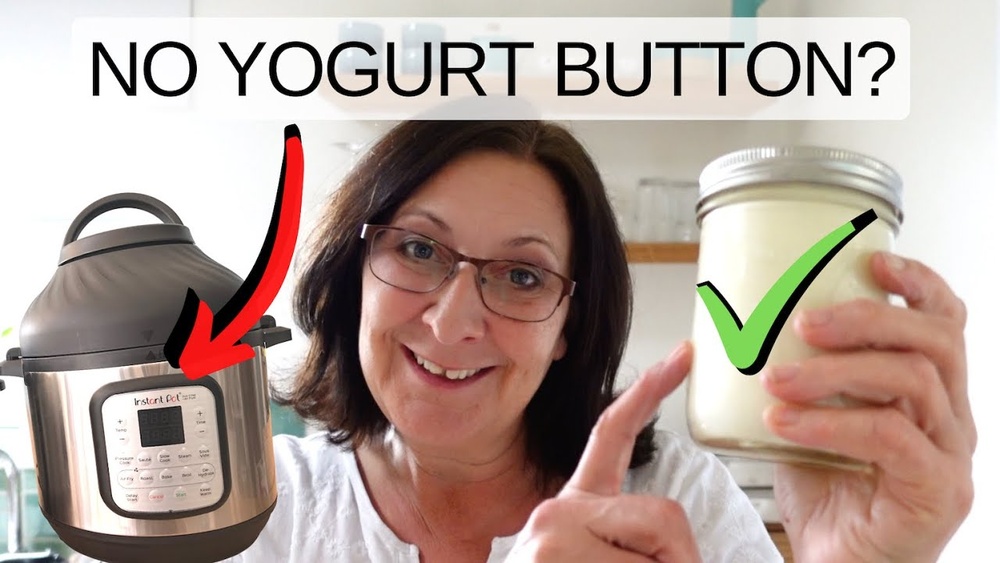
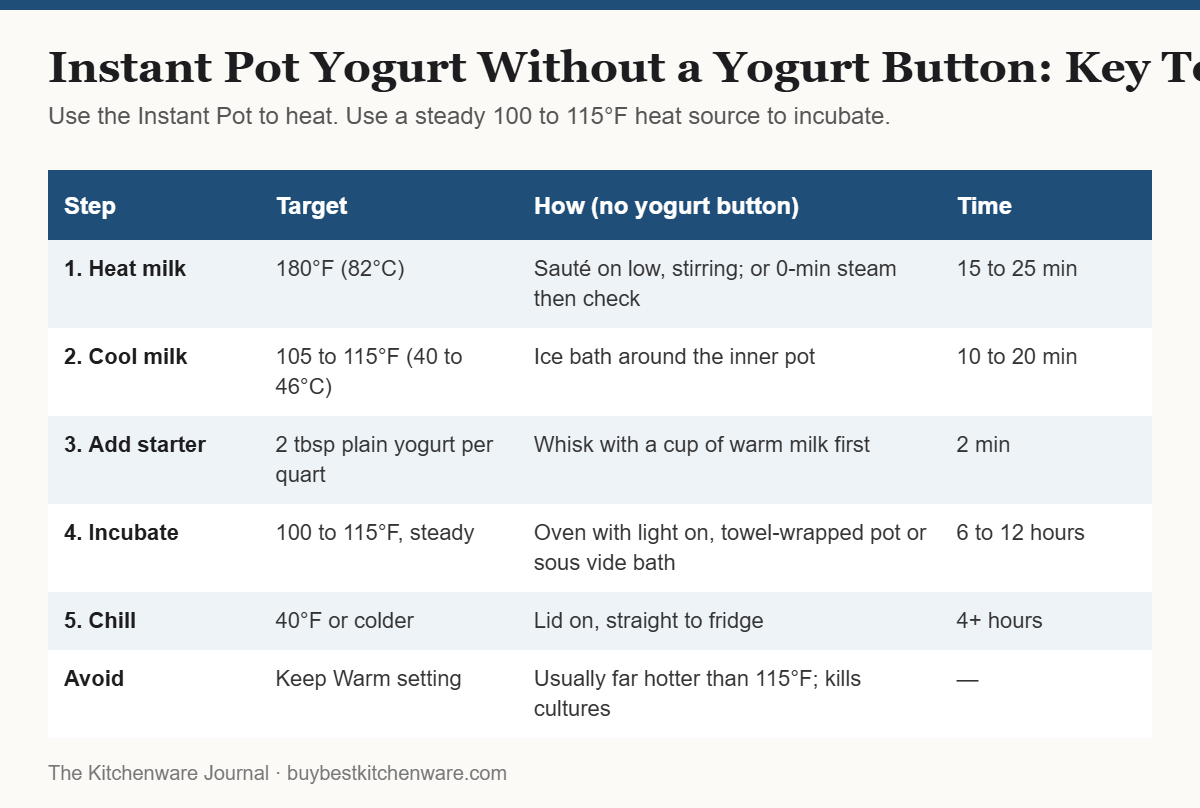
The 30-Second Answer: Here’s how to make yogurt in an Instant Pot without a yogurt button: use the pot to heat the milk, then give it steady warmth somewhere else.
- Heat milk in the inner pot on Sauté (low if available), stirring, to 180°F.
- Cool it in an ice bath to 105 to 115°F.
- Whisk in 2 tablespoons of plain yogurt with live cultures per quart of milk.
- Incubate at 100 to 115°F for 6 to 12 Hours: in an oven with only the light on, wrapped in towels in a cooler, or in a sous vide water bath.
- Chill at least 4 hours, then strain for Greek yogurt if you like.
Skip the Keep Warm setting. On most models it runs far hotter than 115°F and will kill the cultures.
Research note: Temperatures follow standard home yogurt-making practice and USDA food-safety guidance in the Kitchen Companion. Check your Instant Pot model’s manual for its settings.
Older and budget Instant Pot models often don’t have a Yogurt button, but they’re still great for yogurt. The pot is perfect for heating milk evenly. All you need is another way to hold the milk warm while the cultures work.
This guide shows the full process with exact temperatures, three reliable incubation methods and fixes for runny or sour yogurt.
In this guide
What You Need
- Instant Pot (any size) and its stainless inner pot
- Half a gallon of milk (whole milk makes the creamiest yogurt)
- 2 tablespoons plain yogurt with live active cultures per quart, or a freeze-dried starter
- An instant-read thermometer
- A whisk and a large bowl of ice water
- For incubating: an oven with a light, a cooler and towels, or a sous vide circulator
How to Make Yogurt in an Instant Pot Without a Yogurt Button
- Heat the milk. Pour milk into the inner pot and use Sauté on the lowest setting, stirring often so it doesn’t scorch, until it reaches 180°F.
- Hold briefly (optional). Keeping it near 180°F for a few minutes makes thicker yogurt.
- Cool. Lift out the inner pot and set it in an ice bath, stirring, until it drops to 105 to 115°F.
- Add starter. Mix the yogurt with a cup of the warm milk until smooth, then stir it back into the pot.
- Incubate using one of the methods below for 6 to 12 hours. Longer gives tangier yogurt.
- Chill. Cover and refrigerate at least 4 hours before eating.
Three Ways to Incubate
- Oven light: place the covered inner pot in the oven with only the light on. Most ovens settle around 100 to 110°F; check with a thermometer first.
- Towel and cooler: wrap the covered pot in thick towels and set it in a cooler, adding a jar of 120°F water to help hold the heat.
- Sous vide: set a water bath to 110°F and incubate the milk in sealed jars. The most precise option.
Troubleshooting
- Runny yogurt: incubate longer, use whole milk or hold the milk at 180°F for 10 minutes.
- Didn’t set: starter wasn’t live or incubation was too hot or too cool; check temperatures.
- Too sour: shorten incubation.
- Lumpy: whisk the starter smooth before adding.
For storing your finished batch, see what temperature yogurt should be stored at.
Tools That Make Instant Pot Yogurt Easier
A good thermometer is the one essential. The rest help with incubation, straining or upgrading to a model with a yogurt button.
1. ThermoPro TempSwift Instant-Read Thermometer (the essential tool)
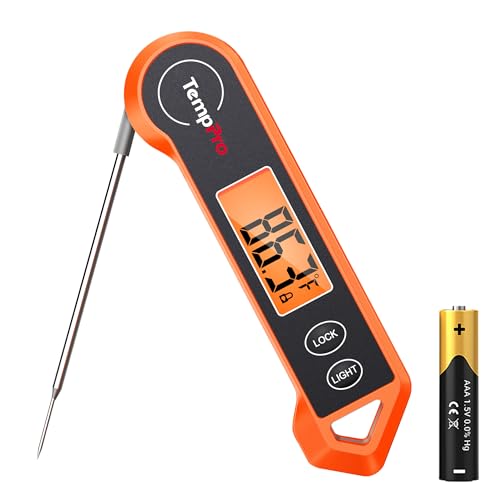
A fast digital thermometer with a backlit, auto-rotating display.
Why We Like It
Hitting 180°F and cooling to 110°F exactly is what makes yogurt set reliably.
Flaws to Know
- Not a leave-in probe
- Battery powered
Buy it if: you don’t own a kitchen thermometer. Skip it if: you already have an accurate one.
2. Greater Goods Sous Vide Cooker (precise incubation)

A simple 1100W sous vide circulator with manual controls.
Why We Like It
Holds a water bath at exactly 110°F for hours, the most reliable way to incubate without a yogurt button.
Flaws to Know
- Another gadget to store
- Jars need to be sealed
Buy it if: you want foolproof yogurt every time. Skip it if: your oven light method works.
3. Euro Cuisine GY60 Greek Yogurt Strainer (make it Greek)

A fine-mesh stainless strainer that fits inside a container.
Why We Like It
Strain your batch in the fridge for thick, Greek-style yogurt without cheesecloth.
Flaws to Know
- Holds about 2 quarts
- Mesh needs a good rinse
Buy it if: you like thick yogurt. Skip it if: you prefer regular yogurt.
4. Instant Pot Pro 6-Quart (upgrade with a yogurt button)
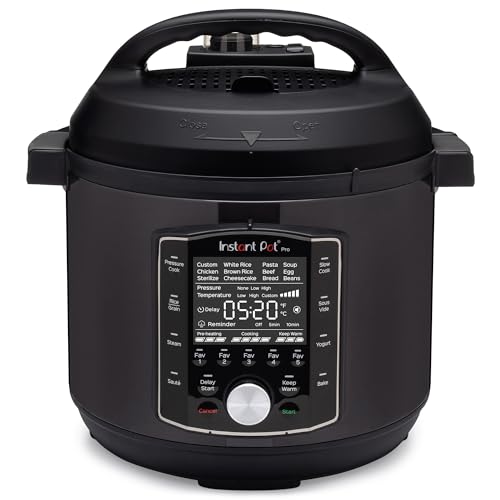
A 10-in-1 multicooker that includes a Yogurt setting.
Why We Like It
If you make yogurt often, a built-in Yogurt program handles incubation automatically.
Flaws to Know
- Another appliance purchase
- 6 quart takes counter space
Buy it if: you want hands-off yogurt. Skip it if: your current pot works fine.
5. Instant Pot Pro 8-Quart (big batches)
The larger Pro model, also with a Yogurt setting.
Why We Like It
Fits a full gallon of milk for big-batch yogurt.
Flaws to Know
- Bulky
- More than small households need
Buy it if: you make yogurt by the gallon. Skip it if: you cook for one or two.
For more appliances worth owning, see our small kitchen appliances list.
Notes for the UK, Canada and EU
In Celsius, heat milk to about 82°C, cool to 40 to 46°C and incubate at 38 to 46°C. Instant Pot models sold in the UK and EU run on 230V and use the same settings. Ovens with a light-only setting exist in many European kitchens; check the temperature with a thermometer.
Frequently Asked Questions
Can I make yogurt in an Instant Pot without a yogurt button?
Yes. Heat and cool the milk in the pot, then incubate in an oven with the light on, a towel-wrapped cooler or a sous vide bath.
Can I use the Keep Warm setting to incubate yogurt?
Usually not. Most Keep Warm settings run well above 115°F, which kills the cultures.
How much starter do I need?
About 2 tablespoons of plain yogurt with live cultures per quart of milk.
How long should yogurt incubate?
6 to 12 hours. Longer makes it tangier.
Why is my homemade yogurt runny?
Short incubation, low-fat milk or skipping the 180°F heat step. Strain it for thicker yogurt.

Reviewed by Darren Kelly, Kitchenware Reviewer & Food Prep Tools Specialist. Darren has cooked for more than ten years, has reviewed kitchenware for The Kitchenware Journal since 2022, and covers peelers and choppers, water dispensers, tableware, cleaning tools and waffle makers. Our lab tests glassware and tableware for true capacity, balance, thermal shock and dishwasher durability. How we test.
Related guides: Air sous vide · Dehydrator temperature guide · How to cook a steak in a plastic bag · Do dehydrators use a lot of electricity?