
Last Updated on November 15, 2026
The 30-Second Answer: here’s how to clean a kitchen sink drain pipe, starting with the easiest fix:
- Run very hot water with a squirt of dish soap for 2 minutes to loosen grease film.
- Pour ½ cup baking soda down the drain, then 1 cup white vinegar. Cover, wait 15 minutes, flush with hot water.
- Still slow? Block the other sink drain and plunge with a cup plunger.
- If that fails, put a bucket under the sink, unscrew the P-trap (the U-shaped pipe) and clean it out.
- For clogs past the trap, feed a drain snake into the wall pipe, then flush with hot water.
Skip chemical drain openers if you plan to remove the trap or plunge afterward; splashback can burn skin and eyes.
Research note: These steps follow standard plumbing practice and manufacturers’ instructions for drain tools. If your home has old metal pipes or you’re unsure about removing the trap, a plumber is the safer call.
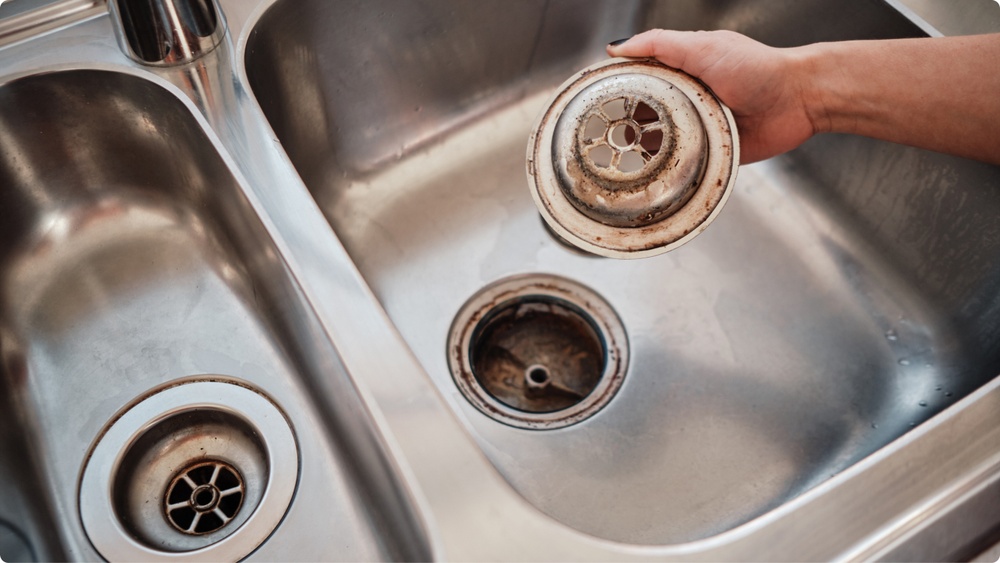
Kitchen drains clog differently from bathroom drains. It’s rarely hair. It’s grease, coffee grounds, rice and starch that stick together into a sludge inside the pipe, usually right in the P-trap under your sink.
The good news is that most of it can be cleared without calling anyone. The key is going in order: start gentle, and only move to the next step if the last one didn’t work. That saves time and protects your pipes.
In this guide
Signs Your Drain Pipe Needs Cleaning
- Water drains slowly or pools around the strainer
- A sour or rotten smell from the sink
- Gurgling when water drains
- Water backs up in the other sink when the dishwasher runs
- Bits of food bubble back up
What You’ll Need
- Baking soda and white vinegar
- Dish soap
- A cup (sink) plunger, not a toilet flange plunger
- A bucket and old towels
- Channel-lock pliers (for snug slip nuts)
- A small brush or old toothbrush
- A drain snake or auger for deeper clogs
- Rubber gloves
Level 1: Hot Water and Dish Soap
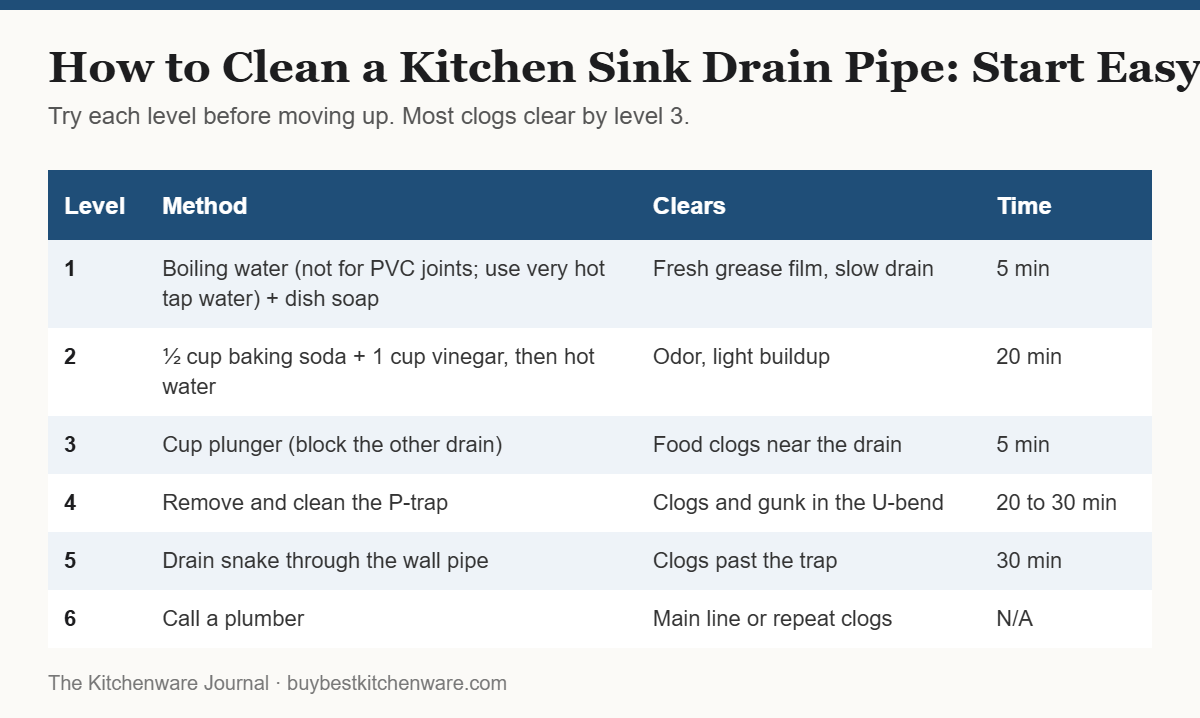
For a sink that’s just slow, run the hottest tap water you have with a good squirt of dish soap for 2 minutes. Soap breaks down grease film. If you have metal pipes, a kettle of boiling water works even better. With PVC pipes, avoid pouring boiling water directly, since repeated heat can soften joints; very hot tap water is enough.
Level 2: Baking Soda and Vinegar
- Remove standing water if there is any.
- Pour ½ cup baking soda into the drain.
- Follow with 1 cup white vinegar. It will fizz.
- Cover the drain with a stopper or wet rag and wait 15 to 30 minutes.
- Flush with hot water for a minute.
This is great for smells and light buildup. It won’t dissolve a real clog, so don’t repeat it five times; move to the next level.
Level 3: Plunge It
Fill the sink with a few inches of water so the plunger cup is covered. If you have a double sink, block the other drain with a wet rag or stopper. If a dishwasher drains into the sink, clamp the dishwasher drain hose or hold a rag tight over the other drain. Plunge hard with 10 to 15 fast strokes, then pull up sharply. Repeat a few times.
Level 4: How to Clean a Kitchen Sink Drain Pipe at the P-Trap
This is where most kitchen clogs live, and it’s easier than it looks. The U-shaped plumbing trap holds a little water to block sewer gas, which also makes it the spot where grease and food settle.
- Clear under the sink and put a bucket under the U-shaped trap. Lay towels down.
- Loosen the two slip nuts on either side of the trap. Most turn by hand; use pliers gently if they’re tight.
- Lower the trap slowly into the bucket. Water and gunk will pour out.
- Clean it out. Scoop the sludge into the trash (not back down the drain), then scrub the inside with a brush and hot soapy water.
- Check the pipe into the wall. Reach in with a gloved finger or a short snake for any buildup.
- Reassemble. Make sure the washers sit flat and hand-tighten the nuts, then a quarter-turn more.
- Test for leaks. Run water for a minute and feel the joints with a dry paper towel.
Level 5: Snake the Pipe
If the trap was clean but the drain is still slow, the clog is further down. With the trap off, feed a drain snake into the pipe in the wall. Crank it as you push. When you feel resistance, keep turning to break it up or hook it, then pull the snake back out. Reattach the trap and flush with hot water for several minutes.
Tools That Make Drain Cleaning Easier
A few cheap tools turn a plumber call into a 20-minute job, and one keeps the drain from clogging again.
1. Luigi’s Sink Plunger (best sink plunger)

A compact, commercial-style cup plunger sized for kitchen and bathroom sinks.
Why We Like It
Toilet plungers don’t seal on a flat sink. This one does, which is what actually moves a clog.
Flaws to Know
- Too small for toilets
- Rubber is stiff when new
Buy it if: you don’t own a sink-sized plunger. Skip it if: you already have a flat cup plunger.
2. 25-Foot Drain Auger With Drill Adapter (best for deep clogs)
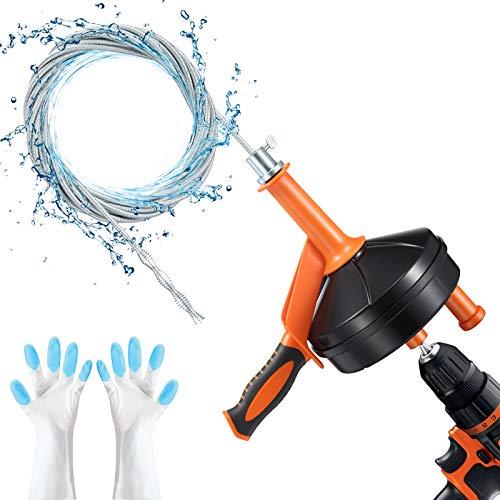
A 25-foot flexible plumbing snake that can be cranked by hand or attached to a power drill.
Why We Like It
Reaches clogs past the trap that plunging can’t touch. The drill adapter saves your wrist on long runs.
Flaws to Know
- Messy to pull back out
- Use slow drill speed to avoid kinks
Buy it if: clogs keep coming back after cleaning the trap. Skip it if: your clogs are always at the drain opening.
3. Drain Snake Clog Remover Set (9-Pack) (cheap quick fix)
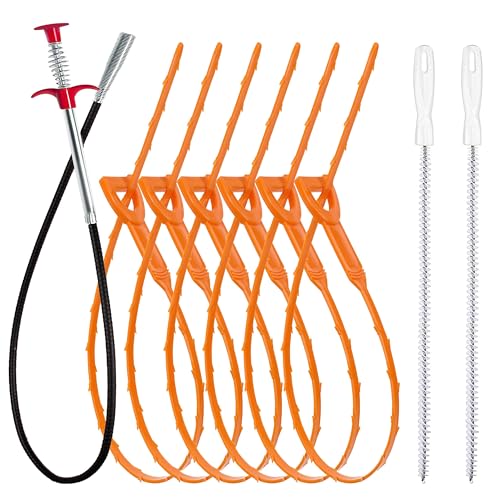
A set of plastic barbed strips and a 4-claw grabber for pulling gunk from near the drain opening.
Why We Like It
Good for grabbing food scraps and sludge near the strainer without taking anything apart. Also useful for bathroom drains.
Flaws to Know
- Only reaches a short way
- Plastic strips are single-use
Buy it if: you want something quick for surface clogs. Skip it if: your clog is past the P-trap.
4. Green Gobbler Enzyme Drain Cleaner (best for prevention)

An enzyme-based drain treatment that breaks down fats, oils and grease, safe for pipes and septic systems.
Why We Like It
Unlike harsh chemical openers, enzymes work slowly on the grease layer that causes most kitchen clogs. Used monthly, it keeps drains flowing.
Flaws to Know
- Not a fast fix for a full clog
- Works best overnight
Buy it if: your kitchen drain gets slow every few months. Skip it if: you need a clog gone right now.
5. VARNAHOME Stainless Sink Basket Strainer (stop clogs at the source)
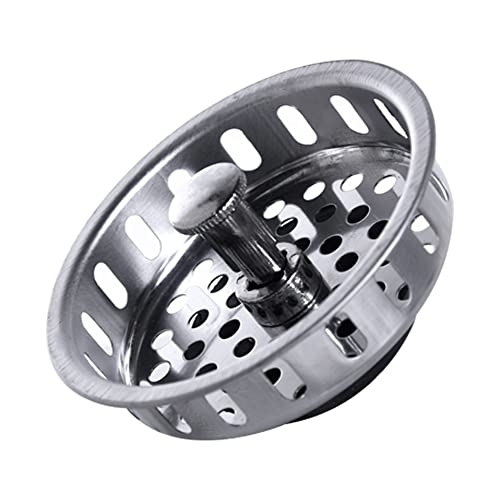
A stainless basket strainer with a stopper for standard 3½-inch US kitchen drains.
Why We Like It
Most kitchen clogs start with food that slips past a worn-out strainer. A good basket catches rice, grounds and scraps before they reach the trap.
Flaws to Know
- Fits standard US drains only
- Check your drain size
Buy it if: your current strainer is missing, loose or rusted. Skip it if: you have a garbage disposal opening.
How to Keep Your Kitchen Drain Clear
- Never pour grease or oil down the drain. Let it cool in a can and toss it.
- Scrape plates into the trash or compost before rinsing.
- Keep a strainer in the drain and empty it daily.
- Run hot water for 30 seconds after washing greasy dishes.
- Do a baking soda and vinegar flush or enzyme treatment once a month.
Your dishwasher drains into the same pipe, so a clogged dishwasher filter can make the sink smell too. Our guide on how to clean a dishwasher filter takes 10 minutes. Both tasks are on the monthly list in our kitchen cleaning checklist.
When to Call a Plumber
Call a pro if multiple drains in the house are slow, water backs up into other fixtures, you smell sewer gas, the trap or pipes are cracked or corroded, or a snake doesn’t clear it. Those point to a main line clog or a venting problem.
Notes for the UK, Canada and EU
In the UK the P-trap is usually called the U-bend, and many UK and European sinks use a bottle trap instead, which unscrews from the bottom for easy cleaning. Bicarbonate of soda is the same as baking soda. Canadian plumbing matches US sizes, so the strainer above fits standard Canadian sinks. Sink strainers in Europe can be different sizes, so measure before buying.
Frequently Asked Questions
What is the best way to clean a kitchen sink drain pipe?
Start with hot water and dish soap, then baking soda and vinegar. If it’s still slow, plunge. If that fails, remove and clean the P-trap.
Can I use baking soda and vinegar to unclog a kitchen sink?
It helps with odors and light buildup but rarely clears a real clog. Use a plunger or clean the trap for that.
Is it safe to pour boiling water down the drain?
It’s fine for metal pipes. For PVC, use very hot tap water instead, since boiling water can soften joints over time.
How do I get rid of a smelly kitchen sink drain?
Flush with baking soda and vinegar, then hot water. If the smell stays, clean the P-trap and the dishwasher filter.
Are chemical drain cleaners safe for pipes?
They can damage older pipes and are dangerous to handle. Enzyme cleaners are a gentler option for maintenance.
How often should I clean my kitchen sink drain?
A monthly flush and a yearly P-trap clean keep most drains clear.

Reviewed by Darren Kelly, Kitchenware Reviewer & Food Prep Tools Specialist. Darren has cooked for more than ten years, has reviewed kitchenware for The Kitchenware Journal since 2022, and covers peelers and choppers, water dispensers, tableware, cleaning tools and waffle makers. Our lab tests glassware and tableware for true capacity, balance, thermal shock and dishwasher durability. How we test.
Related guides: How to clean grease from a stove · How to clean a microwave · Dish soap vs hand soap · Best dish sponges