
Last Updated on November 15, 2026
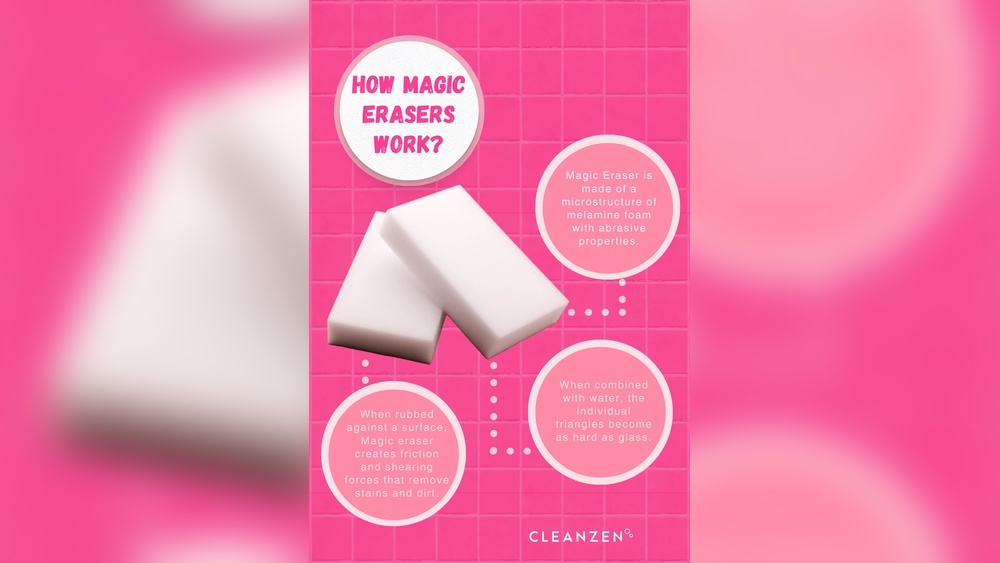
The 30-Second Answer: what are Magic Erasers made of? Melamine foam, a hard, open-cell foam made from melamine-formaldehyde resin. Under a microscope the foam is a web of tiny, stiff strands, so it works like extremely fine sandpaper: it sands stains off the surface instead of dissolving them.
- Main material: melamine foam (melamine-formaldehyde resin).
- How it cleans: micro-abrasion, like ultra-fine sandpaper.
- Why it shrinks: the foam wears away as it scrubs; that’s normal.
- Use it on: scuffs, crayon, soap scum, grimy plastic and grout.
- Keep it off: glossy paint, car paint, nonstick pans, polished wood and skin.
Because it’s abrasive, always test a hidden spot first and use light pressure.
A note on this guide: Reviewing a product properly is not easy, and real testing takes time. For now, this guide is research-based, built on manufacturer specs, product details and verified owner feedback. Our team is testing these products in The Kitchenware Journal lab, and we will update this guide with our hands-on results and photos very soon.
If you’ve ever wondered what Magic Erasers are made of, the answer explains both why they work so well and why they sometimes leave a dull patch behind. There’s no special chemical inside the original white sponge. It’s the foam itself doing the work.
Our angle is practical: once you know a Magic Eraser is basically very fine sandpaper, it’s easy to tell where it’s safe and where it will do damage. That’s the part most articles skip, so we built a surface-by-surface chart below.
In this guide
What Are Magic Erasers Made Of?
The white block is melamine foam. Manufacturers make it from melamine-formaldehyde resin that’s foamed and cured into a rigid, open-cell structure. Industry has used the same foam for decades as soundproofing and insulation; someone just noticed it scrubbed marks off walls. You can read more about the material in the melamine foam entry on Wikipedia.
Some branded versions add a scrubbing layer or a built-in cleaner, but the original Mr. Clean Magic Eraser is just the foam. You only add water.
How Melamine Foam Cleans
- Tiny, hard strands: once cured, the foam is surprisingly hard. Its microscopic strands act like grit on sandpaper.
- Water lets it glide: wetting the foam lets it reach into fine textures and carry dirt away.
- It wears down as it works: the crumbs you see are worn-off foam, which is why it shrinks with use.
- No soap needed: for the plain white version, water is enough.
Where You Can and Can’t Use a Magic Eraser
| Surface | Safe? | Notes |
|---|---|---|
| Flat or matte painted walls | Usually | Test first; it can leave a shiny patch |
| Glossy or semi-gloss paint | Use caution | Can dull the sheen |
| Bathtubs, sinks, tile | Yes | Great on soap scum |
| Grout | Yes | Wears the eraser fast |
| Plastic and laminate counters | Usually | Avoid high-gloss laminate |
| Sneaker soles and rubber | Yes | Popular for white soles |
| Brushed stainless steel | Use caution | Can scratch the grain; rub with the grain or use a stainless cleaner |
| Nonstick pans | No | Strips the coating |
| Car paint, polished wood, acrylic | No | Dulls or scratches the finish |
| Skin | No | It’s abrasive; never use it on people or pets |
For stainless appliances, a dedicated cleaner is safer; see how to get stains off stainless steel. For glass cooktops, our guide to cleaning a black stove top covers safer options.
Is Melamine Foam Safe?
Used as directed, Magic Erasers are considered safe for household cleaning. The resin is fully cured, so it isn’t the same as handling raw chemicals. A few common-sense rules still apply:
- Keep them away from small children and pets, who may chew the foam.
- Don’t use them on skin, even to remove marker or paint.
- Wear gloves if you have sensitive hands or use them for a long time.
- Rinse surfaces that touch food after scrubbing.
Magic Erasers and Alternatives We Recommend
1. Mr. Clean Original Magic Eraser Cleaning Pads (The Original)
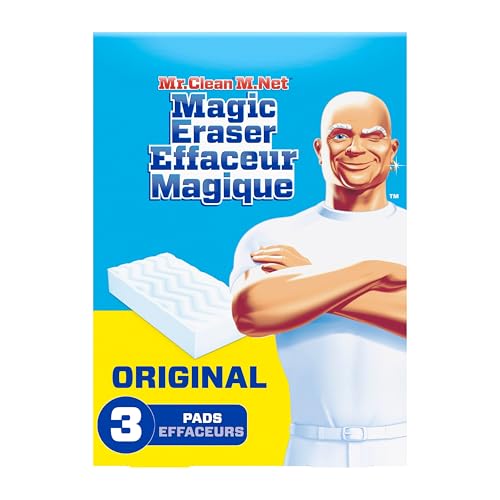
The brand-name white melamine eraser.
Why We Like It
Consistent foam density means it lasts longer than many bulk generics and cleans with just water.
Flaws to Know
- Costs more per pad than bulk packs
Buy it if: you want the brand you know. Skip it if: you go through dozens a month.
Key Specs
- Material: melamine foam
2. Mr. Clean Magic Eraser Pads, 8 Count (Best Multi-Pack)

A larger pack of Mr. Clean erasers.
Why We Like It
Keep one in the kitchen and one in the bathroom without running out.
Flaws to Know
- Pricier per pad than generic bulk
Buy it if: you use them every week. Skip it if: you clean occasionally.
Key Specs
- Count: 8
3. Heavy Duty Melamine Sponges, 100 Pack (Best Bulk Value)
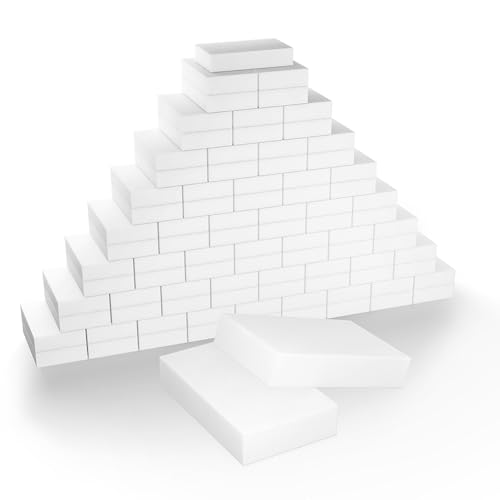
Generic melamine foam pads in a big pack.
Why We Like It
Same basic material at a fraction of the price, good for grout, scuffs and messy jobs where you toss the pad after.
Flaws to Know
- Density varies; may crumble faster
Buy it if: you clean grout or garages. Skip it if: you want the longest-lasting pad.
Key Specs
- Count: 100
- Material: melamine foam
4. SmilePowo Melamine Eraser Sponges, 50 Pack (Best Small Bulk Pack)

A smaller bulk pack of melamine pads.
Why We Like It
A middle ground between name-brand and a 100-pack.
Flaws to Know
- Generic quality
Buy it if: you want a cheap stash. Skip it if: you only need a few.
Key Specs
- Count: 50
5. Scrub Daddy Colors Kitchen Sponges (Best Non-Abrasive Alternative)

Textured polymer sponges that firm up in cold water and soften in warm.
Why We Like It
For dishes and surfaces a Magic Eraser could scratch, this scrubs without sanding.
Flaws to Know
- Not as strong on scuffs
Buy it if: you need a scratch-free scrubber. Skip it if: you’re removing wall scuffs.
Key Specs
- Material: polymer foam
6. Bar Keepers Friend Cookware Cleanser and Polish (Best for Stainless and Cookware)

A mild powdered cleanser for stainless steel, copper and enamel.
Why We Like It
It removes heat tint and stains from pans and sinks where a melamine pad might dull the finish.
Flaws to Know
- Not for nonstick coatings
Buy it if: you clean stainless pans and sinks. Skip it if: you only need wall-scuff removal.
Key Specs
- Size: 12 oz
How to Use a Magic Eraser Without Damage
- Wet the eraser and squeeze out the extra water. Don’t wring it; it tears.
- Test a small hidden spot first.
- Rub gently in small circles. Let the foam do the work.
- Wipe the area with a damp cloth to remove foam crumbs.
- Rinse the eraser and let it air-dry for reuse.
Working through a bigger clean? Our kitchen cleaning checklist shows which jobs to do daily, weekly and monthly, and where a Magic Eraser fits in. For everyday dishes, a regular sponge is still the better tool; see our picks for the best dish sponge.
Magic Eraser Notes for the UK, Canada and the EU
UK: Mr. Clean is sold as Flash in the UK, and the same melamine pads are often labelled “magic sponge” or “Flash Magic Eraser.”
Canada: Mr. Clean Magic Eraser is sold under the same name, with bilingual packaging.
EU: look for “Melaminschwamm” (Germany) or “éponge magique” (France). It’s the same melamine foam, so the same surface rules apply.
Frequently Asked Questions
What are Magic Erasers made of?
Melamine foam, a hard open-cell foam made from melamine-formaldehyde resin.
Do Magic Erasers have chemicals in them?
The original white eraser is just melamine foam and works with water. Some versions add a cleaning solution, so check the package.
Why do Magic Erasers disappear as you use them?
They’re abrasive, so the foam wears away a little with each scrub, much like sandpaper.
Can I use a Magic Eraser on stainless steel?
Use caution. It can scratch or dull brushed stainless. A stainless cleaner or Bar Keepers Friend is safer.
Are Magic Erasers safe on skin?
No. They’re abrasive and can irritate or scrape skin.

Reviewed by Dominik Hunt, Assistant Editor & Cookware/Appliance Specialist. Dominik has cooked for more than ten years, has reviewed kitchenware for The Kitchenware Journal since 2022, and covers pots and pans, cookware materials, bakeware, roasting pans, kitchen organization and griddles. Our lab tests organizers in real kitchen cabinets, drawers and pantries for fit, capacity and durability. How we test.
Related guides: How to Clean a Microwave · How to Clean Black Stainless Steel · Dish Soap vs Hand Soap · Vinegar on Stainless Steel