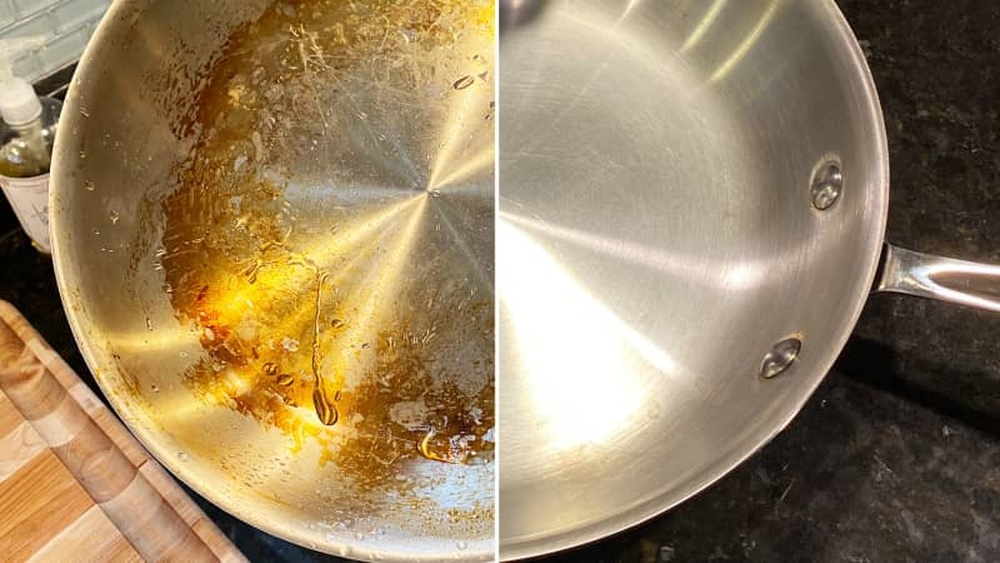

Last Updated on November 23, 2026
The 30-Second Answer: here’s how to get stains off stainless steel: start mild and work up. Wipe water spots and heat tint with white vinegar, lift grease with hot soapy water, soften burnt-on food with a soak and a baking soda paste, and use Bar Keepers Friend for rust spots and anything stubborn. Always rub with the grain, then rinse and dry.
- Water spots and rainbow tint: white vinegar.
- Grease: hot water and dish soap.
- Burnt-on food: soak, then baking soda paste.
- Rust and stubborn stains: Bar Keepers Friend.
- Never: steel wool, bleach or chlorine cleaners.
Drying with a microfiber cloth right after washing prevents most new stains.
A note on this guide: Reviewing a product properly is not easy, and real testing takes time. For now, this guide is research-based, built on manufacturer specs, product details and verified owner feedback. Our team is testing these products in The Kitchenware Journal lab, and we will update this guide with our hands-on results and photos very soon.
Stainless steel is tough, but it still shows every water spot, fingerprint and scorch mark. This guide explains how to get stains off stainless steel for pans, sinks and appliances, using the gentlest method that works for each type of stain.
Our angle is identify the stain first. A rainbow haze, white spots and orange specks all need different fixes, and using the wrong one wastes time or scratches the finish. The chart below matches each stain to its fix.
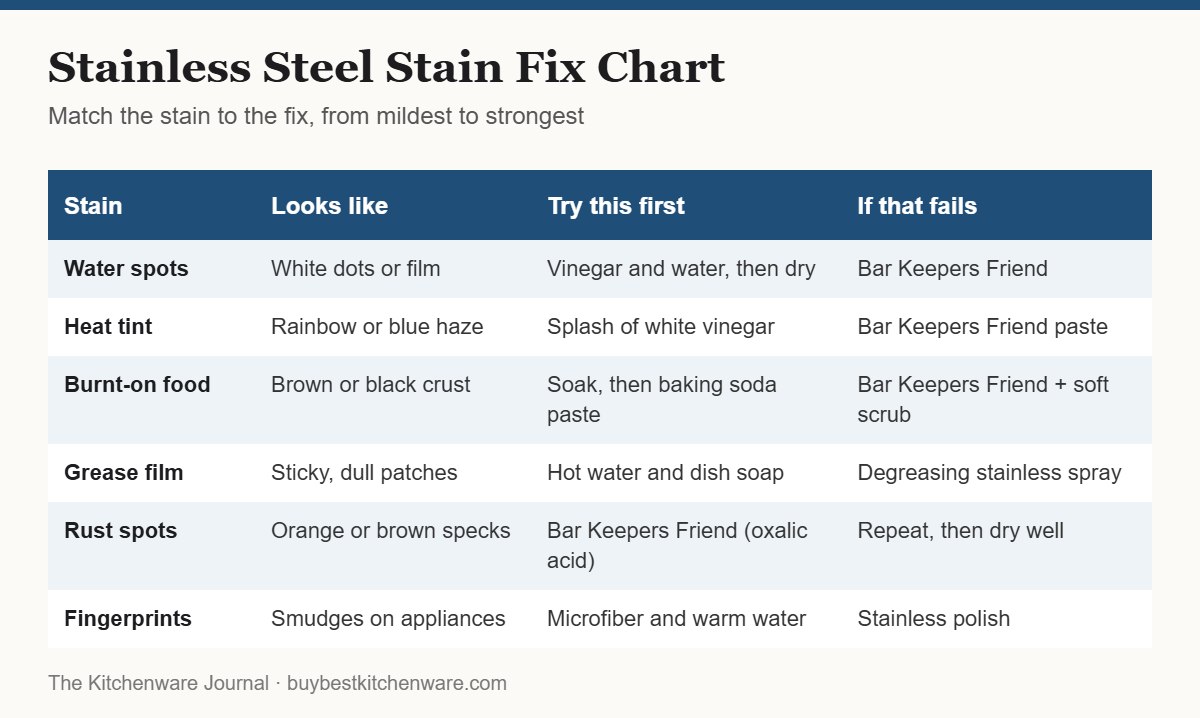
In this guide
Why Stainless Steel Stains
Stainless steel resists rust because of a thin, invisible chromium oxide layer on its surface (the Wikipedia entry on stainless steel explains the chemistry). Stains are usually something sitting on top of that layer: minerals from hard water, burnt fats, or iron particles from steel wool or tools. Heat can also tint the oxide layer, which is where the rainbow colors come from.
How to Get Stains Off Stainless Steel: Method by Stain
Water spots and white film
- Mix equal parts white vinegar and water.
- Wipe the spots and leave for a minute, no longer.
- Rinse with clean water and dry with a microfiber cloth.
Rainbow heat tint on pans
- Pour a splash of white vinegar into the cooled pan.
- Swirl or wipe it around with a soft sponge.
- Rinse and dry. For stubborn tint, use a Bar Keepers Friend paste.
Burnt-on food
- Fill the pan with hot water and a drop of dish soap; soak 15 to 30 minutes.
- For tough spots, simmer the water for a few minutes, then let it cool.
- Make a paste of baking soda and a little water, spread it on and rub with a non-scratch sponge.
- Rinse, then finish with Bar Keepers Friend if any marks remain.
Rust spots
- Wet the area and sprinkle on Bar Keepers Friend.
- Rub gently with the grain using a soft sponge.
- Rinse thoroughly and dry right away.
- If rust keeps coming back, check for steel wool residue or a scratched area that traps moisture.
Grease and fingerprints on appliances
Use warm water with a drop of dish soap, wipe with the grain, then dry. A stainless polish afterward slows down new fingerprints. For a vinegar-based method, see our guide to vinegar on stainless steel; for black stainless, which has a coating, follow how to clean black stainless steel instead.
Mistakes That Cause More Stains
- Steel wool: scratches and leaves iron bits that rust.
- Bleach and chlorine cleaners: can pit and stain the surface.
- Scrubbing against the grain: leaves visible swirl marks.
- Air-drying: leaves new water spots, especially with hard water.
- Salting cold water in pans: undissolved salt can cause small pits; add salt once the water boils.
What to Keep Under the Sink
1. Bar Keepers Friend Powder Cleanser, 12 oz (2-Pack) (Best for Rust and Tough Stains)
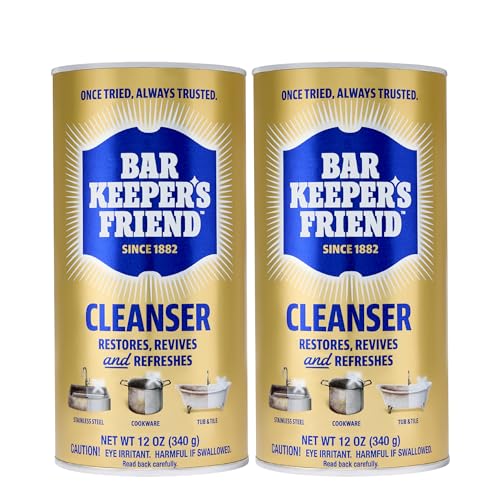
The classic powdered cleanser with oxalic acid.
Why We Like It
It removes rust spots, heat tint and baked-on residue that vinegar and soap can’t touch.
Flaws to Know
- Not for nonstick or natural stone
- Rinse thoroughly
Buy it if: you have stainless pans or a sink. Skip it if: you only clean appliance fronts.
Key Specs
- Size: 12 oz x 2
- Type: powder
2. Bar Keepers Friend Soft Cleanser Liquid, 13 oz (2-Pack) (Best Gentle Option)
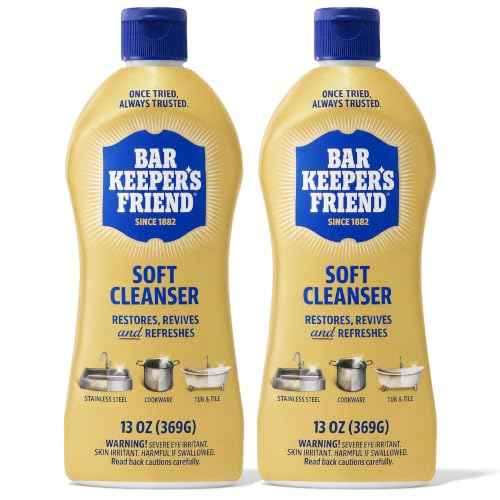
A creamy liquid version of Bar Keepers Friend.
Why We Like It
Easier to spread on vertical surfaces like appliance doors and backsplashes, and a little gentler than the powder.
Flaws to Know
- Slightly less bite on heavy rust
Buy it if: you clean appliances and sinks. Skip it if: you need maximum scrubbing power.
Key Specs
- Size: 13 oz x 2
- Type: cream
3. Scotch-Brite Zero Scratch Scrub Sponges, 6-Pack (Best Scrubber)

Scrub sponges labeled safe for non-scratch cleaning.
Why We Like It
Enough grip for burnt-on food without the scratches steel wool leaves.
Flaws to Know
- Wear out faster than heavy-duty pads
Buy it if: you scrub stainless pans. Skip it if: you only polish appliances.
Key Specs
- Count: 6
4. HOMEXCEL Microfiber Cleaning Cloths, 12-Pack (Best for Drying)
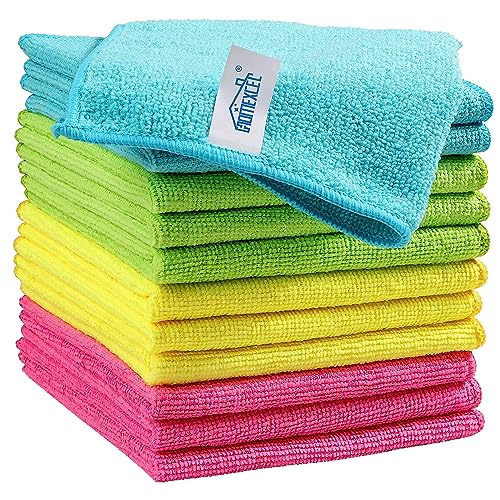
Reusable, lint-free microfiber cloths.
Why We Like It
Drying right after cleaning is what stops new water spots; microfiber does it without streaks.
Flaws to Know
- Skip fabric softener
Buy it if: you want streak-free steel. Skip it if: you already have microfiber.
Key Specs
- Count: 12
5. Weiman Stainless Steel Cleaner and Polish Spray (Best Appliance Polish)
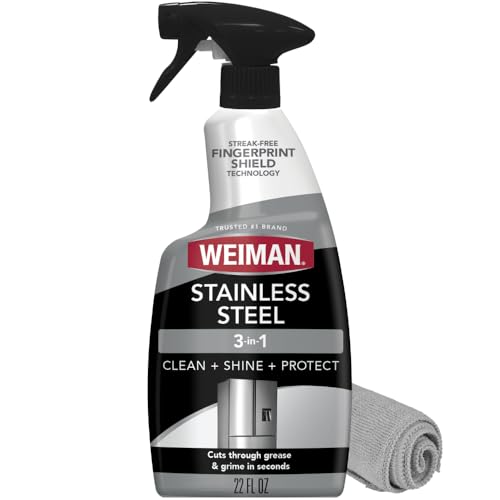
A stainless spray that cleans and leaves an anti-fingerprint finish.
Why We Like It
A final pass keeps fridge and dishwasher doors looking new between deep cleans.
Flaws to Know
- Scented
Buy it if: you have stainless appliances. Skip it if: you prefer fragrance-free.
Key Specs
- Type: spray
Not sure which product suits your appliances? Compare options in our guide to the best stainless steel cleaner. For a full cleaning routine, our kitchen cleaning checklist shows how often to tackle each surface.
Stainless Steel Care Notes for the UK, Canada and the EU
UK: Bar Keepers Friend is sold in the UK too. Hard water in much of England makes water spots more common, so drying after washing matters even more.
Canada: the same products and methods apply; Bar Keepers Friend is widely available.
EU: look for “Edelstahlreiniger” (Germany) or “nettoyant inox” (France). Oxalic acid cleaners are sold under several local brands.
More Stainless Steel and Countertop Care Guides
This page is our starting point for stainless steel and countertop care questions. When you need a specific answer, these guides go deeper:
- How to Remove Stains From Granite: 6 Stains, 6 Fixes
- How to Disinfect Stainless Steel
- How to Strip and Reseal Granite Countertops in 7 Steps
- Butcher Block Countertops With White Cabinets: 5 Looks
Frequently Asked Questions
What is the best way to get stains off stainless steel?
Match the method to the stain: vinegar for water spots and tint, soap for grease, baking soda for burnt-on food, and Bar Keepers Friend for rust and stubborn marks.
Can I use baking soda on stainless steel?
Yes, as a gentle paste with a soft sponge. Rub with the grain and rinse well.
How do I remove rainbow stains from stainless steel pans?
Wipe the cooled pan with white vinegar, then rinse and dry.
Why does my stainless steel have rust spots?
Usually from steel wool residue, iron particles from other tools, or water left sitting on the surface.
Will Bar Keepers Friend scratch stainless steel?
Used gently with a soft sponge and rinsed off, it shouldn’t. Avoid scrubbing hard against the grain.

Reviewed by Darren Kelly, Kitchenware Reviewer & Food Prep Tools Specialist. Darren has cooked for more than ten years, has reviewed kitchenware for The Kitchenware Journal since 2022, and covers peelers and choppers, water dispensers, tableware, cleaning tools and waffle makers. Our lab tests glassware and tableware for true capacity, balance, thermal shock and dishwasher durability. How we test.
Related guides: What Are Magic Erasers Made Of? · How to Clean a Burnt Saucepan Bottom · How to Clean a Dishwasher Filter · Dish Soap vs Hand Soap