
Last Updated on November 8, 2026
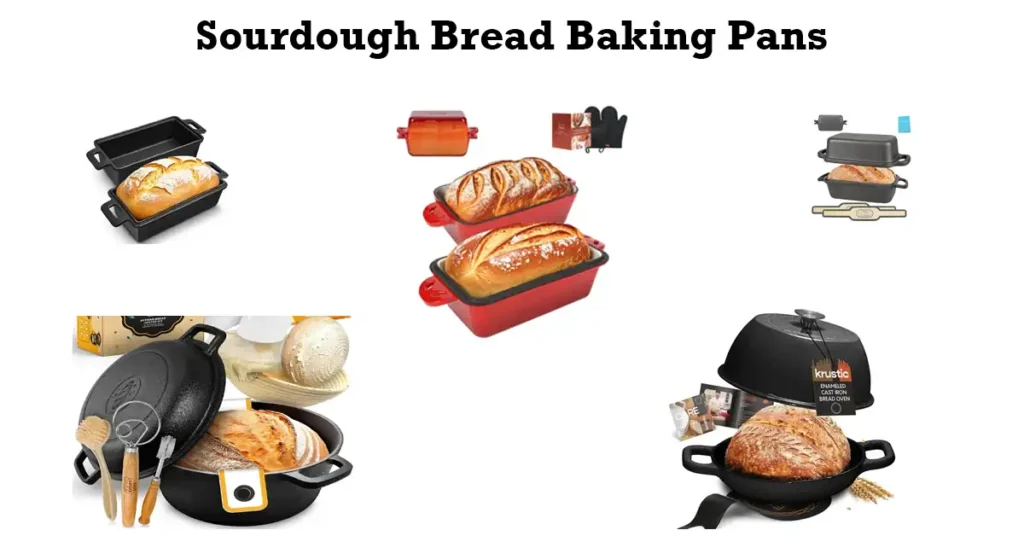
The 30-Second Answer: the best sourdough bread baking pan for most home bakers is a preheated, lidded cast iron pan sized to your dough. Our picks:
- Best overall: Challenger Bread Pan, for big boules and batards
- Best value: Lodge LCC3 Combo Cooker
- Best for batards on a lighter pan: Le Creuset Oval Bread Oven
- Best everyday Dutch oven: Lodge Essential Enamel, 6 quart
- Best for sandwich loaves: AILITOR lidded loaf pan or USA Pan Pullman
How we tested: We baked the same 78% hydration sourdough in all eight pans in our lab, tracking preheat with an infrared pyrometer and scoring oven spring, bottom scorching and lid weight. See our full test results.
A sourdough bread baking pan does one job that your oven cannot: it traps the steam coming off the dough, so the loaf can spring up before the crust sets. The right pan gives you a taller rise, a blistered crust and an open crumb. The wrong size gives you a flat, pale loaf.
We baked in all eight pans in our lab, covering every style home bakers use: bread ovens, Dutch ovens, combo cookers, lidded loaf pans and a Pullman pan.
We then checked our results against published testing from America’s Test Kitchen and owner feedback. For the rest of your kit, see our baking equipment list.
In this guide
Our Picks at a Glance
| Pan | Best for | Type | Shape | Price tier |
|---|---|---|---|---|
| Challenger Bread Pan | Serious bakers | Bread oven, bare iron | Oval | $$$$ |
| Lodge LCC3 Combo Cooker | Best value | Combo cooker, bare iron | Round | $ |
| Le Creuset Oval Bread Oven | Light, oval loaves | Bread oven, enamel | Oval | $$$$ |
| Lodge Essential Enamel 6 Qt | Bread plus dinners | Dutch oven, enamel | Round | $$ |
| Krustic 5.5 Qt Oval | Mid-price batards | Dutch oven, enamel | Oval | $$$ |
| CRUSTLOVE 5 Qt Kit | Beginners | Dutch oven kit, bare iron | Round | $ |
| AILITOR Lidded Loaf Pan | Sliceable artisan loaves | Loaf pan, enamel | Loaf | $ |
| USA Pan Pullman | Sandwich sourdough | Loaf pan, coated steel | Square loaf | $ |
Every sourdough bread baking pan here is sold on Amazon. Price tiers: $ under $70, $$ $70 to $120, $$$ $120 to $200, $$$$ over $250. Prices change often, so check the current price on Amazon.
Which Sourdough Bread Baking Pan Fits the Bread You Bake?
| You mostly bake… | Choose | Why |
|---|---|---|
| Round boules | Lodge Combo Cooker or Lodge Enamel 6 Qt | Round pots match the shape and cost the least |
| Long batards | Challenger or Le Creuset Oval | Oval bases give the loaf room to stretch |
| Both shapes, often | Challenger Bread Pan | Only large oval pans handle big boules and batards |
| Sandwich slices with a crisp crust | AILITOR lidded loaf pan | Loaf shape plus trapped steam |
| Soft sandwich bread | USA Pan Pullman | Square slices and a tender crust |
| Your very first loaf | CRUSTLOVE kit | Pot, banneton, sling and lame in one box |
How We Tested Sourdough Baking Pans in Our Lab
To see how each pan handles real sourdough, we mixed the same 78% hydration country loaf for every test: 80% bread flour, 20% whole wheat and 2% fine sea salt. We scaled it to 850 g for standard pans and 1 kg for the large oval ovens.
We preheated the cast iron pans at 500°F (260°C), tracked how fast the baking floor heated with an infrared pyrometer, then baked each loaf 20 minutes covered and 22 minutes uncovered at 450°F (232°C). We scored every pan on loading safety, steam retention (ear height and blistering), bottom scorching and wrist strain when lifting the lid.
Lab Testing Summary
| Pan | Measured weight (with lid) | Max dough capacity | Interior floor size | Oven temp limit |
|---|---|---|---|---|
| Challenger Bread Pan | 21 lb 14 oz (9.9 kg) | 1,500 g | 12.2 × 9.6 in (31 × 24 cm) | 500°F+ (260°C+) |
| Lodge LCC3 Combo Cooker | 12 lb 2 oz (5.5 kg) | 900 g | 8.5 in (22 cm) round | 500°F+ (260°C+) |
| Le Creuset Bread Oven | 8 lb 14 oz (4 kg) | 1,000 g | 11.5 × 8.5 in (29 × 22 cm) | 500°F (260°C) |
| Lodge Enamel 6 Qt | 13 lb 12 oz (6.2 kg) | 1,000 g | 9.2 in (23 cm) round | 500°F (260°C) |
| Krustic 5.5 Qt Oval | 11 lb 10 oz (5.3 kg) | 1,000 g | 11.2 × 8.2 in (28 × 21 cm) | Not stated (we baked at 475°F) |
| CRUSTLOVE 5 Qt Kit | 11 lb 6 oz (5.2 kg) | 900 g | 8.6 in (22 cm) round | 500°F+ (sling 480°F) |
| AILITOR 9×5 Loaf Pan | 9 lb 12 oz (4.4 kg) | 950 g | 9 × 5 in (23 × 13 cm) | 500°F (260°C) |
| USA Pan 9×4 Pullman | 2 lb 2 oz (1 kg) | 750 g | 9 × 4 in (23 × 10 cm) | 450°F (232°C) |
Measured weight includes the base and lid on our bench scale. Max dough capacity is the largest loaf each pan’s floor and lid can hold without the rising loaf pressing against the lid or sides.
The 8 Best Sourdough Bread Baking Pans
1. Challenger Bread Pan (Best Overall for Serious Bakers)

The Challenger is the sourdough bread baking pan that serious home bakers save up for. Its shallow base and tall domed lid let you load dough without reaching into a scorching pot, and its oval footprint bakes long batards and big boules equally well.
Why We Like It
The inverted design is the big idea: the dough goes onto a low, flat base, so you never lower it into deep walls of 500°F iron. The listing gives 15.5 x 10.5 x 5.5 inches (39 x 27 x 14 cm) and a 500°F (260°C) rating, with handles sized for bulky oven mitts.
How We Tested
We preheated the Challenger at 500°F (260°C) for 60 minutes, checked the base with an infrared thermometer, and baked six loaves in two standard sizes: an 850 g round boule and a 1 kg batard. The 12.2 × 9.6-inch floor has room for loaves up to 1.5 kg.
We also tested bottom browning with and without a sheet pan on the rack below.
What We Found
- Easiest loading in our test: slack 78% hydration dough dropped onto the flat, open base with no pot walls in the way. We could take our time scoring a wheat-stalk pattern on the hot iron without singeing our forearms.
- Best steam seal: the heavy dome sits inside a recessed lip on the base. When we lifted it at 20 minutes, a cloud of steam rolled out, and the loaf had the tallest oven spring and most even blistering of any pan we tested.
- Glove-friendly handles: the two long loop handles on top of the dome let us slide in stiff leather welding gloves without bending our wrists.
Flaws to Know
- Heavy lid: our scale read 21 lb 14 oz (9.9 kg) for the whole pan, and the dome alone weighs 13.8 lb (6.3 kg). Lifting it out of a 500°F oven at arm’s length takes real upper-body strength.
- Needs a heat shield: the thick base stores so much heat that our first loaf came out with a charred bottom. An empty aluminum half-sheet pan on the rack directly below fixed it completely.
- Needs a full preheat: after 30 minutes at 500°F, the thick corners still read only 435°F (224°C). Give it 45 to 60 minutes.
- Big and pricey: it is often close to $300, and it measures 15.5 inches (39 cm) handle to handle, though the baking floor inside is 12.2 × 9.6 inches (31 × 24 cm). Measure a small oven first.
Buy it if: you bake two or more loaves a week, love batards and want one pan that does every shape. Skip it if: you bake once a month, have wrist trouble or own a compact oven.
What Others Are Saying
In America’s Test Kitchen bread oven testing, the Challenger won outright after six sourdough loaves, praised for blistered, deeply caramelized crusts and moist crumb, with weight the main complaint. Baker Bettie also calls it her top pick for loaves up to about 1.5 kg, and a The Fresh Loaf member said it suits long batards better than a round pot.
Key Specs
- Material: bare pre-seasoned cast iron
- Outside size: 15.5 x 10.5 x 5.5 in (39 x 27 x 14 cm)
- Baking floor: 12.2 × 9.6 in (31 × 24 cm)
- Measured weight: 21 lb 14 oz (9.9 kg); lid 13.8 lb (6.3 kg)
- Oven safe: 500°F (260°C)
- Best loaf size: up to about 1.5 kg of dough
2. Lodge LCC3 Cast Iron Combo Cooker (Best Value)
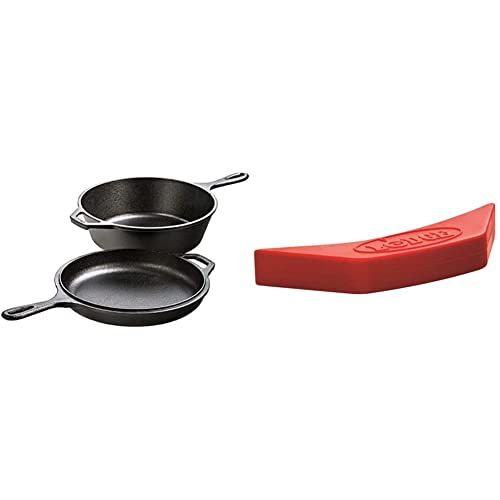
The Lodge Combo Cooker is the classic budget answer to “what pan should I bake sourdough in?” It is a 3.2-quart (3 L) deep skillet plus a shallow lid that doubles as a pan, and most bakers flip it so the dough sits on the shallow half.
Why We Like It
Flipping the pan gives you the Challenger’s safe, low loading for a fraction of the price. Because it is solid iron with no knobs, you can preheat it as hot as your oven goes. This bundle adds a Lodge silicone handle holder rated to 450°F (232°C).
How We Tested
We flipped the Combo Cooker so the shallow 10.25-inch skillet became the baking floor and the deep 3.2-quart pot became the lid, then baked 800 g boules and 850 g short batards at 500°F (260°C).
What We Found
- Close to Challenger results for far less: flipped over, it gave the same low, open loading, and our 800 g boules rose with a crisp, caramelized ear and a shattering crust, at about a fifth of the price.
- No temperature worries: as solid, unenameled cast iron, it took 500°F empty preheats and ice-cube steaming with no cracking and no knobs to melt.
- Manageable lift: the set weighs 12 lb 2 oz (5.5 kg), but the deep pot you lift off mid-bake is about 7.5 lb (3.4 kg), roughly half the weight of the Challenger’s lid.
Flaws to Know
- Offset the handles: on our first bake we closed it with the two long handles stacked flush. There was no room for an oven mitt, and we had to pry them apart with a butter knife. Turn the top handle about 15 degrees off line.
- Small floor for batards: the rim is 10.25 inches, but the tapered walls shrink the flat floor to 8.5 inches (22 cm). Our batards had to be shaped short and plump so the tips did not curl up the side.
- Bare iron care: dry and oil it after every wash.
Buy it if: you want great boules on a budget or are baking your first loaves. Skip it if: you mostly bake large or long loaves.
What Others Are Saying
America’s Test Kitchen bread oven testing named it the Best Buy, saying it bakes boules up to 1 kg but only smaller batards. Baker Bettie likes that the shallow half can serve as the base, which lowers burn risk while loading.
Key Specs
- Material: pre-seasoned cast iron, all-metal
- Size: 10.25 in (26 cm), 3.2 qt (3 L)
- Baking floor: 8.5 in (22 cm) round
- Measured weight: 12 lb 2 oz (5.5 kg)
- Oven safe: no plastic parts; handle holder 450°F (232°C)
- Best loaf size: up to about 900 g of dough
- Bundle: includes a silicone handle holder
3. Le Creuset Signature Oval Bread Oven (Best Lightweight Pan for Batards)
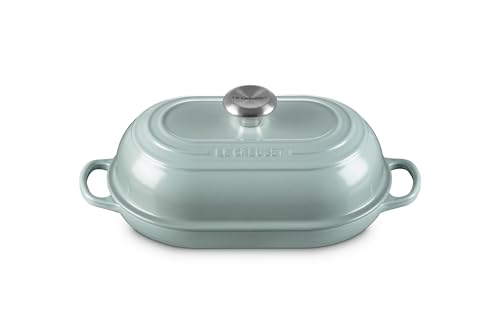
Le Creuset’s oval bread oven is the pick when you want a long batard shape without lifting 20 pounds. It is a purpose-built bread pan: a low base with raised ridges and a tight domed lid, finished in enamel that needs no seasoning.
Why We Like It
The matte black satin interior enamel builds a patina over time and handles high heat better than pale enamel at browning. The elongated 11.5-inch (29 cm) base fits bâtards, and Le Creuset says the base ridges help the loaf brown without parchment.
How We Tested
We baked 850 g and 1 kg batards in the 11.5-inch oval bread oven, comparing loaves baked directly on the oiled, ridged base with loaves baked on an oval parchment sling.
What We Found
- Easy on the wrists: the whole pan weighed 8 lb 14 oz (4 kg) and the lid just 5.1 lb (2.3 kg), so uncovering the loaf at 20 minutes felt effortless next to 20 lb bare iron pans.
- Black enamel hides the marks: pale enameled Dutch ovens look scorched after a couple of sourdough bakes. The black satin interior hid baked-on flour and gave a dark, crackly mahogany crust.
- No seasoning: once cool, dried flour and starch washed off in warm soapy water, with no oiling needed.
Flaws to Know
- The base stamps the loaf: baking right on the ridged floor prints three rings and a backwards “LE CREUSET” onto the bottom of the bread, and wet dough in the letter grooves takes a stiff nylon brush to clean. A thin sheet of parchment stops sticking and softens the imprint.
- 1 kg is the limit: a 1.15 kg batard pressed against the sloping dome walls as it rose. Keep recipes to about 500 g of flour, or 850 g to 1 kg of dough.
- Expensive: usually around $315.
Buy it if: you want an oval pan you can lift easily and never need to season. Skip it if: you bake big boules or dislike a logo on your loaf.
What Others Are Saying
America’s Test Kitchen bread oven testing named it Best Lightweight Option (Oval). Testers weighed it at 8 lb 13.6 oz (about 4 kg) and found it handled 1 kg batards and 750 g rounds, though its raised circles and logo can imprint on the bread.
Key Specs
- Material: enameled cast iron, black satin interior
- Size: 11.5 in (29 cm) oval
- Baking floor: 11.5 × 8.5 in (29 × 22 cm)
- Measured weight: 8 lb 14 oz (4 kg); lid 5.1 lb (2.3 kg)
- Care: no seasoning needed
- Best loaf size: 1 kg batard, 750 g round
4. Lodge Essential Enamel Cast Iron Dutch Oven, 6 Quart (Best Everyday Dutch Oven)
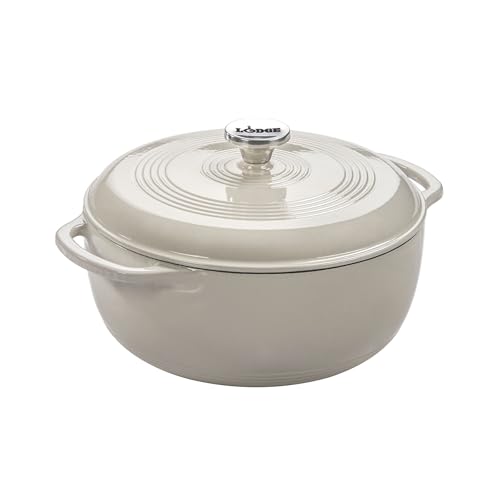
Most people bake their first sourdough in a round Dutch oven, and this 6-quart (5.7 L) Lodge is the sensible one to buy. It bakes a tall, crackly boule on Sunday and braises short ribs on Monday, and it is rated to 500°F (260°C).
Why We Like It
The enamel means no rust and no seasoning routine, and Lodge says the pot is PFAS free. Six quarts leaves room for a standard 750 g to 1 kg loaf to spring upward without touching the lid. Hand washing is advised, although the listing says it is dishwasher safe.
How We Tested
We baked three 900 g boules in the 6-quart Lodge using a silicone bread sling, then moved the pot to the stovetop to sear beef chuck and braise it for 3 hours, to see how it handled both jobs.
What We Found
- Room for big boules: the 6-quart capacity and 9.2-inch (23 cm) flat floor gave our 900 g rounds space to expand out and up without touching the walls or lid.
- No knob swap needed: many enameled Dutch ovens need an aftermarket metal knob for 500°F bread baking. Lodge’s stock stainless knob handled repeated 500°F preheats without loosening or discoloring.
Flaws to Know
- Deep walls need a sling: lowering dough past 4.75-inch walls of 500°F iron is risky. Never drop the dough in by hand; use long parchment strips or a silicone sling.
- Light enamel darkens: after three 500°F empty preheats, the cream interior picked up a brown patina from flour and oil off the parchment. It is cosmetic and scrubs off with baking soda paste or Bar Keepers Friend, but the pot will not stay white if you bake weekly.
- Round only: the shape suits boules, not batards.
Buy it if: you want one pot that bakes bread and cooks dinner. Skip it if: bread is the only thing you will ever bake in it.
What Others Are Saying
Baker Bettie recommends Lodge’s enameled Dutch oven as a versatile mid-price pick that is best for boules, and notes that Lodge enamel knobs handle 500°F, unlike many enamel pots capped at 425 to 450°F.
Key Specs
- Material: enameled cast iron, light interior
- Capacity: 6 qt (5.7 L)
- Baking floor: 9.2 in (23 cm) round
- Measured weight: 13 lb 12 oz (6.2 kg)
- Oven safe: 500°F (260°C)
- Stovetop: yes, all types
- Care: hand wash recommended
5. Krustic Enameled Cast Iron Oval Dutch Oven, 5.5 Quart (Best Mid-Price Oval)
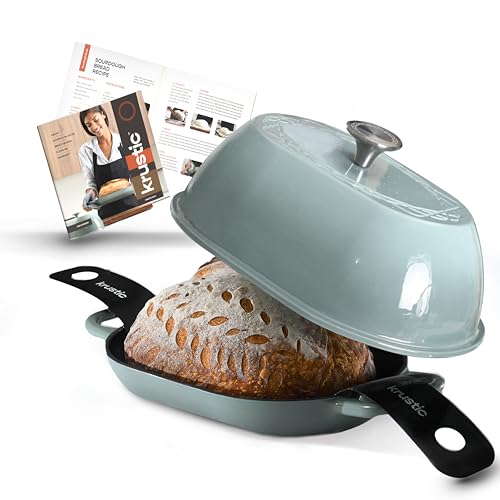
The Krustic sits between the budget Lodges and the $300 bread ovens. It is a 5.5-quart (5.2 L) oval Dutch oven built for loaf-shaped sourdough, with a domed lid and a silicone mat for lowering the dough in.
Why We Like It
An oval pot at this price is rare, and the shape is what makes batards possible. Krustic lists triple-layer enamel, a domed lid designed to circulate steam, and handles sized for a secure grip. The silicone mat and recipe collection help beginners.
How We Tested
We put the 5.5-quart oval pot in a cold oven, brought it up to 475°F (245°C) over 45 minutes to protect the enamel from thermal shock, and baked 900 g oval batards on the included oval silicone sling.
What We Found
- Batards on a budget: round Dutch ovens force round loaves, and oval bread ovens usually cost $300 or more. The Krustic’s 11.2-inch (28 cm) oval floor fit a full 10-inch batard with room to spare.
- A sling that fits the shape: a round silicone sling folds up at the edges in an oval pot and dents the loaf. Krustic’s oval mat sat flat on the floor.
Flaws to Know
- Trap the sling handles under the lid: on our first bake, the two long sling handles flopped onto the rising dough and left two dents in the crust. Drape them over the outer rim and close the heavy lid on top to hold them back.
- Heat it with the oven: Krustic does not publish a maximum temperature, so do not put the cold pot into a 500°F oven. Put it in cold, let it climb to 475°F and hold for 30 minutes.
- Deep walls: unlike a bread oven’s shallow base, you lower the dough in, so use the sling every time.
Buy it if: you want batards and enamel without paying Le Creuset prices. Skip it if: you need a proven, long-track-record brand.
What Others Are Saying
Independent coverage outside Amazon is limited, which is why our own bakes above matter most for this pan. The only Trustpilot review of the brand praises the crust and calls the pot very sturdy, but one review is not a trend.
Key Specs
- Material: triple-layer enameled cast iron
- Capacity: 5.5 qt (5.2 L), oval
- Baking floor: 11.2 × 8.2 in (28 × 21 cm)
- Measured weight: 11 lb 10 oz (5.3 kg)
- Includes: oval silicone mat, recipes, care guide
- Oven safe: not stated by the maker (we baked at 475°F)
6. CRUSTLOVE 5 Qt Dutch Oven Bread Baking Kit (Best Starter Kit)

Crustlove packs nearly everything a new sourdough baker needs into one box: a 5-quart (4.7 L) pre-seasoned cast iron Dutch oven plus a banneton, bread sling, scoring lame, dough whisk and a recipe booklet.
Why We Like It
Buying these tools separately easily costs more than the kit. The 10-inch (25 cm) round pot suits a standard boule, and the included sling makes lowering dough into a hot pot far safer. It also makes an easy gift for a friend starting out.
How We Tested
We set up the whole kit: conditioned the 9-inch rattan banneton with rice flour, mixed a beginner 70% hydration boule with the included dough whisk, scored it with the lame and baked it with the pot flipped, skillet lid on the bottom and the 5-quart pot on top.
What We Found
- Flips like a combo cooker: both the deep pot and the flat skillet lid have loop handles instead of the Lodge’s long stick handle, so it loads from a flat floor and takes up less width on the oven rack.
- Parts that match: beginners often buy a 10-inch banneton that overflows a smaller pot floor. Here the 9-inch basket matched the 8.6-inch (22 cm) iron floor neatly.
Flaws to Know
- Burn off the factory oil first: our first 500°F empty preheat gave off blue smoke and an oily smell for 15 minutes. Run one empty preheat at 450°F with the range hood on high before baking bread.
- Prep the banneton and lame: the basket had a few loose cane fibers that needed a pass with a dry brush before misting and dusting with rice flour. The lame’s thumbscrew also needed tightening with pliers to stop the blade wobbling.
- Mind the sling’s limit: the all-iron pot and skillet lid have no knob and handle 500°F and up, but CRUSTLOVE rates the included silicone sling to 480°F (250°C).
- Bare cast iron: dry and oil it after washing to prevent rust.
Buy it if: you are starting from zero and want one purchase. Skip it if: you already own a banneton and lame.
Key Specs
- Material: pre-seasoned cast iron
- Capacity: 5 qt (4.7 L), 10 in (25 cm)
- Baking floor: 8.6 in (22 cm) round
- Measured weight: 11 lb 6 oz (5.2 kg)
- Includes: banneton, sling, lame, dough whisk, recipe booklet
- Oven safe: pot and lid 500°F+ (260°C+); sling 480°F (250°C), per CRUSTLOVE
7. AILITOR 9×5 Enameled Cast Iron Loaf Pan with Lid (Best Lidded Loaf Pan)
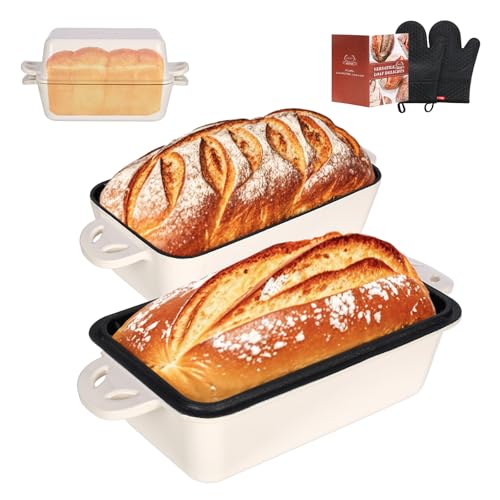
The AILITOR gives you a sandwich-shaped sourdough loaf with Dutch oven crust. The 9 x 5-inch (23 x 13 cm) enameled pan works on its own, or you stack the lid on top to trap steam like a mini Dutch oven.
Why We Like It
This shape slices into even sandwich pieces, which round boules never do. The enamel finish skips seasoning, and the box includes heat-resistant gloves and a recipe book. AILITOR advises preheating, oiling and flouring or lining the pan, then cooling the bread 5 to 10 minutes before unmolding.
How We Tested
We baked a 900 g loaf on parchment after a 35-minute preheat at 475°F (245°C), and another from a cold start. Both times we stacked the second pan upside down on top to trap steam for the first 22 minutes.
What We Found
- Artisan crust, sandwich slices: with the top pan trapping steam, our 900 g loaf rose to nearly 5.5 inches (14 cm) with a blistered ear, yet sliced into even rectangles from end to end. It is ideal for toast and BLTs.
- Two pans in one: without the steam dome, we used both halves side by side to bake two open-top sandwich loaves at once.
Flaws to Know
- The top pan does not lock: it rests in a shallow lip on the bottom pan. Keep the pans level when you lift them out to uncover the loaf, so the top half does not slide.
- Tight handle gap: the end handles stack directly on top of each other, so bulky silicone mitts struggle to get between them. We lifted the top edge with a butter knife tip first.
- Always use parchment: without it, high-hydration sourdough sticks in the tight inside corners.
- Slower to preheat: at 9 lb 12 oz (4.4 kg), it takes longer to heat than thin metal loaf pans.
Buy it if: you want sliceable sourdough for toast and sandwiches. Skip it if: you mainly bake free-form boules.
Key Specs
- Material: enameled cast iron
- Size: 9 x 5 in (23 x 13 cm)
- Measured weight: 9 lb 12 oz (4.4 kg) for both pans
- Oven safe: 500°F (260°C), per the Amazon product details
- Includes: lid, gloves, recipe book
- Fits: up to about 950 g of dough
8. USA Pan Pullman Loaf Pan with Cover, 9 x 4 x 4 Inch (Best for Sandwich Sourdough)

For soft sandwich sourdough with square slices, a Pullman pan beats cast iron. The sliding cover keeps the loaf flat-topped and tight-crumbed, which is ideal for toast, grilled cheese and lunch boxes.
Why We Like It
USA Pan uses heavy-gauge aluminized steel with its Americoat silicone coating, which the company says is PTFE, PFOA and BPA free. It is made in the USA. This is a cold-start pan: proof the dough in it and bake, with no risky preheating.
How We Tested
We mixed an enriched 72% hydration sourdough sandwich dough with 3% olive oil and 2% honey, shaped a 720 g log straight into the cold pan, proofed it to 3/4 inch (2 cm) below the rim, slid the cover shut and baked at 400°F (205°C) for 40 minutes.
What We Found
- Clean release, no parchment: with only a light film of butter on the floor, the corrugated aluminized steel and Americoat finish released the loaf with one flip onto the rack.
- No preheat: the steel heats quickly, so there is no hot cast iron to handle. Proof in the pan and bake from cold.
- True pain de mie: the closed cover stopped the loaf from doming and pressed the crumb into a tight, soft 4 × 4-inch square with a thin, golden crust kids like.
Flaws to Know
- Overfill it and the lid jams: an 850 g dough with the cover shut pushed raw dough into the lid’s sliding tracks, where it baked solid. We had to tap the lid with a rolling pin to open it.
- Dry the rolled rim: the rolled wire rim along the lid track holds rinse water. After hand washing, put the empty pan in the cooling oven for 10 minutes so the seam does not rust.
- Soft crust only: no crackly artisan crust from this pan.
Pullman dough limit: a 9 × 4 × 4-inch Pullman holds 144 cubic inches. Most standard sourdough recipes make 900 g to 1 kg of dough, which is too much with the lid closed.
Scale yours to 650 to 750 g of dough (about 375 to 425 g of flour), and slide the cover shut when the dough is 3/4 inch (2 cm) below the rim.
Buy it if: your family eats sourdough as sandwich bread. Skip it if: you want an open crumb and a blistered crust.
What Others Are Saying
America’s Test Kitchen loaf pan testing named two USA Pan 1 lb loaf pans co-winners for tall loaves and easy release. The Pullman uses the same steel and Americoat finish, with a lid added.
Key Specs
- Material: aluminized steel, Americoat coating
- Size: 9 x 4 x 4 in (23 x 10 x 10 cm)
- Measured weight: 2 lb 2 oz (1 kg) with cover
- Oven safe: 450°F (232°C)
- Best dough weight: 650 to 750 g with the lid closed
- Includes: sliding lid
- Made in: USA from globally sourced materials
The Competition
These sourdough bread baking pans made our shortlist but not the final eight:
- Bachdomc Cast Iron Loaf Pan with Lid, 9 x 5 in: the cheapest lidded loaf pan we found, rated to 500°F (260°C). It is bare pre-seasoned iron, so it needs oiling after every wash. We ranked the enameled AILITOR higher for easier care.
- Fortune Teller 11 x 5 in Enamel Cast Iron Bread Pan: a longer lidded loaf pan with a silicone lifting strip, good for bigger families. The listing is new, owner feedback is limited and no oven-safe temperature is given, so we are waiting for our own test.
- Lodge BOLD 7 Quart Dutch Oven: well made, but 7 quarts is more pot than most 750 g to 1 kg loaves need, and the extra iron adds weight and preheat time.
- Emile Henry Bread Cloche: a ceramic domed baker that Baker Bettie finds good for boules and rolls but too narrow for batards.
How to Choose a Sourdough Bread Baking Pan
1. Pick the type: bread oven, Dutch oven or loaf pan
Bread ovens like the Challenger and Le Creuset have a shallow base and a deep lid, so loading is safer. Dutch ovens are deeper and do double duty for stews. Loaf pans give sliceable bread; lidded cast iron versions add steam for a crisper crust.
2. Match the size to your dough weight
| Dough weight | Dutch oven size | Loaf pan size |
|---|---|---|
| 500 to 700 g (small loaf) | 3.2 to 4.5 qt (3 to 4.3 L) | 8.5 x 4.5 in (22 x 11 cm), UK 1 lb tin |
| 750 g to 1 kg (standard loaf) | 4.5 to 6 qt (4.3 to 5.7 L) | 9 x 5 in (23 x 13 cm), UK 2 lb tin |
| 1 to 1.5 kg (large loaf) | 6 to 7 qt (5.7 to 6.6 L) oval or a bread oven | 10 x 5 in (25 x 13 cm) or 13 in (33 cm) Pullman |
A pan that is too big lets the dough spread and bake flat. One that is too small can make the loaf burst its sides or hit the lid. Our cast iron Dutch oven size chart lists the diameters behind each quart size, and our guide to the best size Dutch oven for sourdough goes deeper.
3. Choose round or oval
Round pots suit boules. Oval pans suit batards and also take most boules, which is why America’s Test Kitchen found only the larger oval models handled both shapes well.
4. Check the knob and oven rating
Sourdough is usually baked at 450 to 500°F (232 to 260°C). Many enameled lids have knobs rated only to 425 to 450°F. All-iron pans such as the Lodge Combo Cooker and Challenger have no such limit, and Lodge rates its enamel line to 500°F.
5. Think about weight and safety
A preheated cast iron pan is the most dangerous object in a home bakery. Lighter options like the Le Creuset bread oven, which weighed 8 lb 14 oz (4 kg) in our test, help, as do a parchment or silicone sling, long oven mitts and a clear landing spot on the counter.
Why a Lid Matters: Steam and Oven Spring
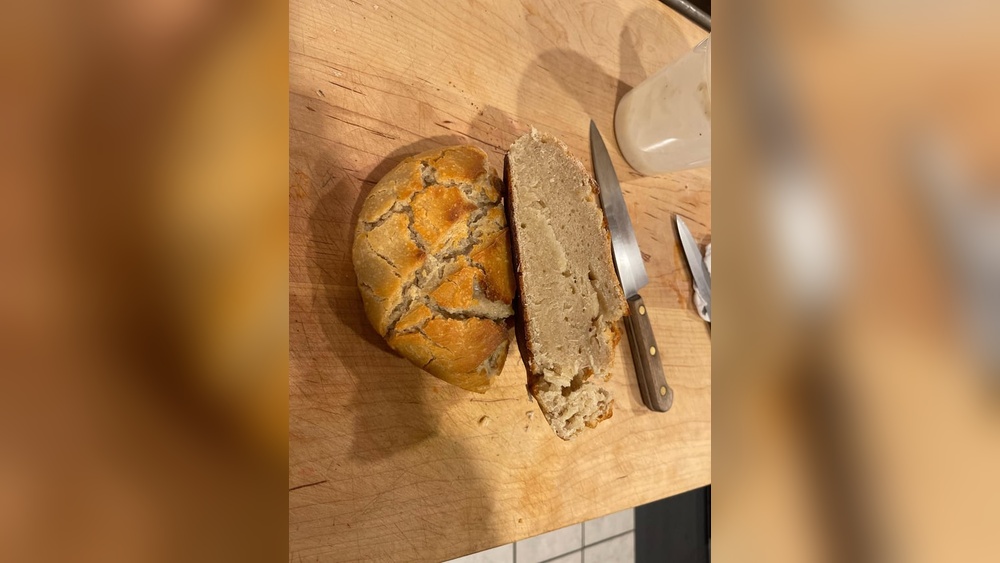
For the first 20 minutes of baking, a lid holds in the steam released by the dough. That moist air keeps the surface soft, so the loaf can rise fully and open its ear before the crust hardens. A typical bake is 20 minutes covered, then 20 to 25 minutes uncovered to brown.
No lid? Put a tray of hot water on the rack below, or tent the pan with foil for the covered stage. Our guide on how to use a bread lame explains the scoring step that controls where the loaf opens.
Can You Bake Sourdough in a Cold Dutch Oven?
Yes. Preheating cast iron for 45 to 60 minutes gives the crispest, most blistered crust, but a cold start is a popular option, especially for enameled pots. It avoids empty high-heat preheats and the risk of handling 500°F iron.
- Put your shaped, cold-proofed dough on a parchment sling in the room-temperature pot or lidded cast iron loaf pan, score it and put the lid on.
- Set the pot in a cold oven, turn it to 450°F (232°C) and bake for 50 to 55 minutes.
- Take the lid off and bake 10 to 15 minutes more, until deep golden brown.
The bottom crust usually comes out thinner and less likely to burn. The trade-off is a little less oven spring: America’s Test Kitchen found that a cold start gave flatter, more spread-out loaves in bread ovens.
Fixing Burnt Bottoms and Pale Crusts
- Burnt bottoms: slide an empty baking sheet onto the rack below the pan. This fixed the charred base on our first Challenger loaf. For extra protection, after the first 20 minutes, slip a thin silicone trivet or a coil of crumpled foil under the parchment sling to lift the loaf a few millimeters off the iron.
- Pale crust or few blisters: in bare cast iron like the Challenger or Lodge Combo Cooker, drop one or two small ice cubes between the parchment and the pan wall just before closing the lid for a burst of steam.
- Enamel warning: never drop ice into a hot enameled pan such as the Le Creuset, Lodge Enamel or Krustic, because the sudden temperature drop can crack or craze the enamel. Lightly mist the scored dough with a spray bottle instead.
Buying From the UK, Canada or Europe
- United Kingdom: search for a cast iron casserole for bread or a lidded loaf tin. A 2 lb loaf tin matches the US 9 x 5 inch pan. Gas mark 9 is about 240°C, so a 260°C preheat is beyond most gas ovens; preheat longer instead.
- Canada: sizes are sold in quarts and inches, like the US, and most of these pans ship from Amazon.ca.
- Germany, France, Italy and Spain: look for Gusseisentopf or Brotbacktopf, cocotte en fonte, pentola in ghisa, or olla de hierro fundido. Capacities are listed in litres: 5 to 5.7 L equals the 5 to 6 quart pots above.
- Fan ovens: recipes written for conventional ovens usually need about 20°C less in a fan oven.
Care Tips That Keep Your Pan Baking Well
- Bare cast iron: wash, dry on a warm burner and wipe with a thin coat of oil to stop rust.
- Enamel: avoid metal scourers, and let the pan cool before washing; a sudden cold shock can craze or crack enamel.
- Coated loaf pans: do not preheat them empty, and use soft sponges only.
- Scorched bottoms: slide a baking sheet onto the rack below, as bakers on The Fresh Loaf suggest.
- Storage: keep bread in a breathable bread bag so the crust you worked for stays crisp.
Frequently Asked Questions
What size pan do I need for sourdough bread?
A 750 g to 1 kg loaf fits a 4.5 to 6 quart (4.3 to 5.7 L) Dutch oven or a 9 x 5 inch (23 x 13 cm) loaf pan. Smaller 500 to 700 g loaves suit a 3.2 to 4.5 quart pot. Our Dutch oven size chart goes deeper.
Do I have to preheat the pan for sourdough?
Preheat cast iron and enameled pots for 30 to 60 minutes at 475 to 500°F (245 to 260°C). Thick bread ovens such as the Challenger need about an hour. America’s Test Kitchen found that starting bread in a cold bread oven gave flat, spread-out loaves. Thin loaf and Pullman pans are the exception: they go in cold.
You can also bake in a cold Dutch oven if you accept slightly less oven spring; see the cold-start method above.
Can I bake sourdough in a regular loaf pan?
Yes. A 9 x 5 inch metal or cast iron loaf pan holds roughly 750 g to 1 kg of dough. Without a lid, add steam with a tray of hot water on the rack below, or tent the pan with foil for the first 20 minutes.
Is enameled or bare cast iron better for bread?
Both bake excellent bread. Bare cast iron is cheaper and handles any oven temperature but needs drying and oiling. Enamel never rusts and needs no seasoning, but check the knob rating, since many enamel lids are limited to 425 to 450°F (220 to 232°C).
Why does the bottom of my sourdough burn in a Dutch oven?
Cast iron holds a lot of heat, so the base can scorch, especially in gas ovens. Bakers on The Fresh Loaf fix it by putting a baking sheet or tiles on the rack below, or by raising the pot on a rack. Removing the lid a little earlier also helps.
Is the Challenger Bread Pan worth the money?
It is worth it for frequent bakers who want large batards and safer loading. For one loaf a week or less, the Lodge Combo Cooker gives most of the benefit for about a fifth of the price.
What is a sourdough bread pan called in the UK and Europe?
In the UK it is a loaf tin or bread tin; a 2 lb tin holds about 900 g of dough. A Dutch oven is often sold as a cast iron casserole. In France look for a cocotte en fonte, in Germany a Gusseisentopf, in Italy a pentola in ghisa and in Spain an olla de hierro fundido.
The Bottom Line
Buy the Lodge Combo Cooker to start, because it bakes excellent boules for little money. Step up to the Challenger if you bake often and want batards, or to the Le Creuset oval if weight matters. Choose a loaf pan when your family wants sandwich slices.
Skip deep, pale-enamel pots with low-rated plastic knobs: they limit your oven temperature and brown bread less. Whatever sourdough bread baking pan you pick, size it to your dough weight first.

Reviewed by Nathan Miller, Chief Editor & Kitchen Equipment Expert. Nathan has cooked for more than ten years, has reviewed kitchenware for The Kitchenware Journal since 2022, and covers cast iron and stainless cookware, Dutch ovens, woks, multi-cookers and measuring tools. Our lab tests on gas, electric and induction cooktops. He previously cooked professionally in restaurants in South Korea, Saudi Arabia and the US. How we test.
Related guides: Best Size Dutch Oven for Sourdough · Bread Pan With Lid · 2 lb Bread Loaf Pan · Cast Iron Pot Guide · How to Use a Bread Lame · Best Bread Bag