Last Updated on September 15, 2026
If you rely on a reverse osmosis system for clean, pure water, keeping it in top shape is essential. But how do you know when and how to maintain your system without hassle?
You might be missing simple steps that can save you money and extend the life of your filter. This guide will show you exactly what you need to do to keep your reverse osmosis system running smoothly. By the end, you’ll feel confident managing your water purifier and enjoying fresh water every day.
Keep reading to discover easy maintenance tips that work.
How Reverse Osmosis Works
Reverse osmosis is a water purification method that removes impurities from water. It uses pressure to push water through a special filter. This filter blocks contaminants and lets clean water pass through. Understanding how it works helps you maintain the system properly.
Key Components
The system has several important parts. A pre-filter removes large particles like dirt and rust. The reverse osmosis membrane is the heart of the system. It traps tiny impurities such as salts and chemicals. A post-filter improves taste and quality. Finally, a storage tank holds the clean water until you need it.
Filtration Process
Water first passes through the pre-filter. This step protects the membrane from damage. Then, pressure pushes water through the RO membrane. Contaminants stay behind and are flushed away. Clean water moves to the storage tank. Before use, it flows through the post-filter. This step removes any leftover tastes or smells. The result is fresh, pure water ready to drink.
Signs Of System Wear
Reverse osmosis systems need care to work well. Over time, parts can wear out. This wear affects water quality and system performance. Knowing the signs helps you act early. Here are common signs of system wear to watch for.
Reduced Water Flow
Water flows slower than usual. This means filters or membranes might be clogged. Dirt and minerals build up inside. The system works harder but gives less water. Check flow rates regularly to spot problems early.
Unusual Taste Or Odor
Water tastes or smells different. A bad taste or smell can mean parts need replacing. Old filters lose the ability to clean water well. This affects water quality and safety. Fresh, clean water should taste neutral and smell fresh.
Leaks And Drips
Leaks or drips appear around the system. These signs show seals or fittings may fail. Water leaks waste water and can damage the area. Check connections and pipes often to avoid bigger problems.
Regular Filter Replacement
Regular filter replacement is key to keeping your reverse osmosis system working well. Filters catch dirt, chemicals, and other impurities from water. Over time, they get clogged and less effective. Changing filters on time keeps water clean and protects the system parts.
Neglecting filter changes can cause poor water taste and damage the RO membrane. It also reduces water flow and system efficiency. Regular replacement keeps water pure and the system running smoothly.
Filter Types And Lifespan
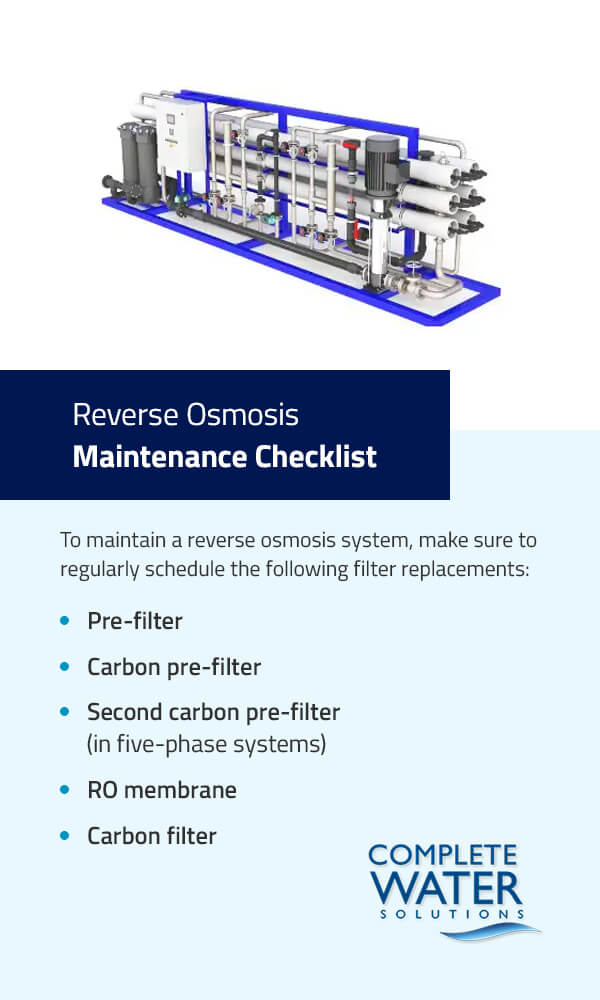
Reverse osmosis systems use several filter types. Sediment filters remove dirt and rust. Carbon filters block chlorine and bad smells. The RO membrane filters tiny particles and harmful substances. Each filter has a different lifespan.
Sediment filters usually last 6 to 12 months. Carbon filters last around 6 to 12 months as well. RO membranes can last 2 to 3 years. Some systems have a post-carbon filter that lasts about 12 months. Lifespan depends on water quality and usage.
Replacement Schedule
Follow the manufacturer’s guide for filter replacement timing. Change sediment and carbon filters every 6 to 12 months. Replace the RO membrane every 2 to 3 years. Post-filters need changing about once a year.
Write down the replacement dates or set reminders. Timely changes keep the system effective and water safe. Watch for signs like bad taste or slow water flow. These can mean filters need changing sooner.
Credit: complete-water.com
Membrane Care
The membrane is the heart of a reverse osmosis system. It filters out impurities and harmful substances from water. Proper care keeps the membrane working well and extends its life. Clean membranes provide better water quality and save money.
Cleaning Techniques
Cleaning the membrane prevents buildup of dirt and minerals. Use a gentle cleaning solution made for RO membranes. Soak the membrane in the solution for the time suggested by the manufacturer. Rinse the membrane thoroughly with clean water after cleaning. Avoid harsh chemicals that can damage the membrane surface. Regular cleaning helps maintain strong water flow and taste.
When To Replace
Membranes do not last forever. Watch for signs like low water flow or bad taste. Check the system pressure regularly. If the membrane is damaged or clogged, cleaning may not help. Replace the membrane every 2 to 3 years or sooner if needed. Follow the instructions from your RO system maker for the best results.
Sanitizing The System
Sanitizing your reverse osmosis system keeps the water clean and safe. Bacteria and other germs can grow inside the system. Regular cleaning stops this buildup. It helps your system work well and lasts longer.
Cleaning Frequency
Clean the system at least once a year. Some homes need more frequent cleaning. Check the water taste and smell. Strange taste or smell means it is time to clean. Follow the manufacturer’s instructions for cleaning times.
Safe Cleaning Solutions
Use mild bleach or special cleaning kits made for RO systems. Avoid harsh chemicals that can damage parts. Mix solutions carefully to avoid strong smells. Rinse the system well after cleaning to remove all cleaning agents.

Credit: espwaterproducts.com
Preventing Common Issues
Preventing common issues in reverse osmosis systems helps keep water clean and the system working well. Regular care avoids costly repairs and extends the life of the unit. Simple steps can stop problems before they start.
Avoiding Clogs
Clogs often come from dirt, minerals, and other particles in water. Change filters on time to stop blockages. Clean pre-filters regularly to catch debris early. Use quality filters that match your system’s needs.
Check the system for signs of slow water flow. Slow flow can mean a clog is forming. Clear the clog quickly to keep water flowing smoothly.
Pressure Management
Correct water pressure is key for reverse osmosis to work well. Too low pressure reduces water flow and filter effectiveness. Too high pressure can damage the system parts.
Use a pressure gauge to monitor system pressure. Adjust the pressure with valves or pumps if needed. Keep pressure within the range recommended by the manufacturer.
Tools For Maintenance
Maintaining a reverse osmosis system keeps water clean and safe. Proper tools make maintenance easier and more effective. Knowing the right tools helps avoid damage and ensures long system life.
Essential Equipment
Basic tools include wrenches, screwdrivers, and pliers. These help remove and tighten parts without causing harm. Replacement filters and membranes are critical for performance. Cleaning brushes clear dirt from small parts. Tubing cutters make neat, precise cuts for new pipes. A bucket or container collects water during servicing. Gloves protect hands from chemicals and sharp parts.
Monitoring Devices
Pressure gauges check water pressure in the system. Consistent pressure ensures proper filtration. TDS meters measure total dissolved solids in water. Low TDS means the system works well. Flow meters track water flow rates through filters. Sudden drops hint at blockages or leaks. Regular monitoring helps catch problems early. Keeping these devices handy improves maintenance quality.
Professional Service Options
Maintaining a reverse osmosis (RO) system ensures clean, safe water at home. Professional service options offer skilled help to keep the system working well. Experts handle complex problems and routine checks. This section explains when to call professionals and the costs involved.
When To Call Experts
Call experts if the water taste changes suddenly. Strange noises or leaks need fast attention. If filters or membranes look worn, get help. Regular annual checkups by professionals extend system life. Complex repairs require special tools and knowledge. Avoid trying repairs that may cause damage.
Cost Considerations
Professional service costs vary by location and system type. Basic maintenance may cost less than full repairs. Some companies offer service plans for steady costs. Factor in parts replacement when budgeting. Paying for expert care prevents costly future problems. Compare quotes from trusted providers before deciding.
Boosting System Longevity
Maintaining your reverse osmosis system helps it last longer. Proper care saves money and keeps water clean. Simple steps can prevent damage and improve performance. Focus on regular checks and mindful use.
Best Practices
Change filters on time. Dirty filters block water flow. Clean membranes gently to avoid damage. Use the system as the manual says. Avoid using harsh chemicals near the unit. Check for leaks regularly. Tighten any loose fittings. Flush the system often to clear deposits.
Environmental Factors
Keep the system in a cool, dry place. Avoid direct sunlight that can harm parts. Protect it from freezing temperatures. High heat can wear out plastic components. Dust and dirt can clog filters faster. Maintain a clean area around the system. Stable water pressure helps the system work well. Sudden pressure changes can cause damage.

Credit: www.reddit.com
Frequently Asked Questions
How Often Should I Perform Reverse Osmosis Maintenance?
You should perform reverse osmosis maintenance every 6 to 12 months. Regular checkups ensure system efficiency and water quality. Timely filter replacement prevents clogging and bacteria growth, maintaining optimal performance and prolonging system life.
What Are The Common Signs Of Reverse Osmosis Issues?
Common signs include low water pressure, strange taste, and slow water flow. These indicate clogged filters or membrane damage. Addressing these issues early avoids costly repairs and ensures safe, clean drinking water.
Can I Clean The Reverse Osmosis Membrane Myself?
Yes, you can clean the membrane with proper instructions and cleaning solutions. However, improper cleaning can damage the membrane. It’s best to follow manufacturer guidelines or consult a professional to maintain system integrity.
Why Is Regular Filter Replacement Important In Reverse Osmosis?
Filters trap contaminants and protect the membrane. Overused filters reduce water quality and system efficiency. Regular replacement ensures clean water, extends membrane life, and keeps your reverse osmosis system running smoothly.
Conclusion
Regular care keeps your reverse osmosis system working well. Clean filters and check membranes often. Watch for leaks or unusual tastes in water. Timely maintenance saves money and avoids repairs. Clean water means better health for you and family. Small efforts bring long-term benefits and pure water.
Stay consistent to enjoy fresh, clean water daily. Simple steps protect your investment and peace of mind. Take action now and keep your system strong.