Last Updated on February 16, 2026
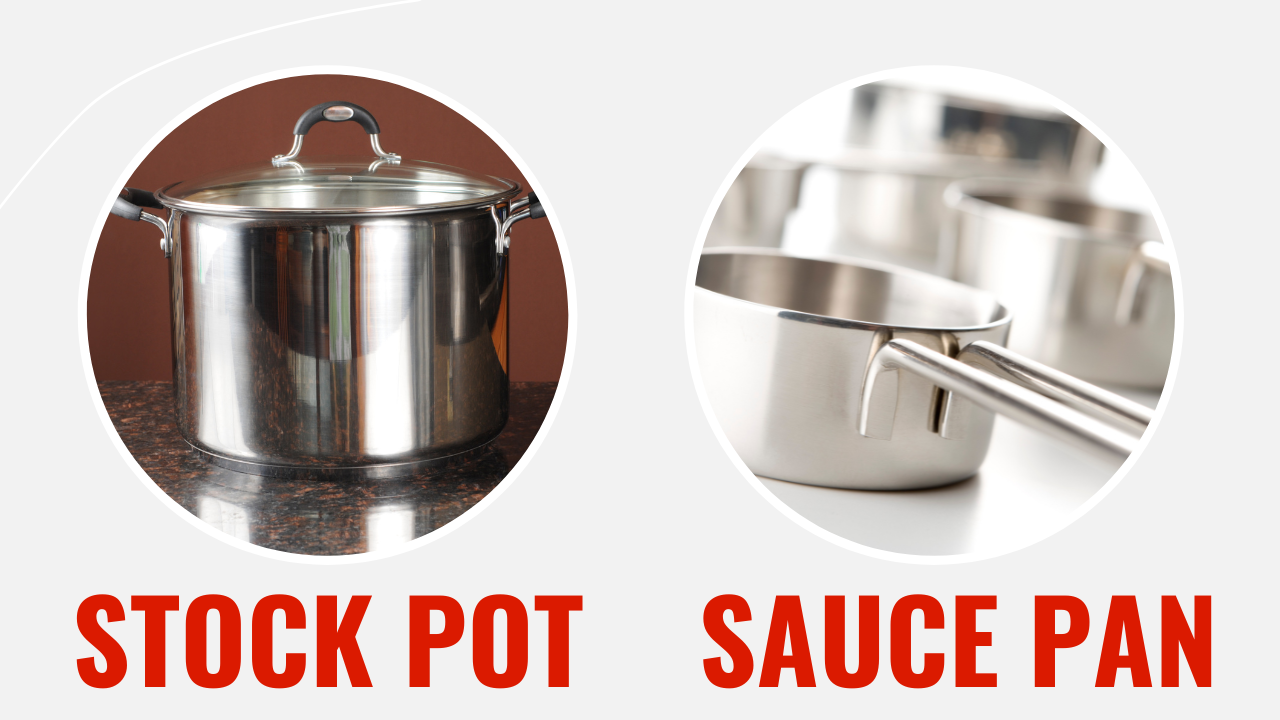
A sauce pot is shorter with a wider base, ideal for simmering and reducing sauces. A stock pot is taller, designed for making broths and soups.
Sauce pots and stock pots are essential cookware in any kitchen, each serving distinct purposes. Sauce pots feature a wide base and shorter sides, making them perfect for simmering and reducing sauces. Their design allows for even heat distribution and easy stirring.
Stock pots, on the other hand, are taller with higher sides, providing ample space for large quantities of liquid. They are ideal for making stocks, broths, and soups, accommodating whole ingredients like bones and vegetables. Understanding the differences helps in selecting the right pot for your culinary needs, ensuring better cooking results.

Credit: madeincookware.com
Introduction To Pots In The Kitchen
In every kitchen, pots are essential. They help cook various meals. Understanding the different types of pots is important. Knowing their uses makes cooking easier and more enjoyable. Two common pots are the sauce pot and the stock pot. They may look similar, but they have different purposes.
Essential Cookware
Every kitchen needs essential cookware. This includes pots, pans, and utensils. Quality cookware can last for years. It makes cooking more efficient. A sauce pot and a stock pot are among the most used items.
Sauce Pot Vs. Stock Pot
Understanding the difference between a sauce pot and a stock pot is crucial. They serve different cooking needs.
| Feature | Sauce Pot | Stock Pot |
|---|---|---|
| Shape | Short and wide | Tall and narrow |
| Uses | Making sauces and soups | Cooking large quantities of liquid |
| Size | Usually smaller | Usually larger |
| Handles | Two small handles | Two large handles |
A sauce pot is ideal for making sauces and soups. It is usually short and wide. This shape allows for even heat distribution. It is perfect for simmering and reducing liquids.
A stock pot is used for cooking large quantities of liquid. It is tall and narrow. This design helps to retain heat. It is ideal for making stocks, broths, and boiling pasta.
The Sauce Pot: A Culinary Workhorse
The sauce pot is a must-have in any kitchen. It’s versatile and perfect for various recipes. Whether you’re simmering, boiling, or reducing, this pot gets the job done.
Design Features
The sauce pot has a unique design. It comes with taller sides and a narrower base compared to other pots. This design helps in slow cooking and reducing sauces efficiently.
Most sauce pots also have a snug-fitting lid. This lid helps to trap moisture and flavors inside. Handles on both sides make it easy to lift, even when full.
| Feature | Details |
|---|---|
| Taller Sides | Great for simmering and reducing |
| Snug-Fitting Lid | Keeps moisture and flavors in |
| Dual Handles | Easy to lift and maneuver |
Ideal Uses
The sauce pot excels in specific cooking tasks. It’s perfect for making sauces, soups, and stews. The tall sides help prevent splatters, keeping your stovetop clean.
It’s also great for boiling pasta or making rice. The snug lid helps cook grains evenly. You can also use it for small batches of deep frying.
- Sauces: Ideal for making and reducing sauces.
- Soups and Stews: Perfect for slow-cooking soups and stews.
- Boiling: Great for pasta and rice.
- Deep Frying: Suitable for small batches.
The Stock Pot: A Must-have For Broths
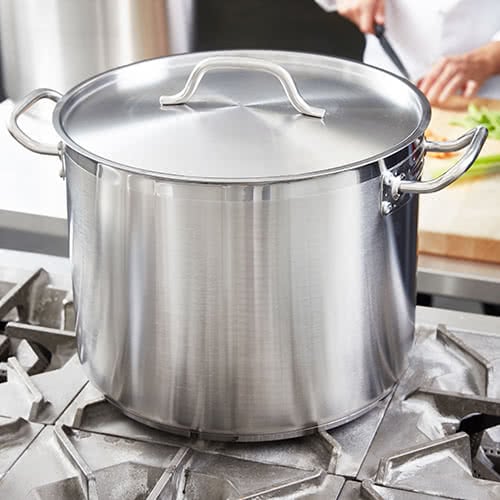
A stock pot is essential for making broths. It is tall and large. This pot can handle a lot of liquid. It is perfect for cooking soup, stew, and broth.
Key Characteristics
The stock pot has some unique features. Here are the key characteristics:
- Size: Stock pots range from 6 to 20 quarts.
- Shape: They are tall and narrow.
- Material: Often made from stainless steel or aluminum.
- Handles: They have sturdy side handles.
- Lid: Comes with a tight-fitting lid.
Primary Functions
Stock pots are versatile. Here are their primary uses:
- Broth Making: Ideal for simmering bones and vegetables.
- Soup Cooking: Perfect for large batches of soup.
- Stewing: Great for making hearty stews.
- Pasta Cooking: Suitable for boiling pasta and grains.
- Preserving: Useful for canning and preserving food.
A stock pot is a must-have in any kitchen. It helps create flavorful broths and soups. Its large size and sturdy build make it versatile. Use it for various cooking needs.
Credit: www.webstaurantstore.com
Comparing Sizes And Capacities
Understanding the differences between a sauce pot and a stock pot can be vital for your cooking needs. Their sizes and capacities vary significantly. This section will delve into these differences.
Volume Considerations
A sauce pot usually holds less liquid compared to a stock pot. Sauce pots come in sizes ranging from 1 to 4 quarts. This makes them perfect for smaller tasks. Stock pots, on the other hand, can hold between 6 and 20 quarts. They are designed for large quantities of liquid.
Here is a quick comparison:
| Pot Type | Typical Volume |
|---|---|
| Sauce Pot | 1 to 4 quarts |
| Stock Pot | 6 to 20 quarts |
Choosing The Right Size
Choosing the right size pot can enhance your cooking experience. A small sauce pot is ideal for making sauces, heating soup, or cooking rice. For these tasks, a 2-quart pot often suffices. If you need to cook for more people, a 4-quart sauce pot is better.
Stock pots are best for making large batches of soup, broth, or pasta. A 10-quart stock pot is perfect for these tasks. For even larger gatherings, a 20-quart stock pot will serve well.
Key considerations:
- Small sauce pots: 1-2 quarts for sauces and small tasks.
- Medium sauce pots: 3-4 quarts for family-sized portions.
- Small stock pots: 6-10 quarts for soup and broth.
- Large stock pots: 15-20 quarts for big batches.
Material Matters: Construction And Heat Conductivity
Understanding the materials used in sauce pots and stock pots is crucial. The materials impact their heat conductivity and overall cooking performance. Let’s dive into the details.
Materials Used
Sauce pots and stock pots often use different materials. Here are the common ones:
| Type of Pot | Common Materials |
|---|---|
| Sauce Pot | Stainless Steel, Aluminum, Copper |
| Stock Pot | Stainless Steel, Aluminum, Cast Iron |
Stainless steel is popular for both types. It is durable and resistant to rust. Aluminum is lightweight and conducts heat well. Copper provides excellent heat conduction. Cast iron retains heat for a long time.
Impact On Cooking Performance
The material affects how each pot performs in the kitchen. Let’s explore this:
- Heat Conductivity: Copper has the best heat conductivity. Aluminum is also good. Stainless steel is slower but even.
- Weight: Aluminum and stainless steel are lighter. Cast iron is heavy but sturdy.
- Durability: Stainless steel and cast iron are very durable. Aluminum and copper may dent or scratch more easily.
Choose the right pot based on your cooking needs. For quick heat, use copper or aluminum. For long cooking, use stainless steel or cast iron.
Handle Design And Lid Types
Understanding the differences between a sauce pot and a stock pot is essential for any home cook. One key area of difference is the handle design and lid types. Proper handle design and lid types can impact your cooking experience significantly.
Ergonomics And Safety
Sauce pots often come with two small side handles. These handles make it easier to lift and pour. This design helps with balance and safety. Stock pots usually feature two large loop handles. These are designed for lifting heavy contents safely. The handles on both types are typically made from heat-resistant materials. This ensures you can handle them without burning your hands.
Sealing And Moisture Control
Both sauce pots and stock pots come with lids. The type of lid can affect cooking results. Sauce pots often have tight-fitting lids. This helps to control moisture and heat, perfect for simmering sauces. Stock pots typically have lids that may not fit as tightly. This allows for some steam to escape, which is good for making broths and stocks.
Here’s a quick comparison table for better clarity:
| Feature | Sauce Pot | Stock Pot |
|---|---|---|
| Handle Design | Two small side handles | Two large loop handles |
| Material | Heat-resistant | Heat-resistant |
| Lid Type | Tight-fitting | Looser fit |
| Moisture Control | Excellent | Good for broths |
Versatility In Cooking
Both sauce pots and stock pots offer unique cooking benefits. Understanding their versatility helps in choosing the right one for your recipe.
Adaptability To Recipes
Sauce pots are perfect for making sauces. Their wide base allows for even heating. This ensures your sauce cooks evenly.
Stock pots, on the other hand, are ideal for boiling and simmering. Their tall sides and large capacity make them perfect for soups and broths.
Limitations And Strengths
| Pot Type | Strengths | Limitations |
|---|---|---|
| Sauce Pot |
|
|
| Stock Pot |
|
|
Care And Maintenance Tips
Proper care and maintenance can extend the life of your sauce pot and stock pot. Keeping them in good shape ensures better cooking results and safety. Here are some essential tips.
Cleaning Practices
Cleaning your pots is crucial for their longevity. Follow these steps:
- Hand Wash: Always hand wash your pots. Dishwashers can damage the finish.
- Avoid Abrasives: Use soft sponges. Abrasive cleaners can scratch the surface.
- Soak Stubborn Stains: Soak pots in warm soapy water. This loosens burnt food.
- Dry Immediately: Dry your pots right after washing. This prevents rust and water spots.
Longevity And Durability
Ensuring your pots last long requires more than just cleaning. Here are some tips:
- Proper Storage: Store pots in a dry place. Use a rack to avoid stacking.
- Use Correct Utensils: Use wooden or silicone utensils. Metal can scratch the surface.
- Avoid High Heat: Don’t use high heat settings. It can warp the pot.
- Regular Inspections: Check for wear and tear regularly. Replace if needed.
Following these tips will ensure your sauce pot and stock pot remain in great condition for years.
Making The Right Choice For Your Kitchen
Choosing between a sauce pot and a stock pot can be tricky. Each pot serves unique purposes in your kitchen. Knowing the differences helps you pick the right one.
Assessing Needs And Preferences
Understanding your cooking needs is crucial. Do you often prepare sauces, soups, or stews? A sauce pot is ideal for simmering sauces and small batches. It has a wide base and straight sides.
If you cook in large quantities, a stock pot is better. It has a taller shape and larger capacity. This pot is perfect for making broths, stocks, and large stews.
| Feature | Sauce Pot | Stock Pot |
|---|---|---|
| Shape | Wide base, straight sides | Tall, narrow shape |
| Capacity | Small to medium | Large |
| Best For | Sauces, small batches | Broths, large quantities |
Recommendations And Tips
- Choose a sauce pot for daily cooking tasks.
- Select a stock pot for bigger family meals or gatherings.
- Consider the material. Stainless steel is durable. Non-stick is easy to clean.
- Look at the handles. They should be sturdy and heat-resistant.
- Think about storage. Stock pots take up more space.
Having both types can be very helpful. This way, you are always ready for any cooking adventure.
Credit: www.culinarydepotinc.com
Frequently Asked Questions
What Is A Sauce Pot Used For?
A sauce pot is used for simmering sauces, soups, and stews. It’s perfect for slow cooking and reducing liquids.
Can I Use A Stock Pot For Sauces?
Yes, but stock pots are larger. They are designed for boiling stocks, soups, and large quantities of liquids.
Why Is A Stock Pot Taller?
A stock pot is taller to accommodate large volumes. This design helps in making stocks, broths, and soups efficiently.
Do Sauce Pots Have A Specific Size?
Sauce pots typically range from 1 to 4 quarts. They are smaller compared to stock pots, ideal for sauces and small batches.
Conclusion
Understanding the difference between a sauce pot and a stock pot can enhance your cooking experience. Both have unique purposes. Choose the right pot for your recipe to achieve the best results. Remember, the correct cookware makes a significant difference.
Happy cooking!