
Last Updated on November 15, 2026
The 30-Second Answer: Butcher block vs cutting board comes down to how you cook:
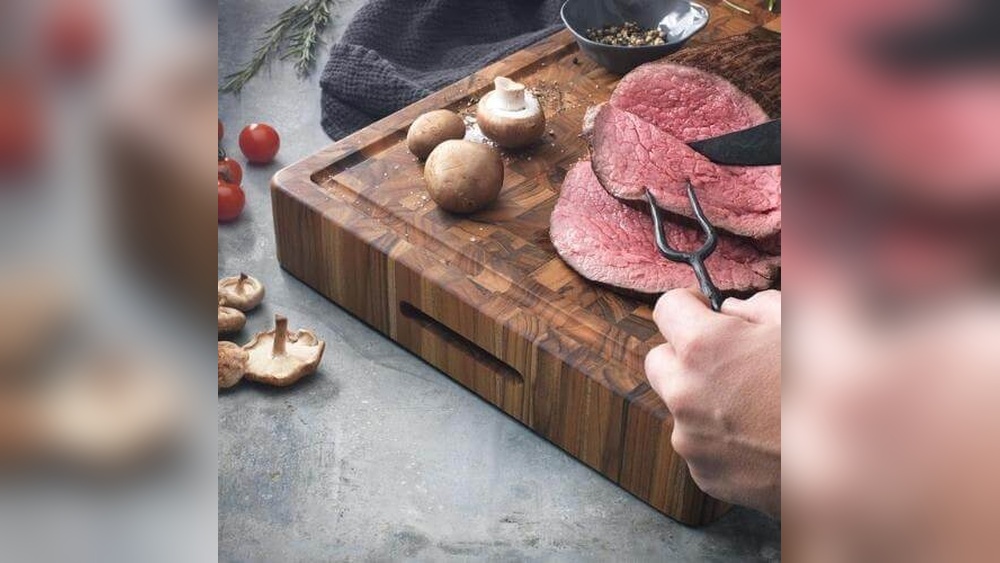
- A butcher block is a thick wooden board, often end grain, that stays on the counter and is the kindest surface for knives.
- A cutting board is any thinner board: wood, plastic or composite. Easier to move, wash and store.
- For heavy chopping and a showpiece counter, pick a butcher block.
- For raw meat and quick cleanup, keep a dishwasher-safe plastic board too.
- Most kitchens do best with both: wood for produce and bread, plastic for raw proteins.
Whatever you choose, avoid glass, stone and ceramic boards. They dull knives fast.
Research note: Food safety tips follow University of Illinois Extension guidance and the USDA’s Kitchen Companion. Board care follows standard wood-care practice.
“Butcher block” and “cutting board” get used interchangeably, but they’re not quite the same thing. A butcher block is a heavy, thick slab made to stay put and take a beating. A cutting board is the everyday tool you grab, use and wash.
This guide compares them on knife care, hygiene, upkeep and cost, then helps you decide what your kitchen actually needs.
In this guide
What Is a Butcher Block?
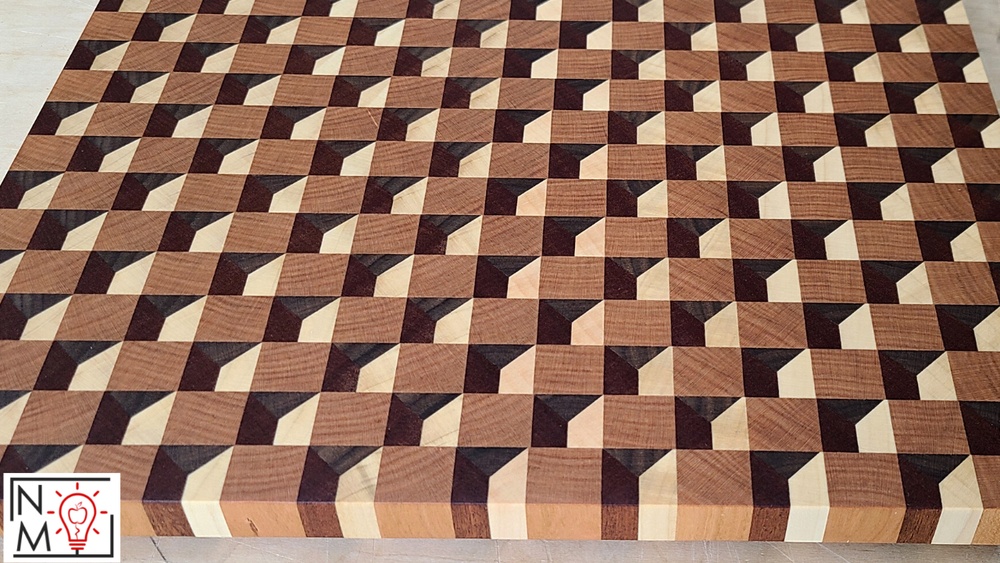
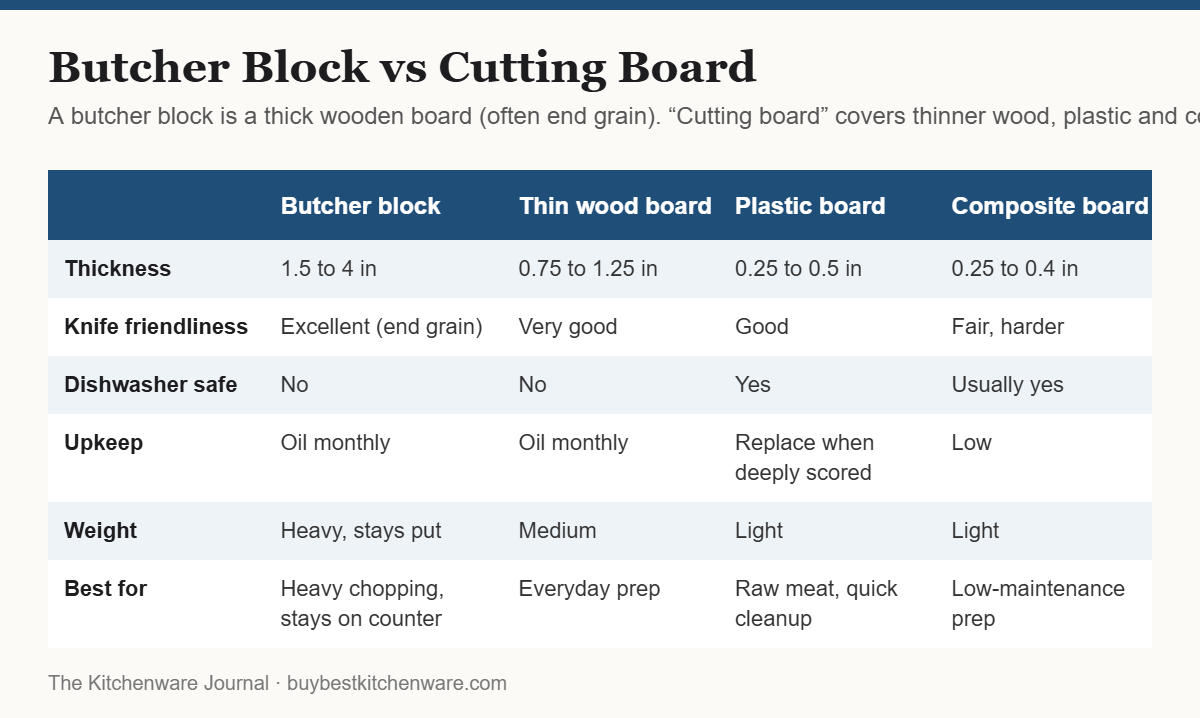
A butcher block is a thick board (usually 1.5 to 4 inches) made from strips of hardwood glued together. End-grain blocks show the ends of the wood fibers, which part around the knife and close back up, so they’re gentle on edges and hide cut marks. Edge-grain blocks use long strips and are a little harder but cheaper. Our end grain vs edge grain guide explains the difference in detail.
What Counts as a Cutting Board?
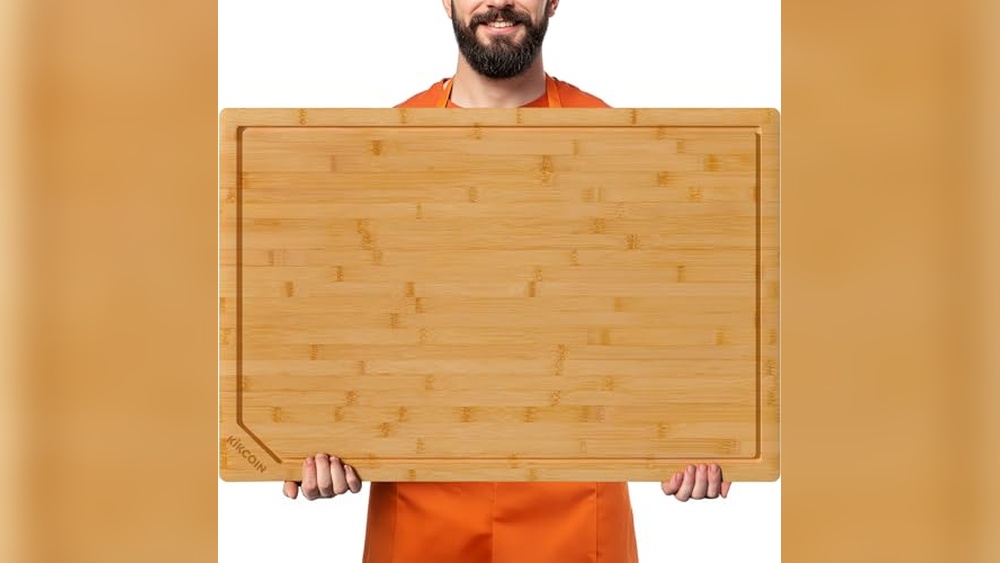
- Thin wood boards: maple, walnut, cherry or bamboo, about an inch thick.
- Plastic boards: polyethylene or polypropylene; light and dishwasher safe.
- Composite boards: wood fiber and resin; thin, durable and often dishwasher safe, but harder on knives.
- Avoid: glass, marble and ceramic; they’re great for serving, terrible for knife edges.
Butcher Block vs Cutting Board: Hygiene
Both can be safe when cleaned properly. Wash any board with hot, soapy water after use, rinse and dry it upright. Plastic and composite boards can go in the dishwasher. Many cooks keep a separate plastic board for raw meat, poultry and seafood to limit cross-contamination, and replace plastic boards once they get deep grooves that are hard to clean.
Care and Maintenance
- Wood and butcher block: hand wash, dry immediately, oil with food-grade mineral oil monthly, never soak or dishwash.
- Plastic: dishwasher safe; replace when heavily scored.
- Composite: dishwasher safe on most; occasional oil keeps them looking good.
Which Should You Buy?
| If you… | Choose |
|---|---|
| Chop a lot and have counter space | End-grain butcher block |
| Want one board for everything, easy storage | 1-inch maple or walnut board |
| Cook raw meat often | Add a plastic board |
| Hate maintenance | Composite board |
| Have a small kitchen | Thin wood board plus a plastic board |
Planning a full butcher block countertop instead? See our butcher block countertop with white cabinets ideas.
Boards and Care Products Worth Buying
A butcher block, a plastic board for raw meat and a bottle of board oil cover most kitchens.
1. THETCHRY End-Grain Walnut Board (17 x 13 in) (best butcher block)
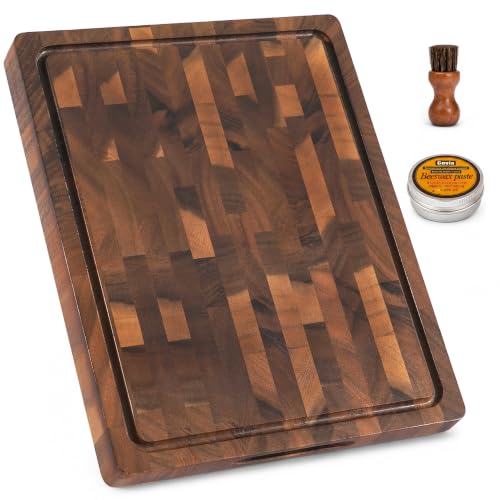
A large end-grain walnut board, 1 inch thick.
Why We Like It
End grain is the gentlest surface for knives, and walnut looks great left on the counter.
Flaws to Know
- Needs regular oiling
- Heavy to move to the sink
Buy it if: you want a knife-friendly showpiece. Skip it if: you want dishwasher-safe.
2. American Walnut End-Grain Butcher Block (alternative walnut block)

A black walnut end-grain cutting board.
Why We Like It
Another solid end-grain option with rich color and good knife feel.
Flaws to Know
- Hand wash only
- Oil monthly
Buy it if: you prefer this size or style. Skip it if: you need a lightweight board.
3. OXO Good Grips 2-Piece Plastic Board Set (for raw meat)
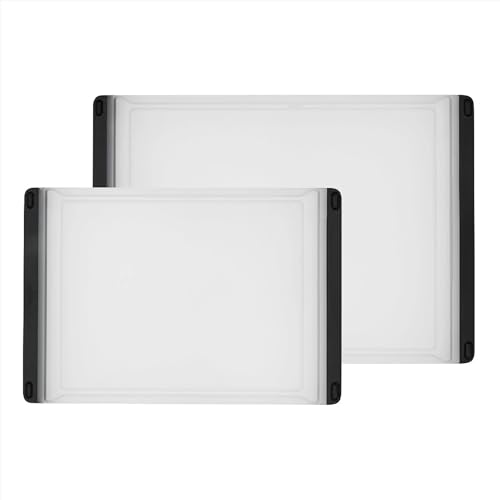
Two double-sided plastic boards with non-slip edges.
Why We Like It
Dishwasher safe and easy to sanitize, the right choice for raw meat, poultry and fish.
Flaws to Know
- Shows knife marks
- Replace when deeply grooved
Buy it if: you need a raw-meat board. Skip it if: you already have one.
4. Epicurean Kitchen Series Board (low-maintenance composite)
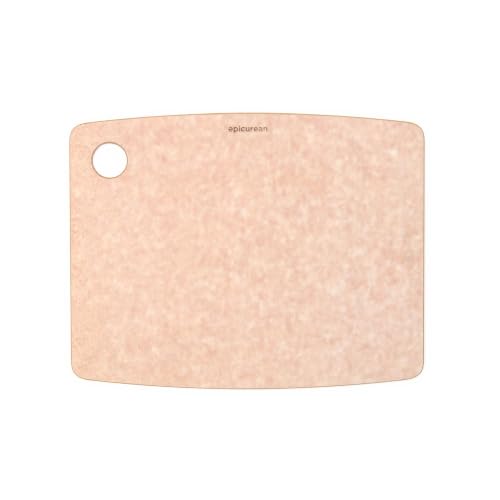
A thin wood-fiber composite board that’s dishwasher safe.
Why We Like It
Light, durable and low maintenance, a good everyday board for small kitchens.
Flaws to Know
- Harder on knives than wood
- Can be noisy
Buy it if: you want easy care. Skip it if: you prioritize knife edges.
5. Howard Butcher Block Conditioner (board care)

Food-grade mineral oil blended with beeswax and carnauba wax.
Why We Like It
Keeps wood boards from drying, cracking and absorbing stains.
Flaws to Know
- Needs a few hours to soak in
- Reapply monthly
Buy it if: you own any wood board. Skip it if: you only use plastic.
For knives that pair well with a good board, see our guide to the types of kitchen knives.
Notes for the UK, Canada and EU
In the UK and Europe, butcher blocks are often called chopping blocks, and boards are sold in centimetres (a 43 x 33 cm board is about 17 x 13 inches). Many commercial kitchens in the UK use color-coded plastic boards to separate raw meat, fish and produce, a smart habit at home too. Canadian sizing matches the US.
Frequently Asked Questions
Is a butcher block better than a cutting board?
For knife care and heavy chopping, yes. For raw meat and dishwasher cleaning, a plastic board is more convenient.
Are wooden boards safe for raw meat?
They can be if washed promptly and well, but many cooks prefer a dedicated plastic board for raw meat.
How thick should a butcher block be?
1.5 inches or more. Thicker blocks stay put and resist warping.
How often should I oil a butcher block?
About once a month, or whenever it looks dry.
Can you put a butcher block in the dishwasher?
No. Heat and water cause warping and cracking.

Reviewed by Samantha Hickel, Kitchenware Reviewer & Cookware Expert. Samantha has cooked for more than ten years, has reviewed kitchenware for The Kitchenware Journal since 2022, and covers stock pots, saucepans, canning, cake and bread pans, cutting boards and everyday kitchen tools. Our lab tests kitchenware, cutting boards and serving pieces for capacity, durability, stain resistance and ease of care. How we test.
Related guides: How to make a 3D cutting board · Liflicon silicone cutting boards review · Best charcuterie boards · What is a chef’s knife used for?