
Last Updated on November 15, 2026
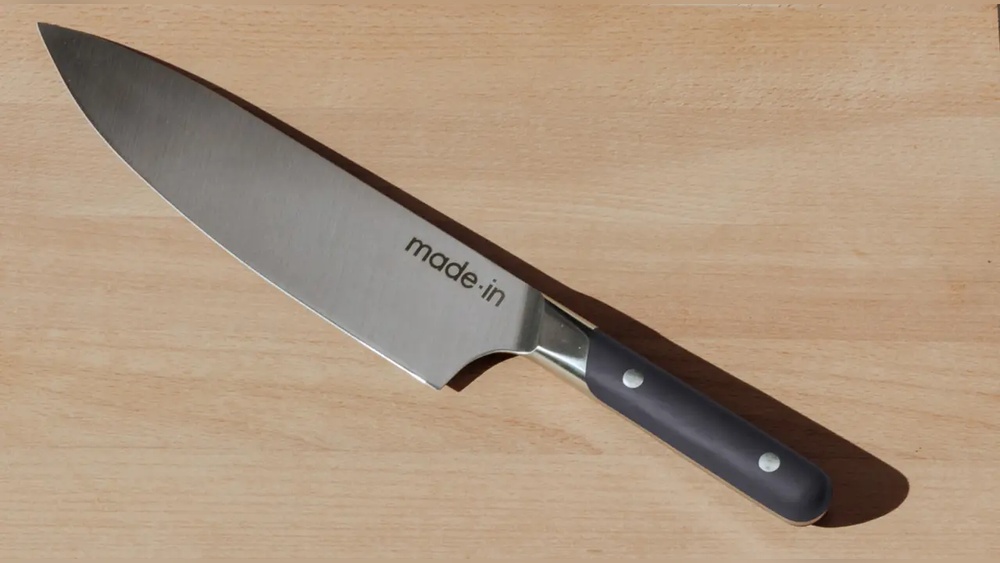
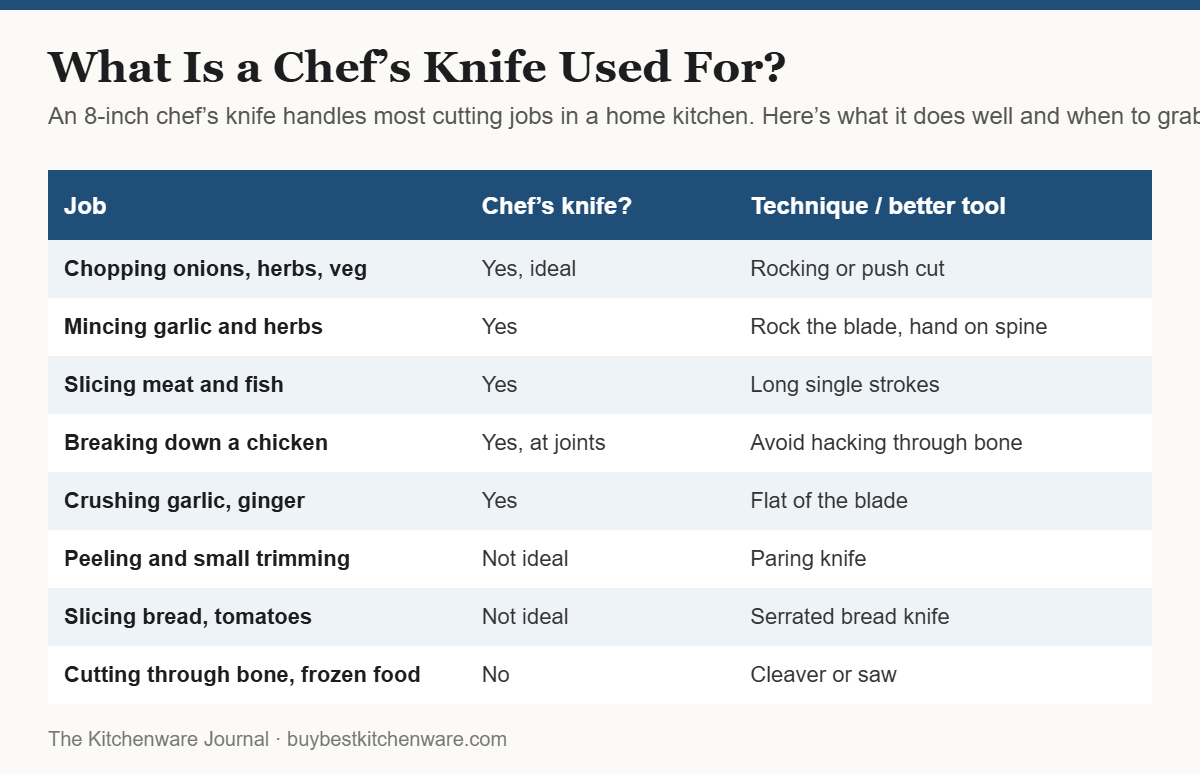
The 30-Second Answer: What is a chef’s knife used for? Nearly everything you cut at home:
- Chopping and dicing onions, carrots, peppers and potatoes.
- Mincing garlic, shallots and herbs.
- Slicing meat, fish and large vegetables.
- Breaking down whole chickens at the joints and trimming larger cuts.
- Crushing garlic and ginger with the flat of the blade.
Leave peeling and fine trimming to a paring knife, crusty bread and tomatoes to a serrated knife, and bones to a cleaver.
Research note: Uses and techniques follow standard culinary practice for the chef’s knife. Blade lengths and styles reflect common Western and Japanese designs.
If you could own only one knife, it should be a chef’s knife. Its curved edge, broad blade and comfortable weight let it chop, slice and mince with the same tool, which is why professional cooks reach for it all day.
This guide covers what a chef’s knife does best, the core cuts to learn, how to choose one and the jobs where another knife is the better pick.
In this guide
What Is a Chef’s Knife Used For? Start With Its Anatomy
- Tip: for fine work and scoring.
- Belly: the curved middle that rocks for chopping and mincing.
- Heel: the widest, strongest part, for tough cuts.
- Spine: the thick top edge; rest your guiding hand here when mincing.
- Bolster and tang: balance and strength where blade meets handle.
The Core Cuts a Chef’s Knife Is Used For
| Cut | How | Used for |
|---|---|---|
| Rock chop | Tip stays on the board, heel rises and falls | Herbs, garlic, onions |
| Push cut | Slide forward and down through the food | Carrots, celery, potatoes |
| Pull cut | Draw the blade back through the food | Meat, fish, delicate items |
| Julienne | Thin planks, then matchsticks | Stir-fries, salads |
| Dice | Planks, sticks, then cubes | Soups, sautés |
| Chiffonade | Roll leaves, slice thin ribbons | Basil, spinach |
Choosing a Chef’s Knife
- Length: 8 inches suits most home cooks; 10 inches for big hands or large prep; 6 inches for small kitchens.
- Western vs Japanese: Western blades are heavier with more belly for rocking; Japanese gyutos are thinner and lighter for push cuts.
- Steel: stainless is low-maintenance; high-carbon gets sharper but can rust if neglected.
- Grip: the handle should feel secure with a pinch grip on the blade.
Comparing styles in more depth? Our German knives guide covers the heavier Western style, and our guide to the types of kitchen knives shows where the chef’s knife fits in a full set.
Keeping It Sharp and Safe
- Use a pinch grip: thumb and index finger on the blade just past the handle.
- Curl your guiding hand into a “claw,” knuckles forward.
- Cut on wood or soft plastic boards.
- Hone every few uses and sharpen every few months; see how to sharpen a knife with a rod.
- Hand wash and dry immediately.
Chef’s Knives Worth Buying
Good chef’s knives come at every price. These cover budget, value and premium picks.
1. Victorinox Fibrox Pro 8-Inch Chef’s Knife (best value)
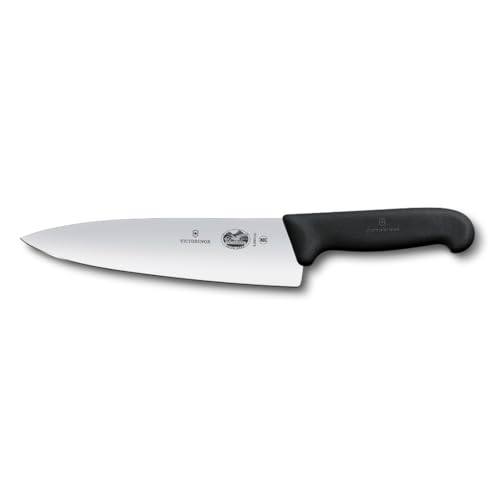
A stamped stainless chef’s knife with a non-slip handle, used widely in culinary schools.
Why We Like It
Light, sharp out of the box, easy to sharpen and very forgiving for beginners.
Flaws to Know
- Plain plastic handle
- Lighter than forged knives
Buy it if: you want a great knife on a budget. Skip it if: you want a heavy forged feel.
2. WÜSTHOF Classic 8-Inch Chef’s Knife (premium German)
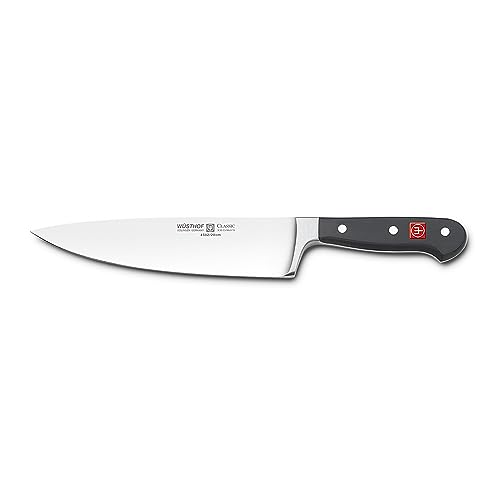
A fully forged chef’s knife made in Solingen, Germany.
Why We Like It
Heavy, balanced and durable; the rocking belly makes chopping effortless, and it lasts for decades.
Flaws to Know
- Pricey
- Heavier than Japanese knives
Buy it if: you want a lifetime knife with heft. Skip it if: you prefer light, thin blades.
3. HOSHANHO Japanese High-Carbon Chef’s Knife (Japanese style)

A Japanese-style chef’s knife in high-carbon stainless steel.
Why We Like It
Thinner and lighter than German knives, great for precise push cuts on vegetables.
Flaws to Know
- Harder edge can chip on bones
- Hand wash only
Buy it if: you like a lighter, sharper blade. Skip it if: you do heavy chopping through squash or bones.
4. Amazon Basics 8-Inch Chef’s Knife (budget starter)
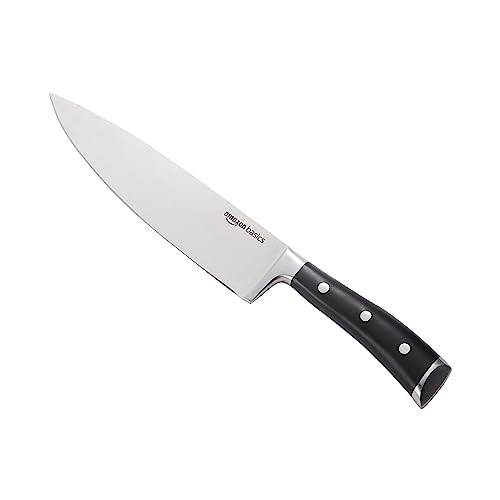
A full-tang, high-carbon stainless chef’s knife.
Why We Like It
A solid first knife or backup at a very low price.
Flaws to Know
- Edge needs sharpening sooner
- Basic fit and finish
Buy it if: you need an inexpensive knife now. Skip it if: you want a long-term favorite.
Notes for the UK, Canada and EU
In the UK and Europe, chef’s knives are often sold as “cook’s knives” and measured in centimetres; a 20 cm knife is about 8 inches. Japanese gyutos are widely available. Buying knives online in the UK requires age verification at delivery.
Frequently Asked Questions
What is a chef’s knife used for?
Chopping, dicing, mincing and slicing most vegetables, herbs, meat and fish.
What should you not use a chef’s knife for?
Cutting through bone or frozen food, prying, or slicing crusty bread.
What size chef’s knife is best?
8 inches for most home cooks.
Is a santoku the same as a chef’s knife?
No. A santoku is shorter and flatter, better for push cuts; a chef’s knife has more curve for rocking.
How often should I sharpen my chef’s knife?
Hone every few uses and sharpen every few months.

Reviewed by Gregory Lowe, Kitchenware Reviewer & Spice Tools Specialist. Gregory has cooked for more than ten years, has reviewed kitchenware for The Kitchenware Journal since 2022, and covers skillets, sauté pans, knives, grinders, scales, juicers and bread makers. Our lab tests on gas, electric and induction cooktops. How we test.
Related guides: Best steak knives · Knife sharpness chart · Butcher block vs cutting board · End grain vs edge grain cutting board