
Last Updated on November 15, 2026
The 30-Second Answer: Here’s how to sharpen a knife with a rod using the safest method, the vertical (tip-down) technique:
- Stand the rod upright with its tip on a folded towel on the counter.
- Place the heel of the blade against the top of the rod at your knife’s angle, about 15 degrees for Japanese knives and 20 for German.
- Draw the knife down and toward you in one smooth arc so the whole edge, heel to tip, touches the rod.
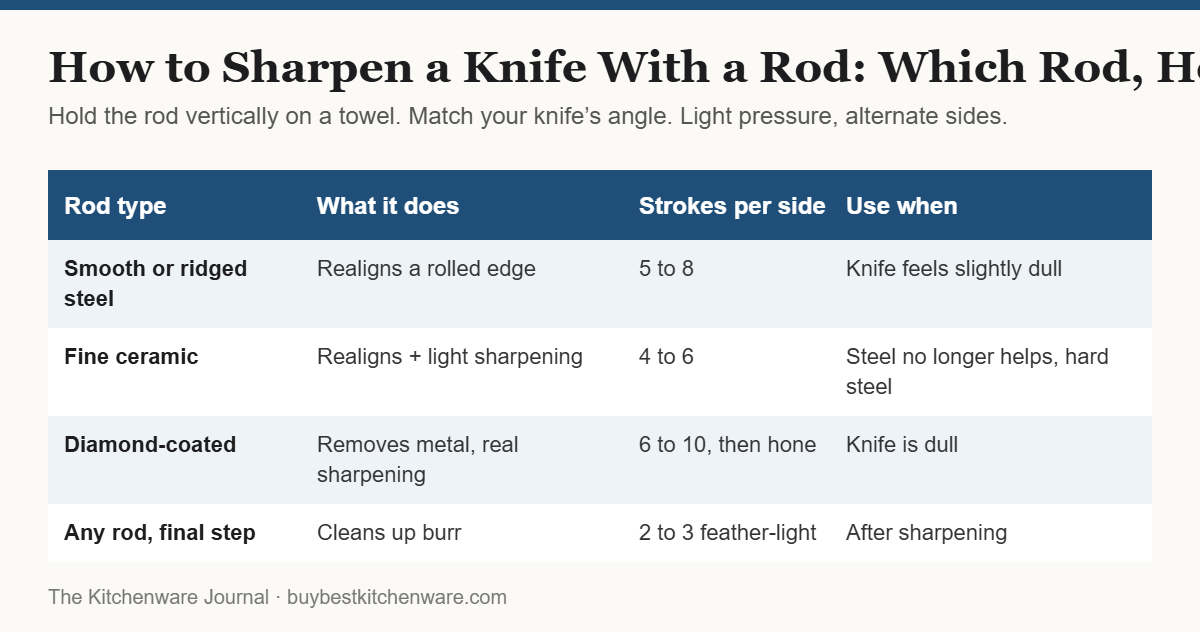
- Switch sides and repeat, 5 to 8 light strokes per side.
- Test on paper. If it still won’t slice cleanly, the knife needs a whetstone or a diamond rod.
A steel or fine ceramic rod mostly realigns the edge; only a diamond or coarse ceramic rod truly sharpens.
Research note: Technique follows standard knife-maintenance practice and the basics of the honing steel. Angles vary by maker, so check your knife’s recommended edge angle.
The rod that came with your knife block is one of the most useful tools in the kitchen, and one of the most misused. Most people swing the knife at it like a TV chef, which is fast but hard to control.
This guide shows the slower, safer vertical method, explains which rod does what, and helps you tell when a rod is enough and when the knife needs real sharpening.
In this guide
Which Rod Do You Have?
- Steel (ridged or smooth): metal rod that realigns a rolled edge. Best for daily touch-ups on Western knives.
- Ceramic: white or gray rod, harder than knife steel. Realigns and lightly sharpens; great for Japanese knives.
- Diamond-coated: gritty rod that removes metal. Use it to sharpen a dull knife, not for daily honing.
For a side-by-side comparison of materials, see sharpening steel vs ceramic rod, and for the honing-vs-sharpening distinction, honing rod vs sharpening rod.
How to Sharpen a Knife With a Rod, Step by Step
- Set up. Fold a damp towel on the counter and stand the rod on it, tip down, handle up.
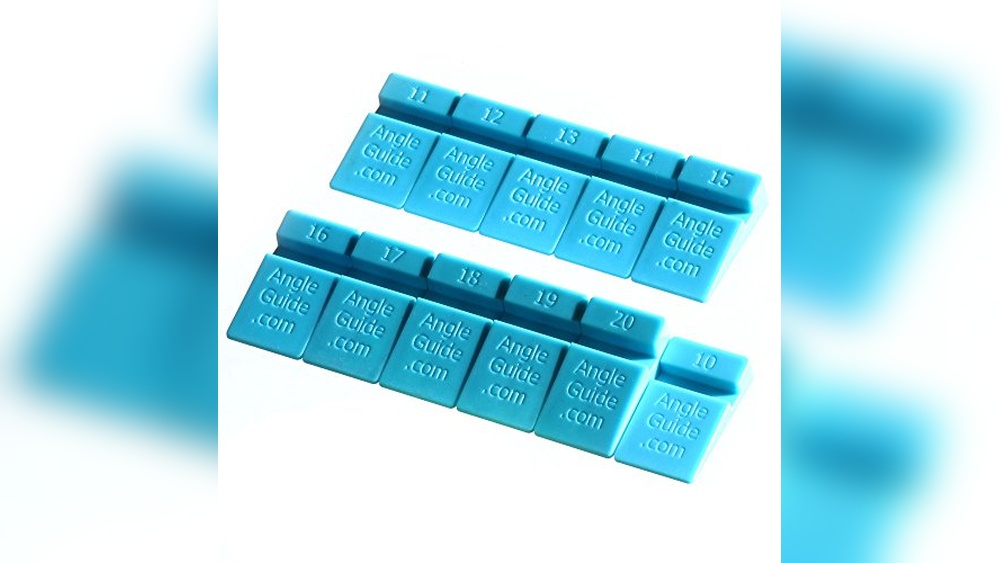
- Find your angle. Hold the blade at 90 degrees to the rod, halve it to 45, then halve again to about 22. Tilt a little lower for Japanese knives.
- Start at the heel. Rest the heel of the edge near the top of the rod.
- Pull down and back. In one smooth motion, slide the blade down the rod while pulling the handle toward you, so the tip finishes near the bottom.
- Alternate sides. Repeat on the other side of the rod for the other side of the edge.
- Finish light. Do the last two or three strokes per side with almost no pressure.
- Wipe the blade to remove metal particles.
How to Tell It Worked
- Paper test: it should slice cleanly through printer paper.
- Tomato test: the edge should bite into the skin without pressure.
- Light test: look straight down at the edge under a light; shiny spots mean dull or rolled sections.
If the knife still struggles after honing, it’s dull and needs real sharpening. Our how to sharpen a blunt knife guide walks through the options, and the knife sharpness chart helps you judge where your edge stands.
Common Mistakes
- Pressing hard. Honing needs only the weight of the knife.
- Changing the angle stroke to stroke.
- Skipping the tip or heel; sweep the full edge.
- Using a coarse ridged steel on hard Japanese knives.
- Waiting until the knife is dull; hone every few uses.
Rods Worth Buying
A long steel for daily honing, a ceramic rod for harder knives and a diamond rod for real sharpening cover every situation.
1. Utopia Kitchen 12-Inch Honing Rod (best budget steel)
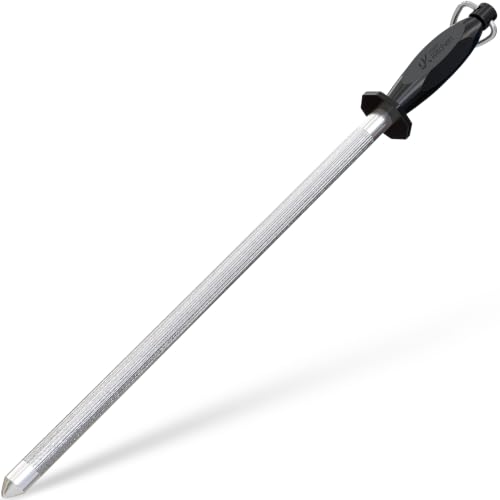
A 12-inch carbon steel honing rod with a comfortable handle.
Why We Like It
Twelve inches gives plenty of length for long chef’s and bread knives, so you can sweep the full edge in one stroke.
Flaws to Know
- Ridged surface; go light on Japanese knives
- Basic build
Buy it if: you need an affordable daily steel. Skip it if: you mostly use hard Japanese knives.
2. 12-Inch Carbon Steel Honing Rod (long and sturdy)
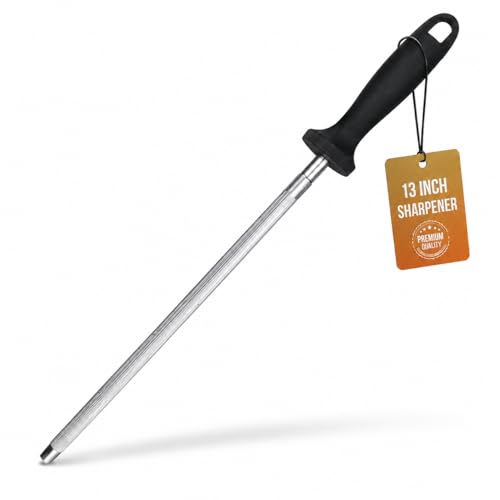
A 12-inch carbon steel rod for kitchen knives.
Why We Like It
Another long, budget-friendly steel for German and Western knives.
Flaws to Know
- Can rust if stored wet
- Ridges wear over years
Buy it if: you want a long steel for big knives. Skip it if: you want ceramic.
3. WÜSTHOF 10-Inch Ceramic Sharpening Rod (best ceramic)

A ceramic rod for dull to moderately sharp knives.
Why We Like It
Ceramic realigns and lightly sharpens, so it keeps a knife sharper longer between full sharpenings. Safe for harder steels.
Flaws to Know
- Fragile if dropped
- Premium price
Buy it if: honing with steel no longer helps. Skip it if: you want the cheapest option.
4. Koja 10-Inch Diamond-Coated Rod (for dull knives)
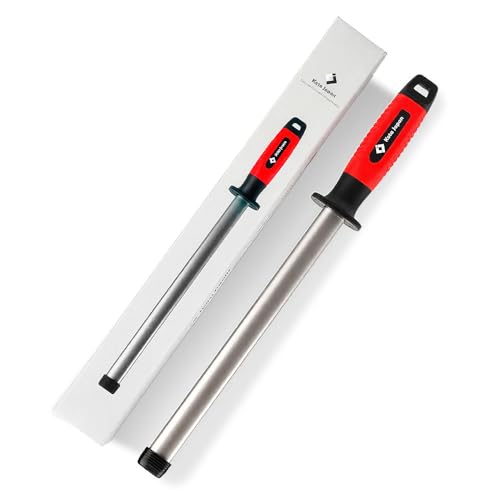
A diamond-coated carbon steel rod for kitchen and outdoor knives.
Why We Like It
Removes metal to bring back a dull edge without setting up a whetstone. Finish with a few strokes on a steel or ceramic rod.
Flaws to Know
- Too aggressive for daily use
- Coating wears over time
Buy it if: your knives are dull and you want a quick fix. Skip it if: you only need daily honing.
For more on knives and edges, see our guide to the types of kitchen knives.
Notes for the UK, Canada and EU
Rods are often sold as “sharpening steels” in the UK and Europe, regardless of whether they hone or sharpen. European knife makers usually recommend angles between about 14 and 20 degrees depending on the line. UK buyers ordering knives online may face age checks at delivery; rods aren’t restricted. Canadian availability matches the US.
Frequently Asked Questions
Can you sharpen a knife with a honing rod?
A steel or fine ceramic rod mostly realigns the edge. A diamond rod actually sharpens.
What angle should I hold the knife on a rod?
About 15 degrees for Japanese knives and 20 degrees for German knives.
How many strokes on a honing rod?
About 5 to 8 light strokes per side, alternating.
How often should I use a rod?
Every few uses, before the knife feels dull.
Is it better to hone vertically or in the air?
Vertically, with the tip on a towel. It’s safer and easier to control the angle.

Reviewed by Samantha Hickel, Kitchenware Reviewer & Cookware Expert. Samantha has cooked for more than ten years, has reviewed kitchenware for The Kitchenware Journal since 2022, and covers stock pots, saucepans, canning, cake and bread pans, cutting boards and everyday kitchen tools. Our lab tests kitchenware, cutting boards and serving pieces for capacity, durability, stain resistance and ease of care. How we test.
Related guides: Sharpening steel vs whetstone · Knife sharpening angle guide · DIY knife sharpener · German knives