
Last Updated on November 15, 2026
The 30-Second Answer: Sharpening steel vs ceramic rod, in short:
- Steel rods realign a rolled edge and remove almost no metal. Best for softer German-style knives.
- Ceramic rods realign and gently sharpen, because ceramic is harder than knife steel. Best for hard Japanese knives and a good all-rounder.
- Ceramic is gentler on hard steel; a coarse ridged steel can chip it.
- Ceramic is more fragile: drop it on tile and it can break.
- If you have mixed knives, a fine ceramic rod (1000 to 2000 grit) handles all of them.
Neither replaces real sharpening. When a rod no longer brings the edge back, use a whetstone or sharpener.
Research note: This comparison follows standard knife-maintenance practice and the basics of the honing steel. Check your knife maker’s recommended maintenance tool and angle.
Knife blocks come with a steel, but many cooks are switching to ceramic rods. The question is whether that’s an upgrade or just a different tool.
It comes down to how hard your knife is and how much metal you want to remove. This guide compares steel and ceramic rods (plus diamond, briefly) so you can match the rod to your knives.
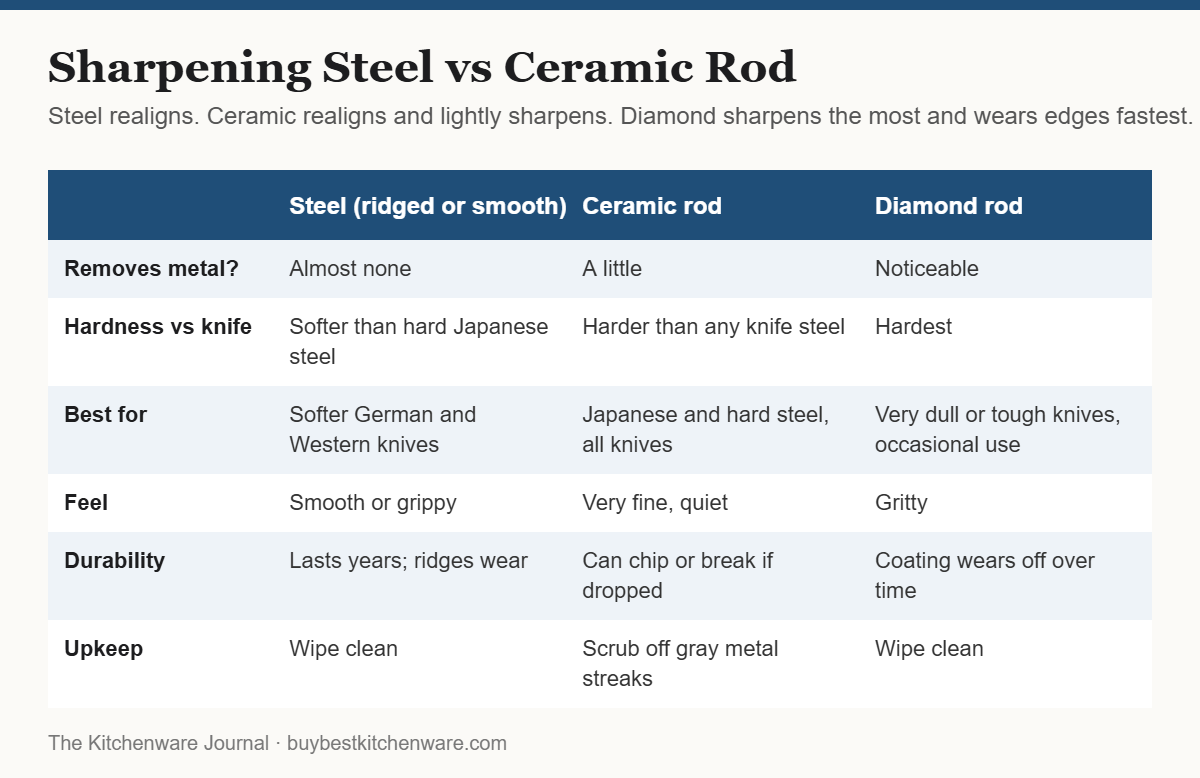
In this guide
How Steel Rods Work
A steel rod is usually hardened steel with fine ridges or a smooth surface. Drawing the blade along it pushes a rolled edge back into line. Because the rod is about as hard as a German knife, it barely removes metal, which makes it ideal for daily touch-ups on softer blades. On very hard Japanese steel, a coarse ridged steel can catch and chip the edge.
How Ceramic Rods Work
Ceramic rods are made from hard alumina ceramic. They realign the edge like a steel, but because ceramic is harder than any knife steel, they also remove a tiny amount of metal with each stroke. That leaves a slightly refreshed edge. Fine ceramic (around 1000 to 2000 grit) is gentle enough for Japanese knives; coarser ceramic acts more like a light sharpener.
Sharpening Steel vs Ceramic Rod: Side by Side
| Steel | Ceramic | |
|---|---|---|
| Action | Hones (realigns) | Hones and lightly sharpens |
| Metal removed | Almost none | A little |
| Best knives | German, Western, softer steel | Japanese, hard steel, all knives |
| Risk | Can chip hard steel if ridged | Breaks if dropped |
| Cleaning | Wipe | Scrub off metal streaks with a cleanser |
| Typical cost | $15 to $65 | $25 to $40 |
Which Rod Should You Buy?
- German knives only (Wüsthof, Zwilling, Henckels): a quality steel.
- Japanese knives (Shun, Miyabi, Global): a fine ceramic rod.
- Mixed set: a fine ceramic rod works for everything.
- Very dull knives: neither; sharpen first. A diamond rod or whetstone restores the edge.
For the difference between honing and true sharpening rods, see our guide to honing rod vs sharpening rod. When honing stops helping, compare tools in sharpening steel vs whetstone.
How to Use Either Rod
- Hold the rod vertically with the tip on a folded towel.
- Set the blade against the rod at your knife’s angle: about 15 to 16 degrees for Japanese knives, 18 to 20 for German.
- Draw the knife down and toward you, heel to tip, with light pressure.
- Alternate sides, 4 to 8 strokes each.
- Wipe the blade and rod when done.
Our how to sharpen a knife with a rod guide walks through the technique in more detail.
Steel and Ceramic Rods Worth Buying
One good rod is all most kitchens need. Here are top picks in each material.
1. Green Elephant 11-Inch Ceramic Honing Rod (1500 Grit) (best ceramic rod)
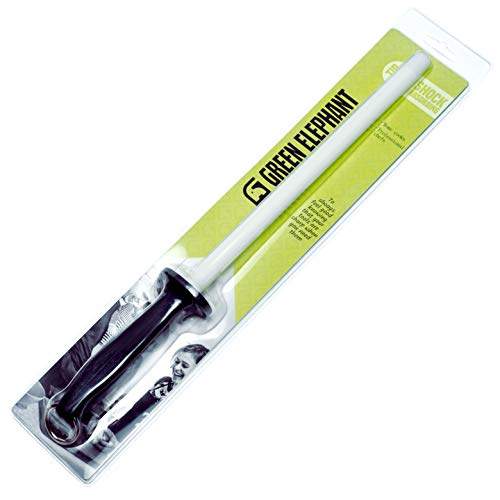
An 11-inch fine-grit ceramic rod with a shatter-resistant design.
Why We Like It
Fine 1500 grit is gentle enough for Japanese knives yet refreshes German blades, and the extra length suits big chef’s knives.
Flaws to Know
- Still breakable if dropped hard
- Needs occasional cleaning
Buy it if: you want one rod for every knife. Skip it if: you only own soft German knives.
2. Work Sharp Kitchen Ceramic Honing Rod (built-in angle guide)
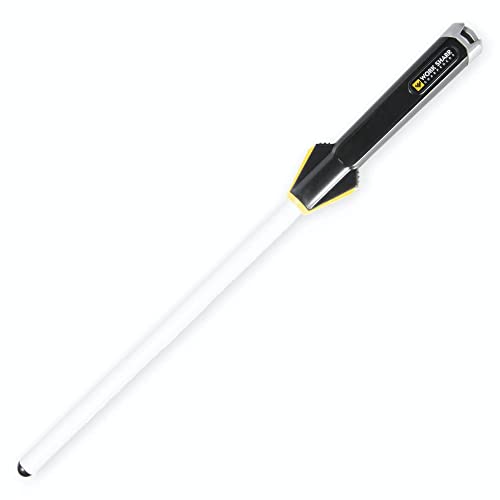
A ceramic rod with angle guides and a fine and coarse surface.
Why We Like It
The angle guides take guesswork out of holding a consistent angle, a big help for beginners.
Flaws to Know
- Bulkier handle
- Guides take getting used to
Buy it if: you struggle to keep a steady angle. Skip it if: you prefer a simple rod.
3. WÜSTHOF 10-Inch Sharpening Steel (best for German knives)

A classic 10-inch honing steel from the German knife maker.
Why We Like It
Matched to German knife steel and angles; the go-to steel for Wüsthof, Zwilling and Henckels owners.
Flaws to Know
- Not ideal for hard Japanese knives
- Premium price
Buy it if: your knives are German. Skip it if: you own Japanese knives.
4. Kimura 10-Inch Carbon Steel Honing Rod (budget steel)
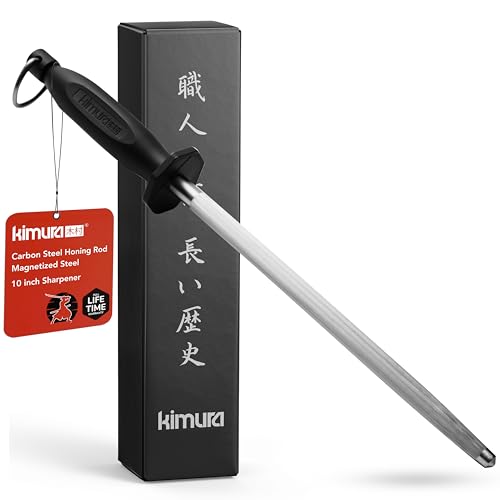
A magnetized carbon steel honing rod with an ergonomic handle.
Why We Like It
An inexpensive steel for everyday touch-ups on Western knives, and the magnetized surface catches metal filings.
Flaws to Know
- Carbon steel can rust if left wet
- Not for hard Japanese steel
Buy it if: you want an affordable steel. Skip it if: you want ceramic.
5. 10-Inch Diamond-Coated Sharpening Rod (for very dull knives)
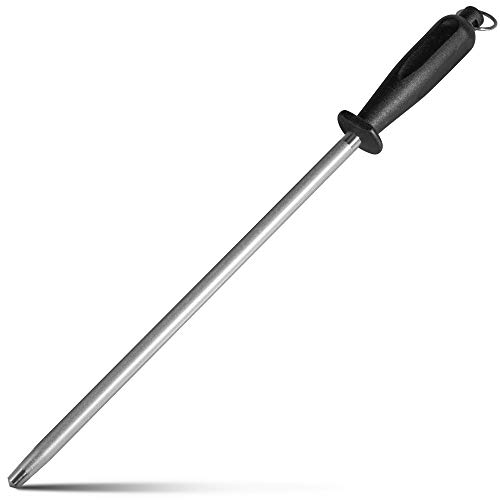
A diamond-coated rod that removes metal faster than steel or ceramic.
Why We Like It
Useful when a knife is too dull for honing but you don’t want to set up a whetstone.
Flaws to Know
- Too aggressive for daily use
- Coating wears over time
Buy it if: you need occasional quick sharpening. Skip it if: you want daily honing.
For more on knife types and steel, see our guide to the types of kitchen knives.
Notes for the UK, Canada and EU
Rods are sold everywhere, often labeled “sharpening steel” even when they only hone. In Europe, German brands dominate steels, while ceramic rods are popular among Japanese knife owners. UK buyers ordering knives may face age checks at delivery; rods and steels themselves aren’t restricted. Canadian availability matches the US.
Frequently Asked Questions
Is a ceramic rod better than a steel?
For hard Japanese knives and mixed sets, usually yes. For softer German knives, a steel works great.
Does a ceramic rod sharpen?
Lightly. It realigns the edge and removes a small amount of metal.
Can a honing steel damage Japanese knives?
A coarse ridged steel can chip very hard steel. Use a smooth steel or fine ceramic rod.
How do I clean a ceramic rod?
Scrub the gray metal streaks off with a mild abrasive cleanser or eraser, then rinse and dry.
How often should I use a honing rod?
Every one to three uses, with light strokes.

Reviewed by Samantha Hickel, Kitchenware Reviewer & Cookware Expert. Samantha has cooked for more than ten years, has reviewed kitchenware for The Kitchenware Journal since 2022, and covers stock pots, saucepans, canning, cake and bread pans, cutting boards and everyday kitchen tools. Our lab tests kitchenware, cutting boards and serving pieces for capacity, durability, stain resistance and ease of care. How we test.
Related guides: How to sharpen Shun knives · Diamond plate vs stones · Knife sharpening angle guide · German knives