Last Updated on July 24, 2026
Are your knives not cutting as smoothly as they used to? The secret to a razor-sharp blade lies in one simple factor: the right sharpening angle.
Knowing the perfect knife sharpening angle can transform your dull knives into precision tools that make cooking easier and safer. In this guide, you’ll discover exactly how to find and maintain the best angle for your knives, so you can enjoy effortless slicing every time.
Keep reading—your kitchen skills are about to get a serious upgrade.
Choosing The Right Angle
Choosing the right knife sharpening angle is key to a sharp, durable blade. The angle affects how the knife cuts and how long it stays sharp. Picking the correct angle depends on the blade type and what you want to use the knife for. Understanding this helps you sharpen your knife better and keep it in top shape.
Common Angle Ranges
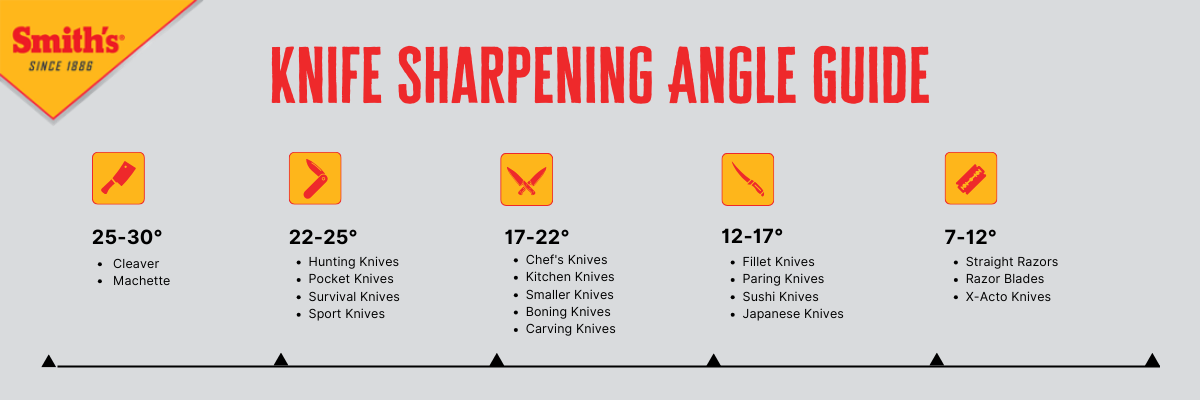
Most knives are sharpened between 15 and 25 degrees per side. A 15-degree angle creates a very sharp edge but is less strong. A 20-degree angle offers a good balance of sharpness and durability. Angles around 25 degrees are stronger but less sharp. Choose an angle based on how you use your knife.
Angle And Blade Type
Thin blades like Japanese knives often use a 15-degree angle. They cut very cleanly but need careful handling. Western knives usually have a 20-degree angle. These are tougher and better for heavy tasks. Thick or outdoor knives can use angles up to 25 degrees for extra strength. Match the angle to the blade style for best results.
Impact On Sharpness And Durability
Smaller angles mean sharper edges. These edges slice easily through food. Larger angles create stronger edges that resist chipping. A very sharp knife with a small angle can dull or chip fast. A wider angle makes the blade last longer but cuts less smoothly. Balance sharpness with durability to suit your needs.
Tools For Measuring Angles
Measuring the correct angle is key for sharp knives. The right tools help keep the angle steady and precise. Many tools fit different needs and budgets. Choose one that feels easy and reliable to use. Here are some common tools for measuring knife sharpening angles.
Angle Guides And Jigs
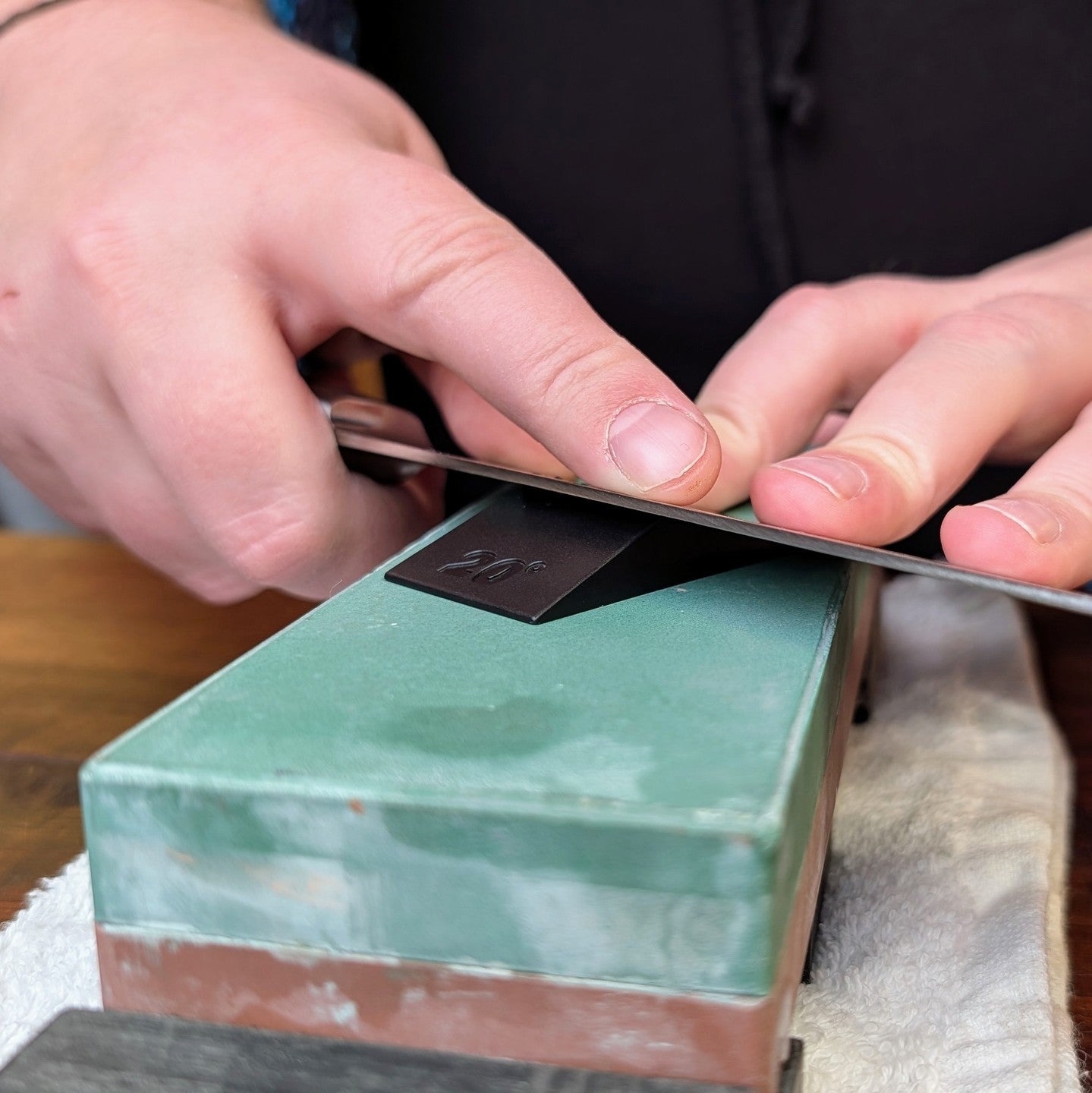
Angle guides and jigs attach to the knife blade. They hold the sharpening tool at a fixed angle. These tools prevent mistakes and keep the edge even. Many guides come with preset angles for popular knives. Some allow angle adjustments for custom needs. They are great for beginners and busy users.
Using A Digital Angle Finder
A digital angle finder measures angles with high accuracy. Place it on the blade or sharpening stone to check the angle. The digital screen shows the exact angle in degrees. This tool helps sharpen with precision and confidence. It suits users who want exact control over their sharpening.
Diy Angle Measurement Techniques
Simple DIY methods work well without special tools. Use a protractor or print angle templates from the internet. Hold the blade next to the guide and match the angle. Another way is folding paper to the desired angle and using it as a guide. These methods save money and still offer good results.
Sharpening Techniques By Angle
Sharpening a knife is not just about making it sharp. The angle you use changes how the blade performs. Different tasks need different angles. Choosing the right angle helps the knife last longer and cut better. Understanding sharpening techniques by angle makes your work easier and safer.
Low-angle Sharpening For Fine Edges
Low-angle sharpening uses angles between 10 and 20 degrees. This creates a thin, sharp edge. It is perfect for delicate tasks like slicing vegetables or filleting fish. Low angles make the blade very sharp but less durable. The edge may wear out faster if used on hard materials.
High-angle Sharpening For Tough Blades
High-angle sharpening uses angles from 25 to 30 degrees. It produces a stronger, thicker edge. This is good for heavy-duty knives and tougher tasks. Knives sharpened at high angles resist chipping and dulling. They work well on bones, wood, or thick food.
Maintaining Consistent Angles
Keeping the same angle during sharpening is very important. Uneven angles cause a weak edge and poor cutting. Use guides or tools to hold the angle steady. Practice helps develop muscle memory for angle control. Consistent sharpening extends the blade’s life and improves performance.
Credit: smithsproducts.com
Adjusting Angles For Different Knives
Adjusting the sharpening angle is key to keeping knives sharp and safe. Different knives need different angles to work best. Using the right angle makes cutting easier and helps the blade last longer. This guide explains how to adjust angles for various knives.
Kitchen Knives
Kitchen knives usually need a sharper angle for fine cuts. A 15 to 20-degree angle works well. This angle keeps the edge sharp for slicing fruits, vegetables, and meat. Too steep an angle can make the blade dull quickly. A consistent angle also helps prevent accidents in the kitchen.
Hunting And Outdoor Blades
Hunting knives need a stronger edge for tough tasks. Set the angle between 20 and 25 degrees. This angle adds durability for cutting wood, rope, or animal hide. A wider angle helps the blade resist chipping. It also holds up better during heavy use outdoors.
Specialty And Decorative Knives
Specialty knives, like Japanese or decorative blades, need precise angles. Angles can range from 10 to 15 degrees for these knives. A smaller angle creates a very sharp edge for detailed work. Careful angle control is important to keep the design and function intact. Sharpen slowly to avoid damaging delicate blades.
Common Mistakes To Avoid
Sharpening a knife needs care and the right angle. Many people make mistakes that hurt the blade or make sharpening harder. Avoid these common errors to keep your knife sharp and strong.
Over-angling And Edge Damage
Sharpening at too steep an angle can ruin your blade. It removes too much metal and weakens the edge. The knife becomes dull faster and may chip easily. Keep the angle steady and correct for your knife type.
Uneven Sharpening
Uneven sharpening leaves one side sharper than the other. This makes cutting harder and unsafe. Use smooth, even strokes on both sides. Check the edge often to keep balance and sharpness.
Ignoring Blade Material
Different blades need different angles and methods. Soft steel needs a wider angle, hard steel a narrower one. Ignoring this can cause poor results or damage. Always consider your blade’s material before sharpening.
Credit: www.reddit.com
Tips For Long-lasting Edges
Keeping your knife edge sharp for a long time saves effort and money. It improves your cutting experience and safety. Simple habits help maintain the blade’s sharpness and prevent damage. Follow these tips to keep your knives in top shape.
Proper Honing Techniques
Honing realigns the knife edge without removing much metal. Use a honing rod at the correct angle. Hold the knife steady and slide it down the rod gently. Repeat on both sides evenly. Avoid pressing too hard to prevent blade wear. Regular honing keeps the edge straight and sharp.
Regular Maintenance Schedule
Set a routine for sharpening and honing your knives. Check the blade often for dull spots or chips. Sharpen the knife only when needed to avoid over-grinding. Use a proper sharpening angle guide to maintain consistency. A well-planned schedule extends the knife’s life and performance.
Storage And Handling Practices
Store knives safely to protect the edge and prevent accidents. Use a knife block, magnetic strip, or blade guards. Avoid tossing knives in drawers where they can bump into other objects. Handle knives carefully, cutting on soft surfaces like wood or plastic. Proper storage and handling keep the blade intact longer.
Credit: knifewear.com
Frequently Asked Questions
What Is The Ideal Knife Sharpening Angle?
The ideal sharpening angle varies by knife type. Generally, 15-20 degrees per side works best for most kitchen knives. Sharpening within this range balances sharpness and edge durability, ensuring efficient cutting without damaging the blade.
How Does Sharpening Angle Affect Knife Performance?
A smaller angle creates a sharper but more fragile edge. A larger angle produces a durable but less sharp edge. Choosing the right angle depends on your knife’s use and desired balance between sharpness and longevity.
Can I Sharpen All Knives At The Same Angle?
No, different knives require different angles. Japanese knives often need 15 degrees, while Western knives use 20 degrees or more. Always check the manufacturer’s recommendation for optimal sharpening angle.
How To Maintain The Correct Sharpening Angle?
Use angle guides or sharpening systems to keep consistent angles. Practice holding the blade steady and adjust your wrist to maintain the desired angle during sharpening. Consistency improves sharpening results.
Conclusion
Choosing the right knife sharpening angle matters a lot. It helps keep your blade sharp and safe to use. A small angle means a sharper but softer edge. A larger angle gives a stronger but less sharp edge. Find the angle that fits your knife and how you use it.
Practice makes perfect. With time, sharpening becomes easier and faster. Keep your knives sharp to make cooking more enjoyable and efficient. Remember, a sharp knife is a safe knife.