
Last Updated on November 15, 2026
The 30-Second Answer: the usual Japanese knife sharpening angle is 10 to 15 degrees per side, compared with 15 to 20 degrees for most Western knives. Harder, thinner Japanese steel holds a finer edge, but too low an angle on a soft or abused knife will chip or roll.
- Most double-bevel gyuto, santoku and petty knives: about 12 to 15° per side.
- Thin slicers and laser-style gyuto: about 10 to 12° per side.
- Single-bevel knives (yanagiba, deba, usuba): follow the factory bevel on the front and flatten the back lightly.
An angle guide makes it easy to stay consistent. See angle guides and stones.
A note on this guide: Reviewing a product properly is not easy, and real testing takes time. For now, this guide is research-based, built on manufacturer specs, product details and verified owner feedback. Our team is testing these products in The Kitchenware Journal lab, and we will update this guide with our hands-on results and photos very soon.
Japanese knives are known for their sharpness, and much of that comes from the edge angle. A narrow bevel slices through food with less force, but it is also less robust. Choosing the right Japanese knife sharpening angle is about matching the edge to the steel and how you use the knife.
This guide gives the Japanese knife sharpening angle for each knife type, a simple way to measure the angle with a ruler, and the angle guides and whetstones that help you hold it steady.
In this guide
Japanese Knife Sharpening Angle by Knife Type
| Knife | Typical angle per side | Notes |
|---|---|---|
| Gyuto (chef’s knife) | 12 to 15° | Go to 15° for heavy daily use |
| Santoku | 12 to 15° | Similar to gyuto |
| Petty (utility) | 12 to 15° | Small edge; easy to overgrind the tip |
| Sujihiki (slicer) | 10 to 12° | Slicing only, no bones |
| Nakiri | 12 to 15° | Flat edge; keep contact even |
| Yanagiba, deba, usuba (single bevel) | Follow factory bevel | Sharpen the front bevel; light work on the back |
| Western chef’s knife | 15 to 20° | For comparison |
Typical ranges; your knife maker’s guidance takes priority. For more detail, see Knifewear’s angle guide and our general knife sharpening angle guide.
How to Find the Angle Without a Guide
Lift the spine to a height that matches the angle. Height is roughly the blade’s width at that point multiplied by the sine of the angle.
| Blade width | Spine height for 10° | Spine height for 15° |
|---|---|---|
| 40 mm (about 1.6 in) | About 7 mm | About 10 mm |
| 50 mm (about 2 in) | About 9 mm | About 13 mm |
| 60 mm (about 2.4 in) | About 10 mm | About 16 mm |
Stacking coins under the spine is a common trick; check your stack with a ruler. Or make your own guide with our DIY sharpening angle guide.
Angle Guides and Whetstones at a Glance
| Product | Type | Angle range | Best for |
|---|---|---|---|
| WEDGEK Angle Wedges | Reference wedges | 10 to 20° | Learning the feel |
| Naniwa Blade Angle Guide | Clip-on guide | Fixed low angle | Japanese stones |
| Sharp Pebble Angle Guide | Clip-on guide | 15 to 20° | Beginners |
| SHARPAL 194H | Adjustable guide and angle finder | 15 to 45° | Measuring existing bevels |
| KING 1000/6000 Starter Set | Whetstone | Any | Classic Japanese stone |
| Shapton #1000 | Ceramic whetstone | Any | Fast, splash-and-go |
| Sharp Pebble 1000/6000 | Whetstone with base | Any | Value combo stone |
Best Angle Guides and Whetstones for Japanese Knives
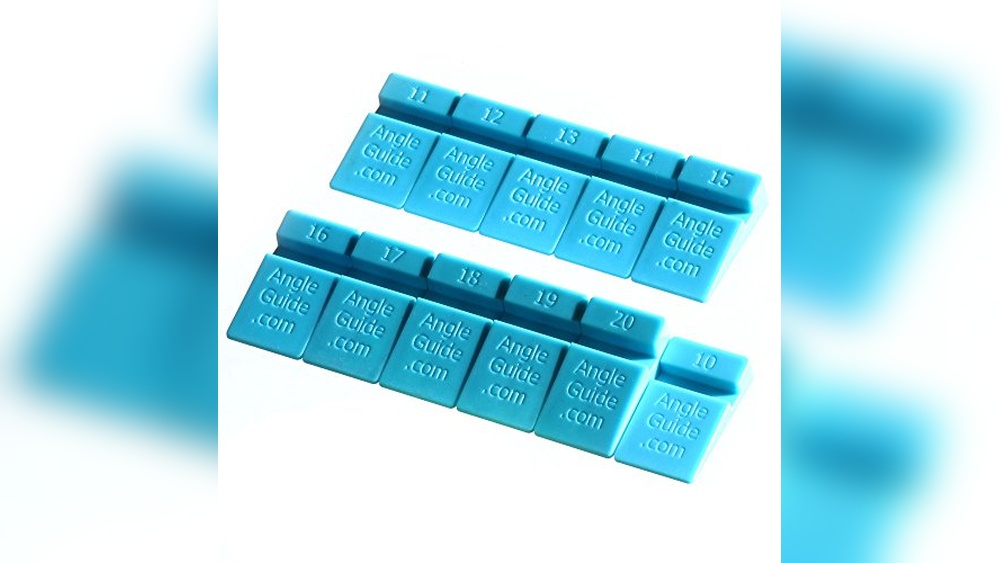
1. WEDGEK Angle Wedges, 10 to 20 Degrees (Best for Learning Angles)
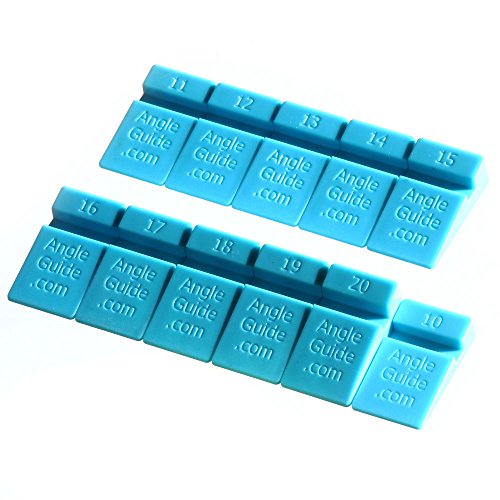
A set of reference wedges you set on the stone to see and copy each angle.
Why We Like It
Covers the low angles Japanese knives use and trains your hands to feel them.
Flaws to Know
- Reference only, does not clip on
- Small parts to store
Buy it if: you want to learn freehand sharpening. Skip it if: you want a clip-on guide.
2. Naniwa QX-0010 Blade Angle Guide (Best Clip-On for Japanese Knives)
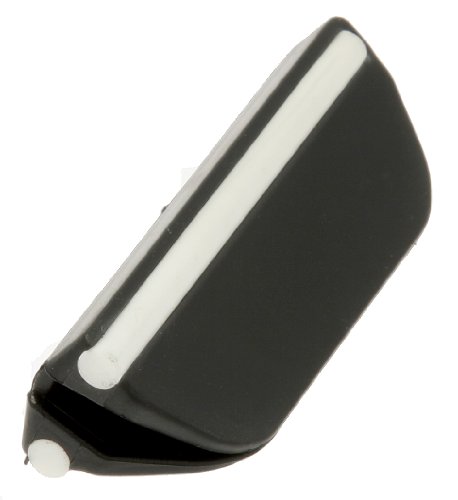
A clip-on guide from Japanese stone maker Naniwa, with a plastic base and ceramic rod that clips onto the spine.
Why We Like It
Holds a fine, low angle suited to Japanese blades.
Flaws to Know
- Fixed angle
- Can mark the spine; use tape
Buy it if: you sharpen on Japanese stones. Skip it if: you need adjustable angles.
3. Sharp Pebble Whetstone Angle Guide (Best Budget Guide)
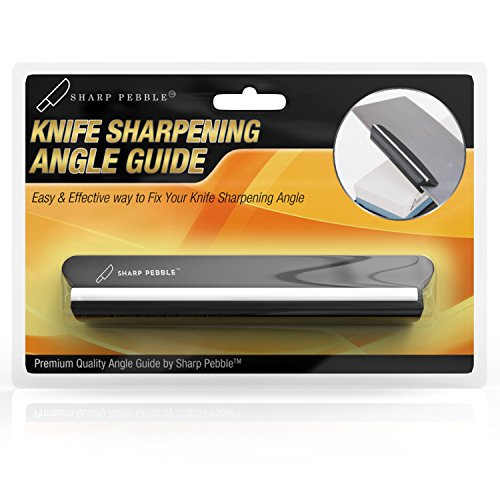
A clip-on guide for 15 to 20-degree angles, sold as fitting most knives.
Why We Like It
An easy way for beginners to hold a steady angle.
Flaws to Know
- Does not go below 15°
- Basic build
Buy it if: you sharpen at 15° on sturdier Japanese knives. Skip it if: you need 10 to 12°.
4. SHARPAL 194H Angle Guide and Edge Angle Finder (Best Adjustable)

An adjustable guide and angle finder covering 15 to 45 degrees for knives, chisels and plane irons.
Why We Like It
Measures the existing bevel so you can match it.
Flaws to Know
- Lowest setting is 15°
- More useful for tools than thin slicers
Buy it if: you want to measure your current edge. Skip it if: you only sharpen thin Japanese knives.
5. KING Whetstone Starter Set, 1000/6000 Grit (Best Classic Stone)

A KING combination stone with 1000 grit for sharpening and 6000 grit for polishing.
Why We Like It
A traditional Japanese stone that suits most home knives.
Flaws to Know
- Needs soaking
- Wears and needs flattening
Buy it if: you want a time-tested starter stone. Skip it if: you want splash-and-go.
6. Shapton Kuromaku #1000 Whetstone (Best Splash-and-Go)
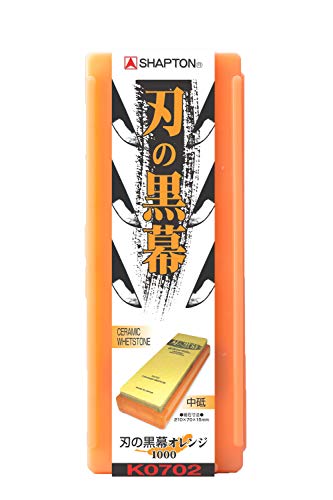
A Shapton ceramic 1000-grit stone.
Why We Like It
Cuts quickly and needs only a splash of water, not soaking.
Flaws to Know
- Single grit
- Pricier per grit
Buy it if: you want a fast, low-fuss main stone. Skip it if: you want a combo stone.
7. Sharp Pebble Whetstone, 1000/6000 Grit with Base (Best Value Combo)
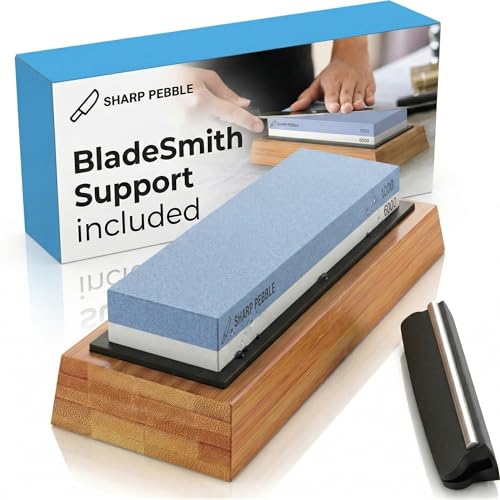
A dual-grit 1000/6000 stone with a non-slip base and angle guide.
Why We Like It
A complete beginner kit at a fair price.
Flaws to Know
- Not a Japanese brand
- Soft stone wears quickly
Buy it if: you are starting out. Skip it if: you want premium stones.
How to Sharpen a Japanese Knife on a Whetstone
- Soak or splash the stone as its maker directs.
- Set the angle, then sharpen one side until you feel a slight burr along the whole edge.
- Repeat on the other side, matching the angle.
- Move to the finer grit and use lighter strokes.
- Remove the burr with very light alternating strokes or a strop.
- Test on paper or a tomato.
Tips to Avoid Damaging the Edge
- Keep your Japanese knife sharpening angle at 10° or above on everyday knives; the edge can chip.
- Avoid pull-through carbide sharpeners on hard Japanese steel.
- Use a ceramic or fine honing rod gently, or skip honing and strop instead.
- Flatten your stones regularly so bevels stay even.
Related guides: what a whetstone is, sharpening steel vs whetstone, sharpening steel vs ceramic rod, honing rod vs sharpening rod and types of knives.
UK, Canada and EU Buyer Notes
- UK and Ireland: search for “whetstone 1000 6000” or “knife sharpening angle guide”; King and Shapton stones are widely sold.
- Canada: the same products are on Amazon.ca.
- Germany, France, Italy and Spain: search for Schleifstein japanisch or Schleifwinkel Hilfe (DE), pierre à aiguiser japonaise (FR), pietra per affilare giapponese (IT) or piedra de afilar japonesa (ES).
- Grit naming: Japanese JIS grits differ from European FEPA ratings; compare like with like.
Frequently Asked Questions
What angle should I sharpen a Japanese knife?
Usually 10 to 15 degrees per side; around 12 to 15° for everyday gyuto and santoku.
Is 15 degrees good for Japanese knives?
Yes. It is a durable choice for daily use.
Can I sharpen a Japanese knife at 20 degrees?
You can, but you lose much of the knife’s cutting performance.
How do I sharpen a single-bevel knife?
Sharpen the angled front bevel and lightly flatten the back to remove the burr.
What grit whetstone do I need?
A 1000 grit for sharpening and a 3000 to 6000 grit for polishing.

Reviewed by Samantha Hickel, Kitchenware Reviewer & Cookware Expert. Samantha has cooked for more than ten years, has reviewed kitchenware for The Kitchenware Journal since 2022, and covers stock pots, saucepans, canning, cake and bread pans, cutting boards and everyday kitchen tools. Our lab tests kitchenware, cutting boards and serving pieces for capacity, durability, stain resistance and ease of care. How we test.
Related guides: Knife Sharpening Angle Guide · What Is a Whetstone? · Sharpening Steel vs Whetstone · Types of Knives