
Last Updated on November 15, 2026
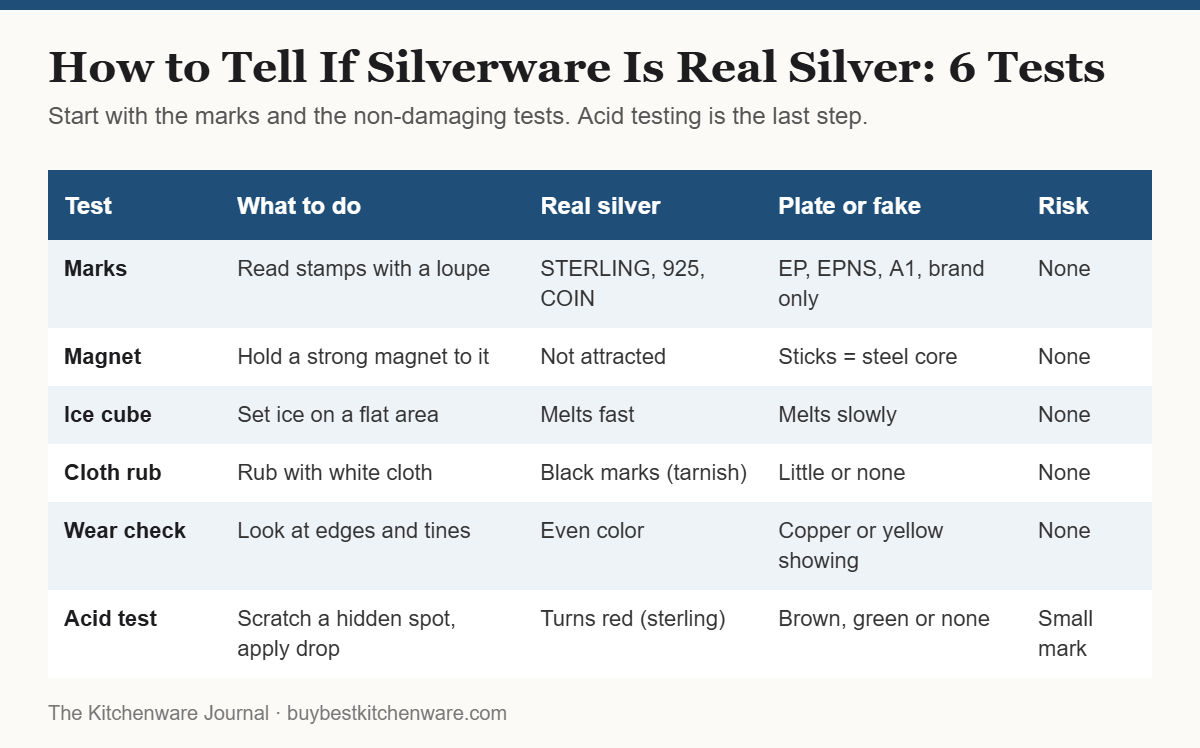
The 30-Second Answer: Here’s how to tell if silverware is real silver, from quickest to most certain:
- Check the marks: STERLING, 925 or COIN suggests solid silver; EP, EPNS, A1 or “quadruple plate” means silver-plated.
- Try a magnet: silver isn’t magnetic. If it sticks, there’s steel inside.
- Look at worn edges: copper or yellow metal showing through means plate.
- Do the ice test: ice melts unusually fast on solid silver.
- Confirm with an acid test on a hidden spot if the piece might be valuable.
No single home test is proof. Marks plus two or three tests that agree give you a confident answer.
Research note: Testing methods follow standard jeweler and collector practice. Purity definitions come from sterling silver standards, and care tips from the Canadian Conservation Institute’s metal care guide.
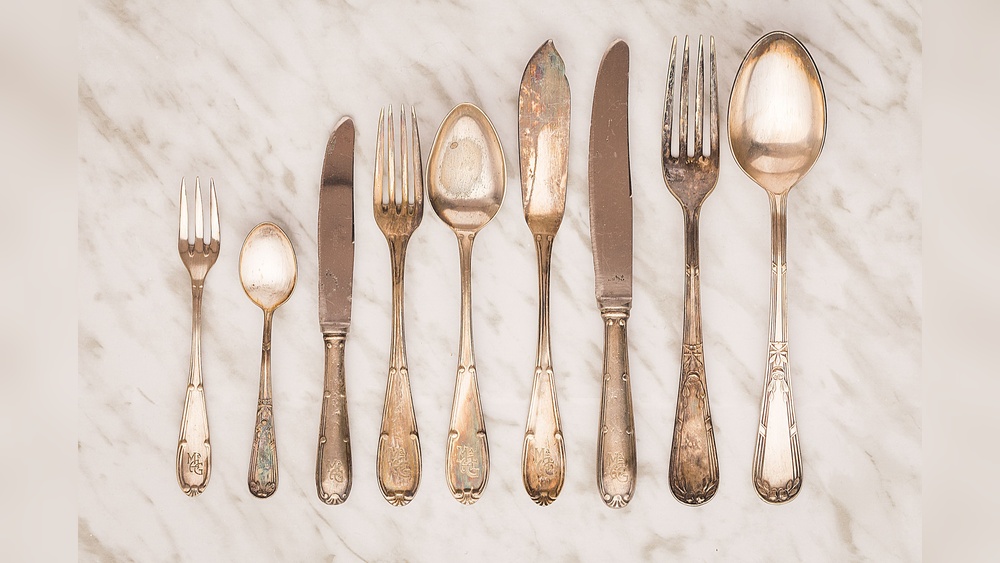
Inherited a drawer of forks and spoons? Some of it may be solid sterling worth real money; some may be silver plate worth more for use than for metal; and some may be stainless or nickel with no silver at all.
This guide walks through six tests in order, from no-risk checks you can do in your kitchen to the acid test jewelers use, and explains what each result really means.
In this guide
Test 1: Read the Marks
Turn the piece over and check the back of the handle with a loupe.
| Mark | What it means |
|---|---|
| STERLING, 925, .925 | Solid sterling (92.5% silver) |
| COIN, PURE COIN, 900 | Coin silver (about 90%) |
| 800, 830, 835 | European silver (80 to 83.5%) |
| EP, EPNS, EPBM, A1 | Electroplated: silver over nickel or brass |
| Triple / quadruple plate | Silver plate |
| Brand only (1847 Rogers Bros., Community) | Usually plate |
| German silver, nickel silver, Alpaca | No silver at all |
For a deeper look at maker symbols, see our guides to American silversmiths marks and sterling flatware marks.
Test 2: The Magnet Test
Hold a strong neodymium magnet against the piece. Silver is not magnetic. If the magnet grabs on, the piece has steel or iron inside and isn’t solid silver. A pass doesn’t prove it’s silver, though; brass, copper and nickel silver aren’t magnetic either.
Test 3: Look for Wear
Check the high points: tips of spoons, fork tines, edges of handles. Silver plate wears through over decades and shows a yellow (brass) or pinkish (copper) base. Solid silver looks the same color all the way through.
Test 4: The Ice Test
Silver conducts heat better than any other metal. Place an ice cube on a flat area of the piece and another on a stainless spoon. On solid silver, the ice starts melting almost immediately. Thick plate over copper can melt ice fast too, so treat this as a supporting test.
Test 5: The Cloth Test
Rub a hidden area with a soft white cloth. Silver tarnish leaves black marks. Stainless steel leaves nothing. This tells you silver is present, not whether it’s solid or plate.
Test 6: How to Tell If Silverware Is Real Silver for Sure (Acid Test)
- Wear gloves and work in a ventilated area.
- Rub a hidden spot on the test stone, or make a tiny scratch on the piece where it won’t show.
- Add one drop of silver testing solution.
- Compare the color to the chart: bright red usually indicates sterling; darker colors indicate lower silver; green or no reaction means little or no silver.
- Wipe and rinse thoroughly.
Because the acid test leaves a small mark, use it last and only on pieces where the answer matters. Have valuable items checked by a jeweler or appraiser, who may use an XRF analyzer that doesn’t damage the piece.
Sterling vs Silver Plate vs Stainless
| Sterling | Silver plate | Stainless steel | |
|---|---|---|---|
| Silver content | 92.5% | Thin layer | None |
| Magnetic? | No | Usually no | Often yes (some grades) |
| Tarnishes? | Yes | Yes | No |
| Weight | Heavy, soft | Medium | Medium |
| Dishwasher | Hand wash best | Hand wash | Yes |
If it turns out to be plate, it can still be lovely to use. Our silver plate guide covers care and value, and if it’s sterling, see is sterling silver worth anything.
Testing Tools Worth Having
These inexpensive tools make every test above easier and more reliable.
1. Silver Test Kit With Scratch Stone (the definitive home test)

An acid testing kit for silver, with solution and a scratch stone.
Why We Like It
The scratch stone lets you test without marking the piece itself, and the color chart separates sterling from lower silver and plate.
Flaws to Know
- Acid needs careful handling
- Results are a guide, not lab-grade
Buy it if: you need a confident answer on possible sterling. Skip it if: your pieces are clearly marked.
2. Jewelers Loupe Set (10x and 30x) (read worn marks)
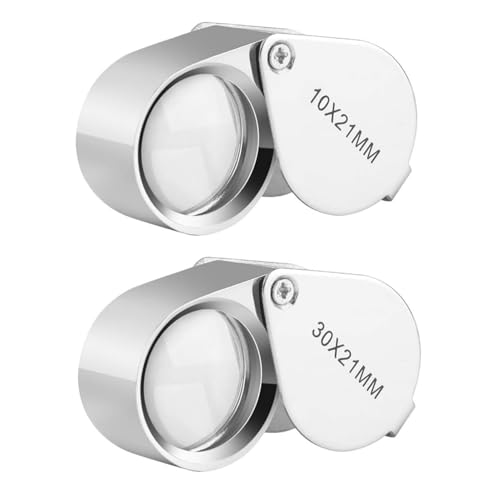
Two pocket loupes at 10x and 30x magnification.
Why We Like It
Tiny, worn marks are the first and best clue. A 10x loupe reveals details you can’t see by eye.
Flaws to Know
- 30x has a small field
- Needs bright light
Buy it if: you’re checking marks. Skip it if: you already own a loupe.
3. FINDMAG Rare Earth Bar Magnets (100 Pack) (magnet test)

Small, strong neodymium bar magnets.
Why We Like It
Fridge magnets are too weak to show a steel core. A rare earth magnet gives a clear yes or no.
Flaws to Know
- Keep away from kids and electronics
- More than you need
Buy it if: you want a reliable magnet test. Skip it if: you already have a strong magnet.
4. JARGOD Pro-Size Silver Polishing Cloth (cloth test and care)

An 11 x 14-inch treated polishing cloth.
Why We Like It
Doubles as your tarnish test and keeps sterling bright between washes.
Flaws to Know
- Turns black with use
- Not for heavy tarnish
Buy it if: you want to clean and test at once. Skip it if: you use liquid polish.
5. Sunshine Polishing Cloths (5 Pack) (budget multi-pack)
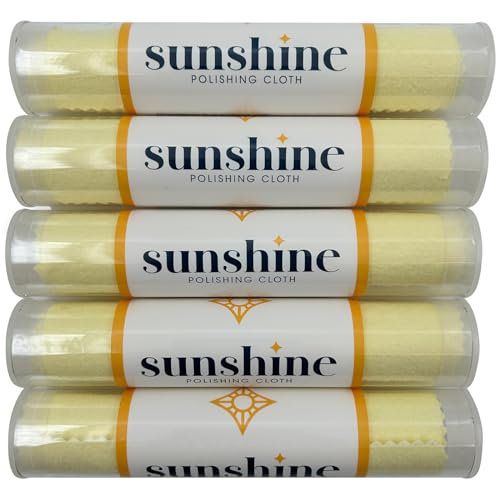
Five small treated cloths for silver, gold, brass and copper.
Why We Like It
Cheap and handy for quick checks and touch-ups on a whole drawer of flatware.
Flaws to Know
- Small size
- Wears out with use
Buy it if: you’re sorting a big collection. Skip it if: you need a large cloth.
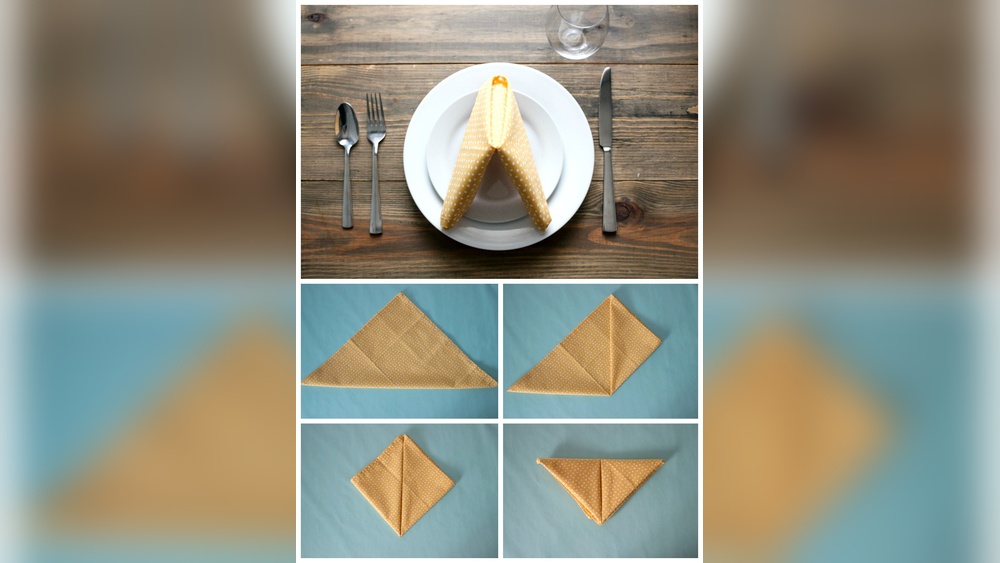
Once you’ve sorted your pieces, our table setting guide shows how to put that sterling to use.
Notes for the UK, Canada and EU
In the UK, sterling made or sold commercially is hallmarked by an assay office: look for the lion passant (or 925 in the newer marks), a town mark and a date letter. Plate is marked EPNS. In much of Europe, solid silver shows a number like 800 or 925, sometimes with a national mark. Canadian silver is usually marked STERLING with the maker’s name.
Frequently Asked Questions
What is the easiest way to tell if silverware is real silver?
Look for STERLING or 925 on the back. If you see EP, EPNS or a plate brand, it’s plated.
Does a magnet stick to real silver?
No. If a magnet sticks, the piece has steel or iron in it.
Can silver plate be marked 925?
Genuine plate shouldn’t be, but fakes exist. If in doubt, confirm with an acid test.
Is silver-plated flatware worth anything?
Usually little for metal value, but some patterns and makers sell well to collectors and replacement buyers.
Does real silver tarnish?
Yes. Sterling tarnishes black over time; stainless steel doesn’t.

Reviewed by Samantha Hickel, Kitchenware Reviewer & Cookware Expert. Samantha has cooked for more than ten years, has reviewed kitchenware for The Kitchenware Journal since 2022, and covers stock pots, saucepans, canning, cake and bread pans, cutting boards and everyday kitchen tools. Our lab tests kitchenware, cutting boards and serving pieces for capacity, durability, stain resistance and ease of care. How we test.
Related guides: Flatware vs silverware · Fancy silverware · Table setting silverware · Types of drinking glasses