
Last Updated on November 15, 2026
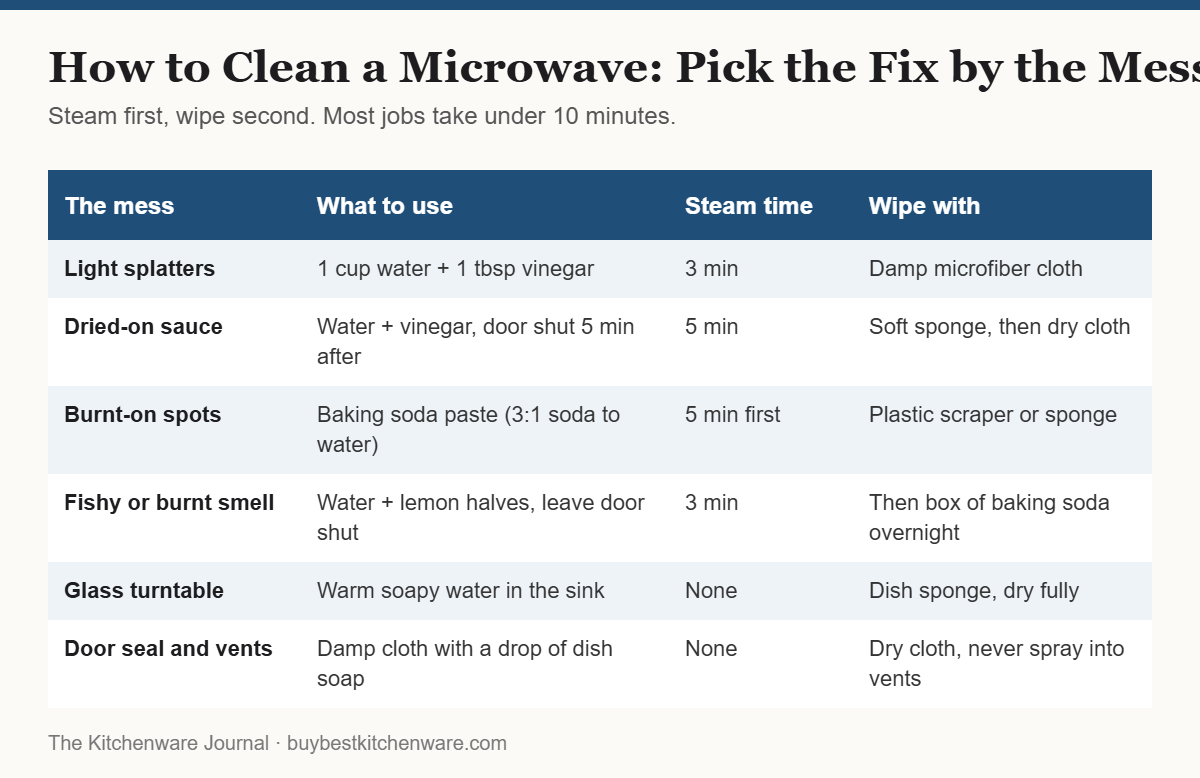
The 30-Second Answer: here’s how to clean a microwave in about ten minutes, no harsh sprays needed:
- Microwave a bowl of 1 cup water and 1 tablespoon white vinegar (or a lemon) on high for 3 to 5 minutes.
- Keep the door shut 5 more minutes so the steam softens everything.
- Pull out the turntable and wash it in the sink.
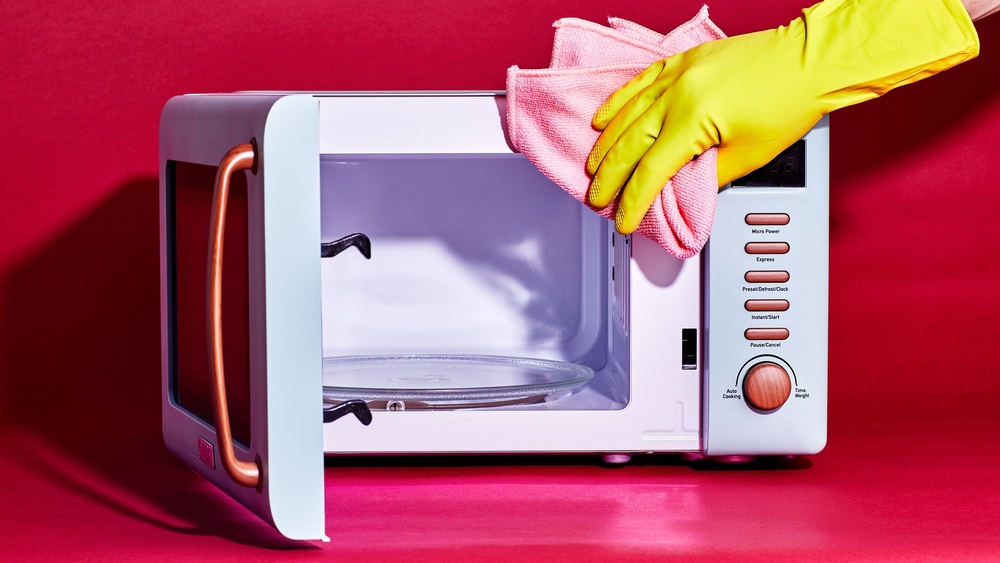
- Wipe the ceiling, walls and floor with a damp microfiber cloth, top to bottom.
- Finish with the door seal, keypad and outside, then leave the door open to air-dry.
Burnt-on spots need a baking soda paste after the steam. Lingering smells need lemon steam plus an overnight box of baking soda.
Research note: We built these steps from the FDA’s microwave oven guidance and major manufacturers’ care manuals, then compared the methods top-ranking guides recommend. Steam times are for a typical 1,000 to 1,200 watt countertop model; lower-wattage units need a minute or two longer.
Most people put off cleaning the microwave because it looks worse than it is. That crusty spaghetti sauce on the ceiling? It’s mostly dried water and sugar, and a few minutes of steam turns it back into something a cloth can lift.
This guide skips the one-size-fits-all routine. Instead, you’ll match the fix to the mess: a quick steam for splatters, a paste for burnt spots, lemon for smells, and a few parts people forget, like the door seal and the vent filter on over-the-range models.
In this guide
What You Need (Probably Already in Your Kitchen)
You don’t need a special spray. Here’s the short list:
- A microwave-safe bowl or large glass measuring cup
- White vinegar or one lemon
- Baking soda
- A soft sponge and two microfiber cloths (one damp, one dry)
- Dish soap for the turntable
- A plastic scraper or old gift card for stubborn bits
Skip steel wool, scouring powder and anything abrasive on the inside walls. Most microwave cavities are painted or enamel-coated steel, and scratches there can chip and rust over time. If you’re tempted to grab a melamine sponge, read what magic erasers are actually made of first. They’re fine on the outside of the door, but they sand the interior coating.
How to Clean a Microwave With Steam (Step by Step)
This is the method that handles most everyday messes. It works because steam rehydrates dried food so you can wipe it instead of scrubbing it.
- Fill the bowl. Add 1 cup of water and 1 tablespoon of white vinegar. Drop in a wooden spoon or toothpick so the water doesn’t superheat and erupt when you move the bowl.
- Run it on high. Three minutes for light splatters, five for dried-on sauce. You want the window fogged.
- Wait with the door closed. Give it 5 minutes. This is the step most people skip, and it’s where the softening happens.
- Lift out the bowl carefully. Use an oven mitt. The bowl and water will be very hot.
- Remove the turntable and ring. Set them in the sink with warm soapy water.
- Wipe top to bottom. Ceiling first, then walls, then the floor, so drips land on areas you haven’t cleaned yet.
- Dry it. A dry cloth prevents streaks and keeps moisture out of the corners.
If vinegar is your go-to, we have a deeper walkthrough on cleaning a microwave oven with vinegar, including ratios for heavy grease.
Burnt-On Spots: The Baking Soda Paste Fix
When steam alone leaves black or brown spots, those are carbonized food. Steam them first, then mix 3 tablespoons of baking soda with 1 tablespoon of water into a thick paste.
- Spread the paste on each spot and let it sit 5 to 10 minutes.
- Work it in small circles with a damp, soft sponge.
- Use a plastic scraper on anything that still sticks. Hold it low and flat.
- Wipe away all paste residue with a damp cloth, then dry.
Never scrape near the waveguide cover, the small cardboard-like panel on one side wall. It’s usually mica, and gouging it can cause sparking. Wipe it gently instead. If it’s already burned or torn, replace it before using the microwave again; the part is cheap and model-specific.
How to Get Rid of Microwave Smells
Burnt popcorn and reheated fish are the usual culprits. Odors cling to the grease film inside the cavity, so you have to clean the film, not just mask the smell.
- Cut a lemon in half, squeeze it into 1 cup of water and drop the halves in.
- Microwave on high for 3 minutes and leave the door closed for 5.
- Wipe the whole interior, including the door glass and the vents on the ceiling.
- Set an open box or small bowl of baking soda inside overnight with the door shut.
Still smells burnt the next day? Repeat the lemon steam once more. Coffee grounds in a bowl overnight also work if you’re out of baking soda.
The Parts People Forget
Turntable and roller ring
Wash the glass tray in warm soapy water or the top rack of the dishwasher if your manual allows it. Wipe the roller ring and the floor underneath it, because crumbs there make the tray wobble and click. Let the glass come to room temperature before washing; a hot tray hitting cold water can crack.
Door seal and keypad
The door seal matters more than it looks. The FDA notes that a damaged or dirty door seal is one of the things to watch on microwave ovens, so wipe the seal and the frame it closes against with a cloth dampened with a drop of dish soap. For the keypad, spray cleaner onto the cloth, never directly on the buttons, so liquid can’t seep behind the panel.
Outside, handle and vent filter
Stainless fronts clean best with a damp microfiber cloth wiped with the grain, then buffed dry. Over-the-range microwaves also have a metal grease filter underneath. Pop it out monthly and soak it in hot water with dish soap and a spoonful of baking soda for 15 minutes, then rinse and air-dry before putting it back.
Tools That Make the Job Faster
You can do everything above with a bowl and a cloth. These are the few extras worth having if you clean often or hate the steam-bowl shuffle.
1. Tovolo Microwave Steam Cleaner (easiest steam method)
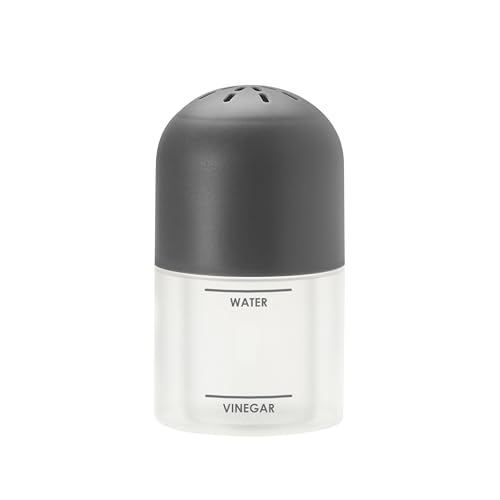
A little bowl with fill lines for water and vinegar and a vented lid, so you’re not guessing the ratio or carrying an open bowl of boiling water.
Why We Like It
The marked lines take the guesswork out, and the lid directs steam up toward the ceiling, which is where the worst splatters live.
Flaws to Know
- Does the same job as a glass bowl you already own
- Small capacity; big microwaves may need a second run
Buy it if: you want a no-measure, no-spill routine. Skip it if: you’re fine with a measuring cup and a spoon.
2. Angry Mama Microwave Cleaner (kid-friendly pick)

The famous steaming figurine: fill her with water and vinegar, heat, and she vents steam through the top of her head.
Why We Like It
It works on the same steam principle and it actually gets people in a busy household to clean the microwave. Our full Angry Mama microwave cleaner review covers how well it holds up.
Flaws to Know
- Plastic body can stain over time
- Novelty is part of the price
Buy it if: you want a fun habit-builder on the counter. Skip it if: you prefer plain, dishwasher-friendly tools.
3. Tovolo Collapsible Splatter Cover (best prevention)

A vented silicone cover that sits over plates and bowls while you reheat, then collapses flat for the drawer.
Why We Like It
The cleanest microwave is the one that doesn’t get dirty. A cover stops most sauce explosions before they happen, and it doubles as a small colander.
Flaws to Know
- 10.5-inch size won’t cover large casserole dishes
- Silicone can hold onto tomato stains
Buy it if: you reheat leftovers daily. Skip it if: you mostly use covered containers already.
4. Nordic Ware Microwave Splatter Cover (rigid, roomy option)
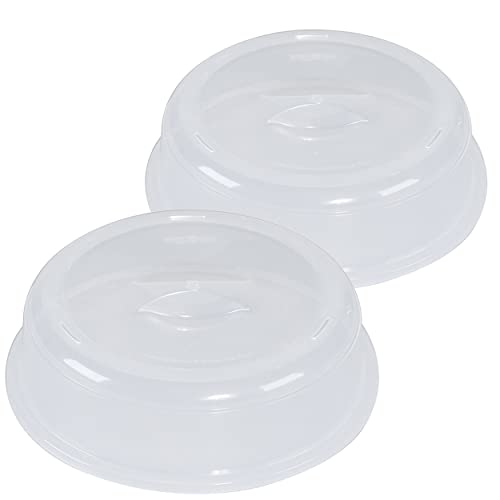
A tall, hard plastic dome with adjustable vents and a grip handle.
Why We Like It
The extra height clears mugs and taller bowls, and the hard shell rinses clean in seconds.
Flaws to Know
- Bulky to store
- Plastic can cloud after many dishwasher cycles
Buy it if: you need clearance for tall containers. Skip it if: drawer space is tight.
5. Amazon Basics Microfiber Cleaning Cloths (streak-free wiping)

A multi-pack of soft, absorbent cloths that are safe on enamel interiors, glass and stainless.
Why We Like It
Microfiber lifts softened grease instead of smearing it, and you can toss the pack in the wash and reuse it for months.
Flaws to Know
- Skip fabric softener or they lose absorbency
- Wash separately from lint-heavy towels
Buy it if: you want one cloth for inside and outside. Skip it if: you already keep a microfiber stash.
How Often Should You Clean Your Microwave?
| Task | How often | Time |
|---|---|---|
| Wipe spills while still warm | After any splatter | 30 seconds |
| Steam clean inside | Once a week | 10 minutes |
| Wash turntable and ring | Once a week | 5 minutes |
| Door seal, keypad, exterior | Once a week | 3 minutes |
| Vent grease filter (over-the-range) | Once a month | 20 minutes, mostly soaking |
A weekly steam is easier to keep up when it’s tied to the rest of your routine. Our kitchen cleaning checklist slots the microwave in with the fridge wipe-down and the dishwasher filter so it’s one quick pass instead of a separate chore.
Mistakes to Avoid
- Running it empty. Never steam or heat with nothing inside; always have water in the bowl.
- Spraying cleaner into the vents. Liquid can reach the electronics. Spray the cloth instead.
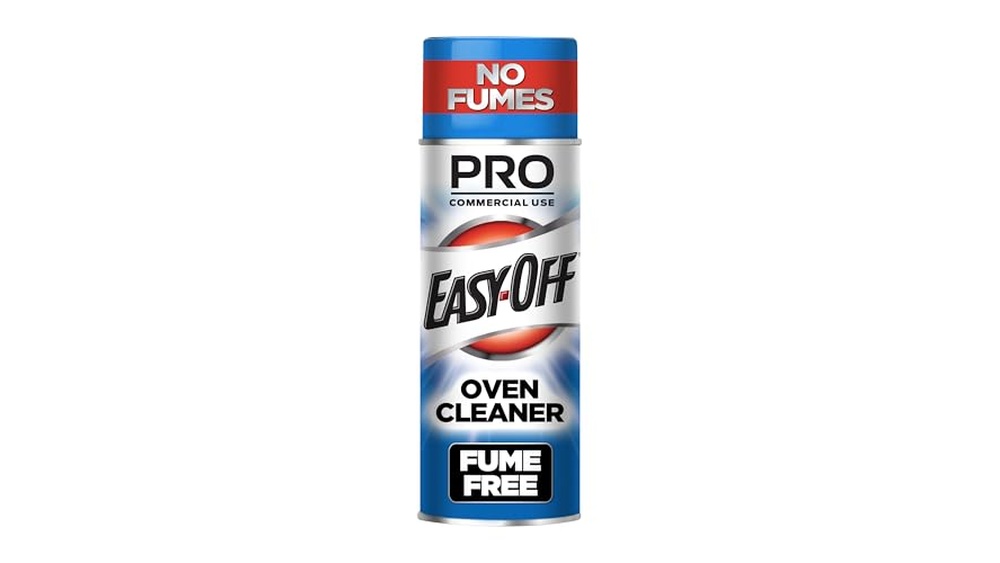
- Using bleach or oven cleaner inside. Fumes linger and can taint food; harsh chemicals also attack the coating.
- Scrubbing the waveguide cover. Wipe it gently. A damaged one can spark.
- Closing the door wet. Leave it open 10 minutes so moisture doesn’t breed odors.
Notes for the UK, Canada and EU
The method is the same everywhere, but a few details shift. In the UK and EU, many kitchens use combination microwave-grill ovens. Clean those only when fully cool, and never steam with the grill or convection element on. White vinegar is sold as “distilled malt vinegar” or “spirit vinegar” in UK shops; the clear spirit type is the one to use. Wattage on European models often runs 800 to 900 W, so add a minute to steam times. In Canada, products and wattages mirror the US, and the same Amazon tools ship there.
Frequently Asked Questions
What is the fastest way to clean a microwave?
Microwave 1 cup of water with 1 tablespoon of vinegar on high for 3 to 5 minutes, keep the door closed 5 more minutes, then wipe. The whole job takes about 10 minutes.
Can I clean a microwave with just water?
Yes. Plain water steam softens light splatters. Vinegar or lemon helps cut grease and smells, but water alone works for quick weekly cleans.
How do I get burnt smell out of a microwave?
Steam a bowl of water with lemon halves for 3 minutes, wipe the whole interior, then leave an open box of baking soda inside overnight with the door shut. Repeat once if needed.
Is it safe to use Windex or bleach inside a microwave?
It’s best not to. Spray cleaners and bleach leave residue and fumes on surfaces that touch food, and they can seep into vents. Use vinegar, lemon, baking soda or mild dish soap instead.
Can I put the microwave turntable in the dishwasher?
Most glass turntables are dishwasher safe, but check your manual. Let it cool to room temperature first so it doesn’t crack.
Why does my microwave spark after cleaning?
Usually a wet or damaged waveguide cover, or a bit of metal left inside. Let it dry fully, check for foil or twist-ties, and replace the cover if it looks burned.

Reviewed by Darren Kelly, Kitchenware Reviewer & Food Prep Tools Specialist. Darren has cooked for more than ten years, has reviewed kitchenware for The Kitchenware Journal since 2022, and covers peelers and choppers, water dispensers, tableware, cleaning tools and waffle makers. Our lab tests glassware and tableware for true capacity, balance, thermal shock and dishwasher durability. How we test.
Related guides: How to clean a dishwasher filter · How to get stains off stainless steel · Best dish sponges · How to stop burning popcorn