Last Updated on August 2, 2026
Is your kitchen really as clean as it should be? You might think a quick wipe-down is enough, but hidden germs and stubborn stains often go unnoticed.
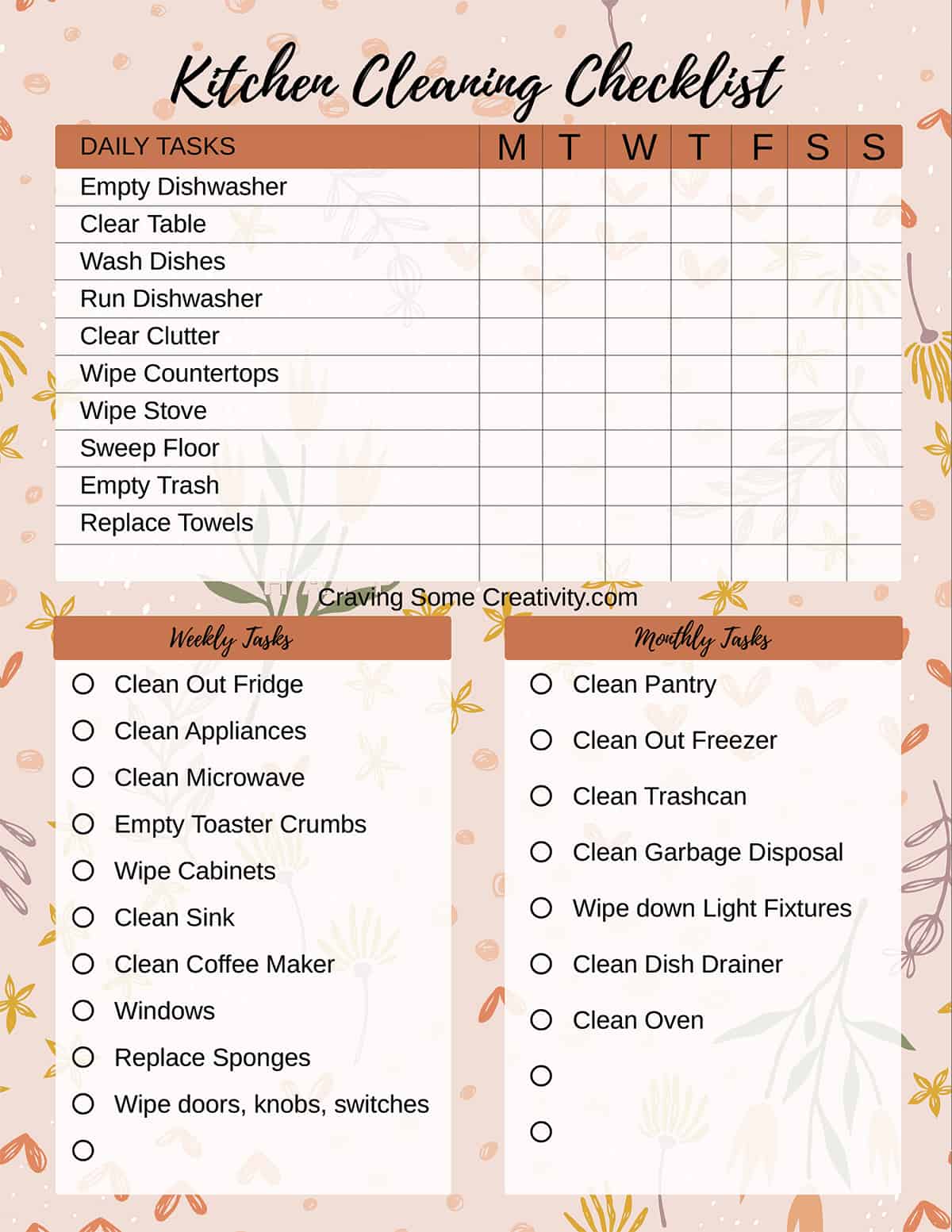
Imagine how much easier your cooking and meal prep would be with a spotless, organized kitchen. This Kitchen Cleaning Checklist is designed just for you—to make sure no corner is missed and your kitchen feels fresh every day. Keep reading, and discover simple, effective steps that will transform your kitchen cleaning routine for good.
Credit: www.cravingsomecreativity.com
Daily Kitchen Cleaning Tasks
Daily kitchen cleaning tasks keep your kitchen neat and safe. They help stop germs from spreading. A clean kitchen makes cooking more pleasant.
Simple daily habits make a big difference. Spend a few minutes on each task. Your kitchen will stay fresh and inviting every day.
Wiping Down Surfaces
Wipe counters and tables after every meal. Use a clean cloth and mild cleaner. This removes crumbs and spills fast. It prevents sticky spots and stains.
Don’t forget cabinet handles and light switches. These spots collect germs too. Clean surfaces help keep your family healthy.
Cleaning Dishes And Sink
Wash dishes right after use. Dirty dishes attract bugs and bad smells. Rinse the sink and wipe it dry. This stops water spots and bacteria build-up.
Clean the faucet and drain area too. A shiny sink makes the kitchen look tidy. It also feels nicer to use.
Sweeping The Floor
Sweep the kitchen floor every day. Crumbs and dirt can cause slips and stains. Use a broom or vacuum with a hard floor setting.
Focus on corners and under appliances. Clean floors keep your kitchen safe and fresh. It also makes mopping easier later on.
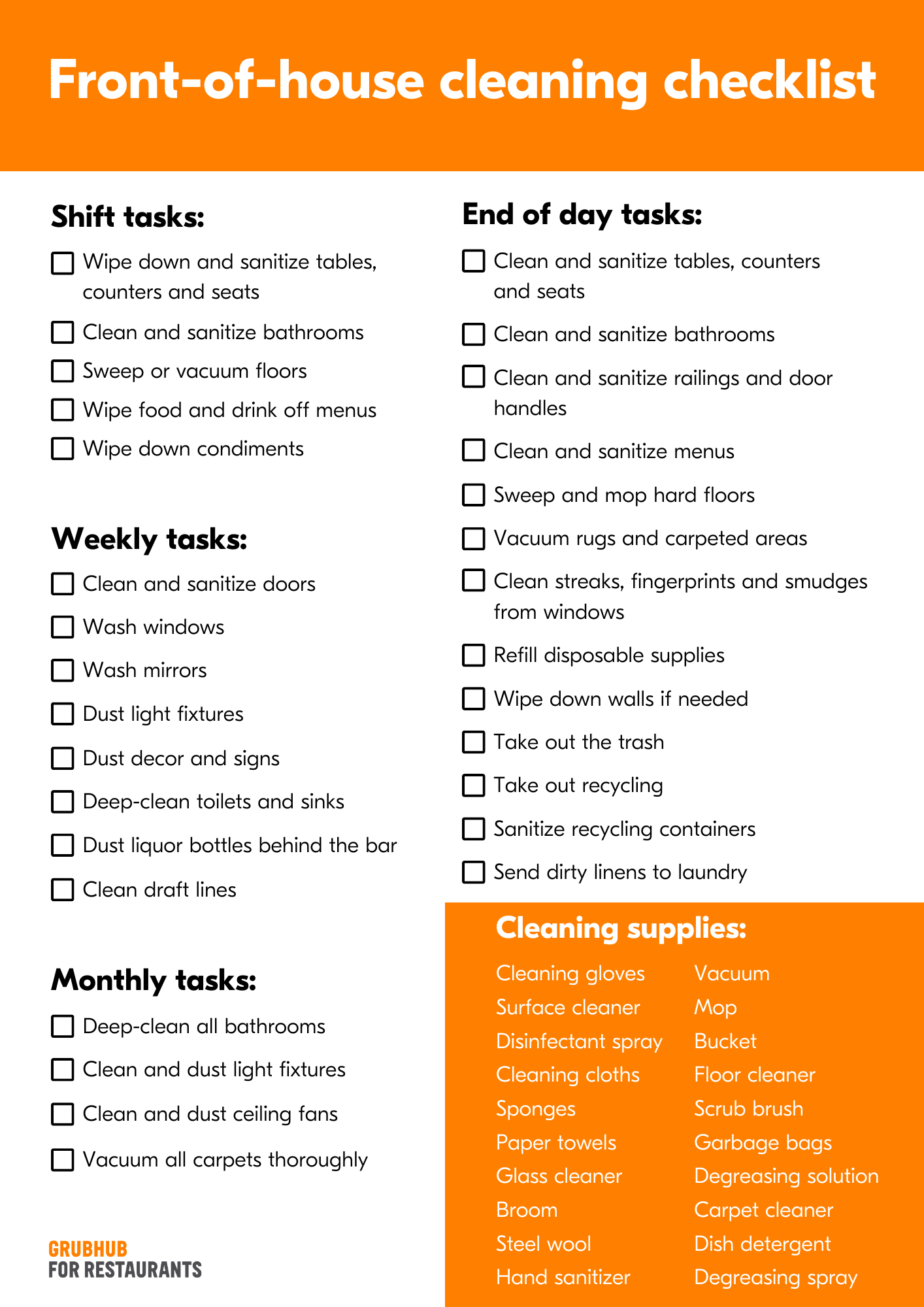
Credit: get.grubhub.com
Weekly Kitchen Cleaning Routine
A weekly kitchen cleaning routine keeps your space fresh and healthy. It stops dirt and germs from building up. A clean kitchen also makes cooking more pleasant. Simple tasks done every week save time later.
Mopping Floors
Start by sweeping or vacuuming the kitchen floor. This removes crumbs and dust. Next, mop with warm water and a mild cleaner. Focus on corners and under cabinets. Clean floors prevent slips and keep pests away.
Cleaning Appliances
Wipe down the outside of appliances like the fridge and microwave. Use a soft cloth and gentle cleaner. Clean inside the microwave to remove food splatters. Check the fridge for expired items and wipe shelves. Clean appliances work better and last longer.
Organizing Pantry And Cabinets
Sort through pantry items and check expiration dates. Arrange cans and boxes neatly. Group similar items together for easy access. Wipe down cabinet shelves with a damp cloth. Organized storage helps reduce food waste and clutter.
Deep Cleaning Kitchen Areas
Deep cleaning kitchen areas is essential for a fresh and healthy home. Dirt and grease build up quickly in this space. Regular cleaning keeps your kitchen safe and pleasant. Focus on key spots that often get dirty but are easy to miss. These include countertops, backsplash, the inside of the refrigerator, and the oven and stove. A thorough clean in these areas improves hygiene and extends the life of your kitchen appliances.
Scrubbing Countertops And Backsplash
Start by clearing all items from the countertops. Use a gentle cleaner suitable for your countertop material. Scrub in small circles to remove stains and spills. Don’t forget the backsplash behind the stove and sink. This area often collects grease and food splashes. Use a soft brush or sponge to clean grout and tiles. Rinse with clean water and dry with a cloth to prevent streaks.
Cleaning Inside The Refrigerator
Empty the refrigerator completely. Check expiry dates and throw away old food. Remove shelves and drawers for a thorough wash. Use warm soapy water and a soft cloth to wipe all surfaces. Pay attention to corners and door seals where dirt hides. Dry parts before placing them back inside. Wipe the fridge interior with a mixture of water and baking soda to remove odors.
Degreasing The Oven And Stove
Ovens and stoves collect grease that can be hard to remove. Use a strong degreaser or a homemade mix of baking soda and water. Apply the paste and let it sit for 15-20 minutes. Scrub with a sponge or brush to lift grease and burnt food. Clean stove knobs and burner grates separately. Wipe everything down with a damp cloth. Finish by drying all surfaces to avoid streaks.

Credit: iconiccleaning.ie
Sanitizing High-touch Spots
Sanitizing high-touch spots in the kitchen helps stop the spread of germs. These areas collect bacteria from hands and food. Cleaning them often keeps your kitchen safe and fresh.
Door Handles And Light Switches
Door handles and light switches are touched many times daily. Germs build up quickly on these surfaces. Use a disinfectant wipe or spray to clean them well. Focus on all sides of the handles and the switch plate. Let the surface dry to kill germs effectively.
Faucets And Sink Fixtures
Faucets and sink fixtures get wet and dirty fast. They hold germs from hands and food scraps. Use a disinfectant cleaner to wipe these areas. Pay attention to handles and spouts. Cleaning here reduces the risk of spreading illness.
Trash Cans And Recycling Bins
Trash cans and recycling bins are full of germs. The lids and rims need regular sanitizing. Wipe them down with a strong cleaner after emptying. This prevents bad smells and bacteria growth. Keep these spots clean for a healthier kitchen.
Tips For Maintaining A Spotless Kitchen
Keeping your kitchen spotless is easier with smart habits. Small steps daily save big cleaning time later. A clean kitchen feels fresh and safe for cooking. Follow these simple tips to keep your kitchen shining.
Using The Right Cleaning Products
Choose cleaning products that match your kitchen surfaces. Some cleaners work well on tiles but harm wood. Use gentle products for delicate areas. Natural cleaners like vinegar and baking soda can help. Avoid harsh chemicals that leave strong smells. Test a small area before full cleaning. Cleaners with antibacterial properties keep germs away. Store products safely out of reach of children.
Creating A Cleaning Schedule
Set specific days for different cleaning tasks. Daily tasks include wiping counters and washing dishes. Weekly chores might be cleaning the fridge and floor. Monthly deep cleaning covers the oven and cabinets. A schedule helps keep cleaning on track. Use reminders or notes to stay consistent. Break big jobs into smaller steps. Regular cleaning stops dirt from building up.
Involving Family Members
Ask family members to share kitchen cleaning duties. Assign simple tasks like clearing the table or sweeping. Children can help with washing vegetables or wiping surfaces. Teamwork speeds up cleaning and builds good habits. Praise everyone for their effort and help. Make cleaning a fun activity with music or timers. Sharing chores teaches responsibility and care for the home.
Frequently Asked Questions
What Is The Best Order For Kitchen Cleaning Tasks?
Start with clearing countertops, then clean dishes and appliances. Next, wipe surfaces, sweep, and mop floors. This order prevents re-contamination and saves time.
How Often Should I Deep Clean My Kitchen?
Deep clean your kitchen every 1 to 3 months. Focus on appliances, cabinets, and hard-to-reach areas. Regular deep cleaning maintains hygiene and prevents buildup.
What Are Essential Tools For Kitchen Cleaning?
Essential tools include microfiber cloths, sponges, scrub brushes, and a mop. Use all-purpose cleaner and disinfectant for surfaces. Proper tools make cleaning efficient and effective.
How Can I Keep My Kitchen Germ-free Daily?
Wipe surfaces daily with disinfectant. Wash hands before cooking. Regularly clean cutting boards and sponges. These habits reduce bacteria and keep your kitchen safe.
Conclusion
Keeping your kitchen clean is easier with a checklist. It helps you stay organized and saves time. Clean surfaces and tools prevent germs and keep food safe. Regular cleaning makes cooking more enjoyable and healthy. Small daily tasks stop big messes from building up.
Use the checklist often to keep your kitchen fresh. A tidy kitchen feels better and works better. Start today and see the difference a clean kitchen brings.