Last Updated on December 14, 2025
Choosing the right surface for chopping, slicing, and dicing in your kitchen can make a big difference. You might be wondering: Should you go for a butcher block or a cutting board?
Both have their fans, but which one fits your cooking style and needs best? By the time you finish reading, you’ll know exactly which option will make your food prep easier, safer, and more enjoyable. Let’s dive in and help you make the perfect choice for your kitchen.
Types Of Butcher Blocks
Butcher blocks come in various types, each with unique features. Choosing the right type affects durability and cutting experience. Understanding these types helps you pick the best block for your kitchen.
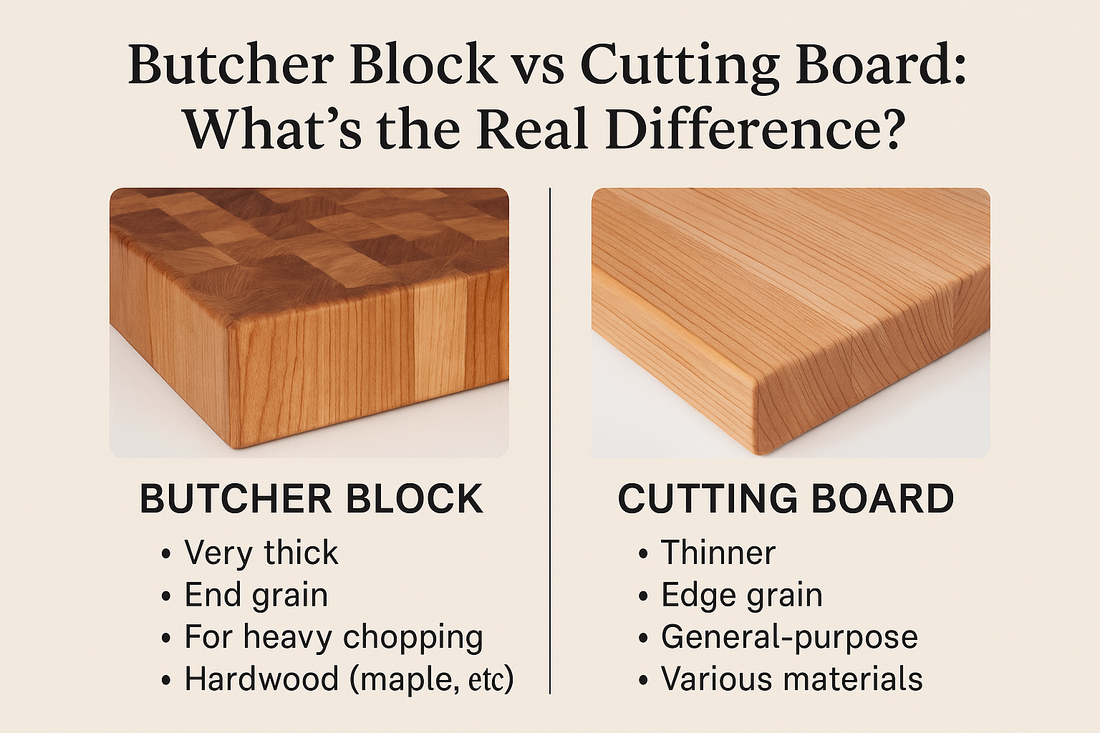
Butcher blocks vary mainly by the way the wood grain is arranged. This affects how the block handles knives and how long it lasts.
End Grain Blocks
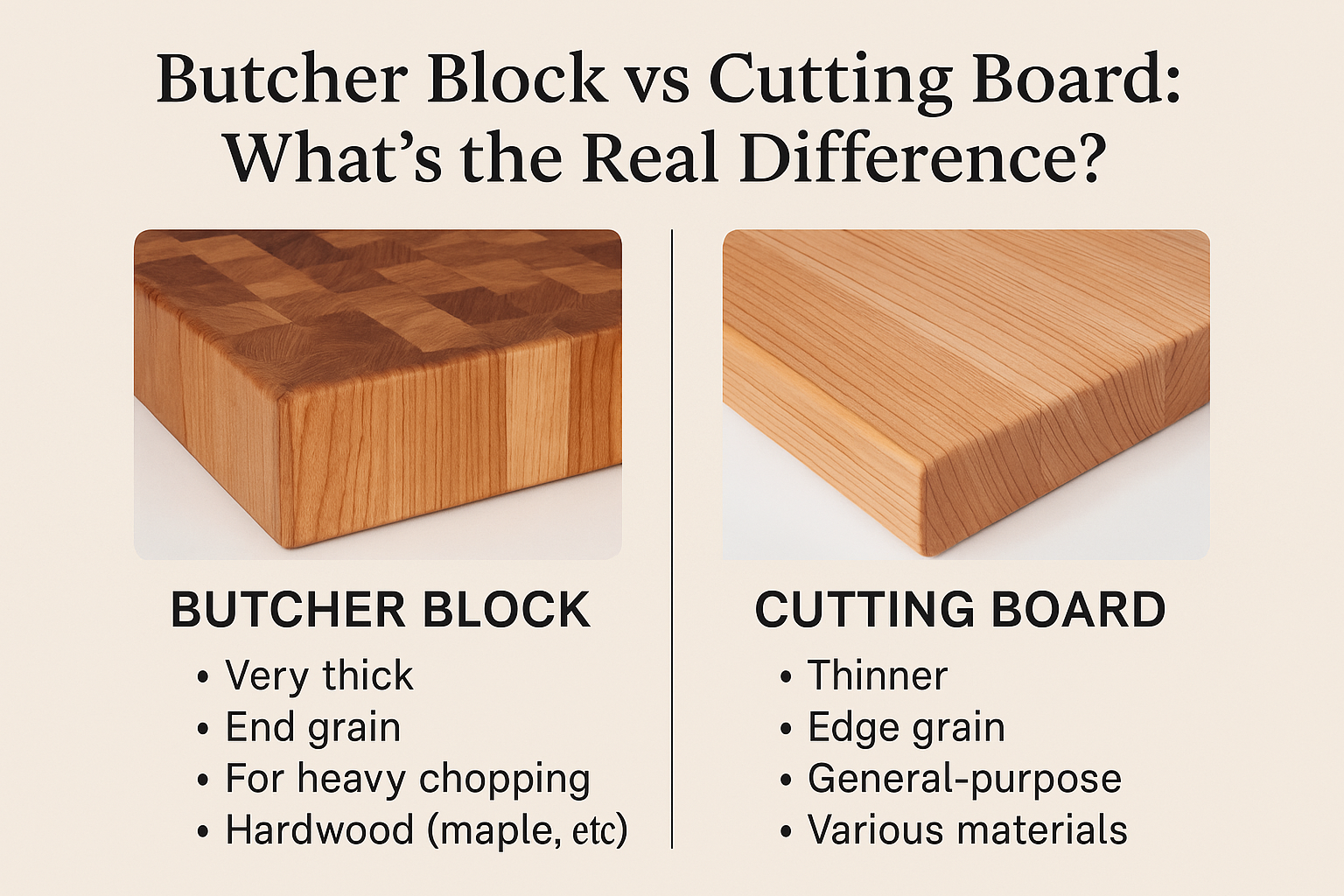
End grain blocks show the wood fibers standing upright. This design is gentle on knives and heals small cuts over time. They are very durable and ideal for heavy chopping. These blocks often cost more due to the complex making process.
Edge Grain Blocks
Edge grain blocks display the long sides of wood strips glued together. They have a smooth, flat surface and are less expensive than end grain blocks. These blocks are easier to clean but may show knife marks faster. They are good for everyday cutting tasks.
Face Grain Blocks
Face grain blocks use the wide, flat surface of the wood. They have a beautiful, natural look with visible grain patterns. These blocks are less durable and can wear faster with heavy use. They are best for light cutting and serving purposes.
Types Of Cutting Boards
Cutting boards come in many types, each with unique features. Choosing the right one can affect your cooking and kitchen safety. This section explains the most common types of cutting boards.
Wooden Cutting Boards
Wooden cutting boards are classic and durable. They are gentle on knives and help keep blades sharp. These boards often have natural antibacterial properties. They need regular oiling to prevent cracking. Wooden boards add a warm look to kitchens.
Plastic Cutting Boards
Plastic cutting boards are lightweight and easy to clean. They are dishwasher safe, which makes cleaning simple. These boards come in bright colors for different food types. Plastic boards are affordable and widely used. They may wear out faster than wood.
Bamboo Cutting Boards
Bamboo cutting boards are eco-friendly and strong. Bamboo grows fast, making it a sustainable choice. These boards resist water better than wood. They are harder than most wooden boards. Bamboo boards require oiling to keep their quality.
Composite Cutting Boards
Composite cutting boards mix wood fibers and resin. They are very tough and heat resistant. These boards do not absorb water easily. Composite boards are dishwasher safe but heavy. They offer a good balance of durability and care.
Durability And Maintenance
Durability and maintenance are key factors when choosing between a butcher block and a cutting board. Both have unique strengths that affect how long they last and how much care they need. Understanding these aspects helps keep your kitchen tools in good shape.
Longevity Of Butcher Blocks
Butcher blocks are thick and solid wood slabs. They can last many years with proper care. The wood is dense, so it resists deep cuts and dents. Over time, you can sand the surface to remove scratches. This restores the block and makes it look new again. Regular oiling protects the wood from drying and cracking. Butcher blocks are heavy and sturdy, making them durable kitchen surfaces.
Longevity Of Cutting Boards
Cutting boards come in various materials like plastic, bamboo, and wood. Plastic boards wear out faster and may need replacement every few years. Bamboo boards are harder and last longer but can crack if not cared for. Wooden cutting boards offer good durability but are thinner than butcher blocks. They can warp or split without proper maintenance. Choosing the right material affects how long your cutting board will stay useful.
Cleaning And Care Tips
Clean butcher blocks with warm water and mild soap. Avoid soaking them in water to prevent swelling. Dry them immediately with a towel. Apply food-safe mineral oil regularly to keep the wood hydrated. For cutting boards, wash plastic ones in the dishwasher or by hand. Wooden and bamboo boards need hand washing only. Sanitize with vinegar or diluted bleach to kill germs. Always dry boards completely before storing to avoid mold and warping.
Credit: tayfus.com
Knife Friendliness
Choosing the right cutting surface can protect your knives and keep them sharp longer. Knife friendliness means how well a surface preserves the edge of your blade. Different boards wear down knives at different speeds. Understanding this helps you pick the best board for your kitchen tools.
Impact On Knife Sharpness
Butcher blocks are usually made from hardwoods like maple or oak. These woods are gentle on knife edges. They absorb some pressure, which reduces dulling. Cutting on butcher blocks can keep knives sharper for more uses.
Plastic cutting boards often feel harder under the knife. Hard surfaces cause blades to dull faster. Plastic can also develop deep cuts that trap bacteria. This roughness can damage knife edges over time.
Surface Hardness Comparison
Butcher blocks have a medium hardness level. This balance protects knives and lasts long. The wood fibers allow knives to cut in smoothly. The surface also heals small cuts naturally.
Plastic boards are harder and less forgiving. Their surface does not heal after cuts. Knives meet more resistance, which can chip or blunt blades. Plastic boards need replacing sooner to stay safe.
Hygiene And Safety
Hygiene and safety are key factors when choosing between a butcher block and a cutting board. Both surfaces come in contact with raw food, so keeping them clean matters a lot. Proper care prevents bacteria growth and food contamination. Understanding how each material handles bacteria and odors helps maintain a safe kitchen.
Bacterial Resistance
Butcher blocks are made of thick wood, which naturally fights bacteria. Wood fibers absorb moisture but also trap bacteria inside, where they die over time. Cutting boards made of plastic can develop deep cuts. These cuts can hold bacteria if not cleaned well. Regular washing and replacing old plastic boards reduce risks. Wood blocks need oiling to stay smooth and less prone to bacteria buildup.
Stain And Odor Control
Wood butcher blocks resist stains better than plastic boards. They don’t absorb strong food colors easily. Odors tend to stay less on wood because of its natural properties. Plastic cutting boards can hold smells from garlic or onions. Stains and odors on plastic can be hard to remove. Both types need thorough cleaning after use to prevent lasting smells and marks.

Credit: www.youtube.com
Cost And Value
Cost and value are key factors when choosing between a butcher block and a cutting board. Both options vary widely in price and durability. Understanding these differences helps you make a smart purchase. Let’s explore the costs and long-term benefits of each.
Price Range Comparison
Butcher blocks usually cost more than cutting boards. Prices start around $100 and can go up to $1,000 or more. This depends on size, wood type, and brand.
Cutting boards are more affordable. Basic models may cost $10 to $50. High-end boards, made from quality wood or composite materials, can reach $100 to $200.
Butcher blocks are larger and more complex, which raises their price. Cutting boards come in many sizes and styles, offering options for every budget.
Long-term Investment
Butcher blocks last a long time with proper care. They can be sanded and refinished many times. This makes them a good long-term investment.
Cutting boards tend to wear out faster. They may need replacement after a few years. Wood boards require regular oiling to stay in good shape.
Choosing a butcher block means paying more upfront but saving on replacements. Cutting boards offer lower initial cost but may need frequent renewal.
Aesthetic And Kitchen Style
The look of your kitchen changes with your choice of cutting surfaces. Both butcher blocks and cutting boards add style and function. Each offers unique aesthetic qualities that suit different kitchen designs. Choosing the right one can enhance your kitchen’s overall vibe.
Design Options For Butcher Blocks
Butcher blocks come in thick, sturdy slabs of wood. They often have a warm, natural finish. Many feature end-grain wood patterns, which add texture and depth. Some butcher blocks include metal accents or sleek edges for a modern touch. Their size and weight make them a strong centerpiece on kitchen counters.
Colors vary from light maple to rich walnut tones. This variety helps match rustic or contemporary kitchens. Butcher blocks can also be custom-made to fit specific kitchen styles. They bring a cozy, traditional feel that fits farmhouse or country kitchens well.
Design Options For Cutting Boards
Cutting boards come in many shapes and sizes. They often feature smooth, flat surfaces that suit everyday use. Materials include wood, plastic, bamboo, and composite. Each material offers a different look and care level.
Wooden cutting boards bring warmth and charm to any kitchen. Plastic boards come in bright colors, adding a fun element. Bamboo boards have a clean, modern look that fits minimalist kitchens. Cutting boards are easy to move and store, making them practical and stylish.
Choosing For Specific Uses
Choosing the right board depends on what you need it for. Both butcher blocks and cutting boards serve different purposes. Knowing their strengths helps pick the best tool for specific kitchen tasks. This section looks closely at how each works for chopping, slicing, serving, and presentation.
Chopping And Slicing
Butcher blocks are thick and sturdy. They handle heavy chopping and slicing without damage. Their solid surface protects your knives and stays stable on the counter. Great for cutting meat, vegetables, and harder foods.
Cutting boards come in many materials like plastic and bamboo. They are lightweight and easy to clean. Ideal for light chopping and slicing tasks. Perfect for daily use and quick meal prep.
Serving And Presentation
Butcher blocks have a rustic, natural look. They make a bold statement on the table. Use them to serve cheese, bread, or charcuterie. Their large surface holds many items at once.
Cutting boards can also serve food. Smaller boards work well for snacks and appetizers. They are easy to pass around and clean after use. Choose a board with an attractive design for a neat presentation.
Environmental Considerations
Choosing between a butcher block and a cutting board involves more than just style or size. Environmental impact matters. Understanding how each option affects the planet helps make a better choice.
Sustainability Of Materials
Butcher blocks often use hardwood from slow-growing trees. This can mean longer forest recovery times. Cutting boards come in many materials, including bamboo, which grows fast. Bamboo is a renewable resource that regrows quickly. Wood boards, if sourced from certified forests, support sustainable practices. Plastic cutting boards, though durable, come from fossil fuels and do not biodegrade.
Eco-friendly Choices
Choose butcher blocks made from reclaimed or FSC-certified wood. This reduces waste and supports forest health. Bamboo cutting boards offer a green alternative with quick growth cycles. Avoid plastic boards that add to landfill waste. Natural oils used to finish wood surfaces are safer for the environment than synthetic coatings. Small changes in material choice help reduce your kitchen’s carbon footprint.
Credit: tayfus.com
Frequently Asked Questions
What Is The Main Difference Between Butcher Block And Cutting Board?
Butcher blocks are thick, sturdy wooden slabs mainly for heavy chopping. Cutting boards are thinner and come in various materials for daily kitchen use.
Which Is Better For Heavy-duty Chopping: Butcher Block Or Cutting Board?
Butcher blocks are better for heavy-duty chopping. Their thickness and durability protect knives and withstand strong impacts.
Are Butcher Blocks Easier To Maintain Than Cutting Boards?
No, butcher blocks require more maintenance. They need regular oiling and proper cleaning to prevent cracks and warping.
Can Cutting Boards Damage Knives More Than Butcher Blocks?
Yes, cutting boards made of hard materials like glass can dull knives faster. Wooden butcher blocks are gentler on blades.
Conclusion
Choosing between a butcher block and a cutting board depends on your needs. Butcher blocks offer durability and a sturdy surface for heavy chopping. Cutting boards are lighter and easier to clean. Both protect your knives and kitchen counters well.
Think about your kitchen space and how often you cook. Either option can serve you well. The key is regular care and maintenance. This keeps your board safe and lasting longer. Simple choices make cooking more enjoyable.