Last Updated on August 5, 2026
Is your dishwasher not smelling fresh or cleaning as well as it used to? You might be surprised to learn that a simple household item can bring it back to life.
Cleaning your dishwasher with vinegar is an easy, natural, and effective way to remove buildup and keep your appliance running smoothly. You’ll discover step-by-step tips that anyone can follow to restore your dishwasher’s sparkle. Keep reading to unlock the secret to a cleaner, fresher kitchen helper—you won’t want to miss it!
Why Clean Your Dishwasher
Cleaning your dishwasher is important for its performance and hygiene. Over time, food particles, grease, and hard water buildup can affect how well it cleans. A clean dishwasher works better and lasts longer. It also keeps your dishes fresh and spotless.
Common Dishwasher Issues
Dishwashers can develop problems like bad odors and poor cleaning. Food debris may clog filters and spray arms. Hard water spots and mineral deposits can build up inside. These issues reduce cleaning power and cause smells.
Sometimes dishes come out dirty or with streaks. The dishwasher may also leak or make strange noises. These signs show your appliance needs cleaning.
Benefits Of Regular Cleaning
Cleaning your dishwasher regularly keeps it running smoothly. It removes grease, food scraps, and hard water stains. This improves water flow and cleaning results.
Regular cleaning prevents bad smells and mold growth. It also helps avoid costly repairs. Your dishwasher will use less energy and save water. Clean dishes come out sparkling every time.
/how-to-clean-the-dishwasher-1900465_07-6452d6083d11478497770f43bfd83258.jpg)
Credit: www.thespruce.com
Vinegar As A Cleaning Agent
Vinegar is a popular and natural cleaning agent. It helps remove dirt, grime, and bad odors. Many people use vinegar to clean their dishwashers. It is safe and effective for this purpose. Vinegar can break down mineral deposits and grease inside the machine. It also kills some bacteria and mold.
Why Vinegar Works
Vinegar contains acetic acid. This acid dissolves hard water stains and soap scum. It loosens grime stuck in small dishwasher parts. The mild acid also fights bacteria and mold growth. Vinegar’s natural properties help freshen the dishwasher. It removes unpleasant smells without harsh chemicals.
Types Of Vinegar To Use
White distilled vinegar is the best choice. It is clear and strong enough for cleaning. Avoid using flavored or colored vinegar. These can leave stains or residues. Apple cider vinegar is an option but less effective. For cleaning dishwashers, stick to plain white vinegar. It cleans well and is safe for your machine.
Preparing Your Dishwasher For Cleaning
Preparing your dishwasher for cleaning is an important step. It helps the vinegar work better and cleans deeper. Start by making sure the dishwasher is empty. Remove any dishes or utensils. This gives you clear access to all parts of the machine.
Cleaning the dishwasher regularly keeps it running well. It also helps your dishes come out cleaner. Before using vinegar, check a few key parts. These parts can block water or hold food bits.
Removing Debris And Filters
Open the dishwasher door and pull out the bottom rack. Look at the filter at the base of the dishwasher. Remove the filter carefully. Rinse it under warm water to clear away food bits and grime. Use a soft brush if needed. Check the drain area for leftover debris. Clear any stuck particles to prevent clogs.
Checking Spray Arms
Spray arms spread water to clean dishes. They can get clogged with food or minerals. Remove the spray arms if your model allows it. Look for blocked holes or dirt. Use a toothpick or small brush to clear blockages. Rinse the spray arms under running water. Put them back securely before cleaning with vinegar.
Credit: www.hgtv.com
Step-by-step Vinegar Cleaning Process
Cleaning your dishwasher with vinegar is simple and effective. Vinegar helps remove grease, grime, and odors. Follow these easy steps to keep your dishwasher fresh and clean.
Running A Vinegar Wash Cycle
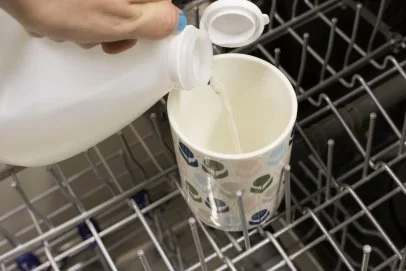
First, empty the dishwasher completely. Place a cup of white vinegar in a dishwasher-safe bowl. Put the bowl on the top rack of the dishwasher. Run a hot water cycle. The vinegar will break down buildup and sanitize the machine. This process takes about an hour. After the cycle ends, your dishwasher will smell fresh and look cleaner.
Additional Vinegar Spot Treatments
Check for stubborn spots or stains inside the dishwasher. Dip a cloth or sponge in white vinegar. Rub the tough areas gently to remove residue. Use a toothbrush dipped in vinegar for small crevices. Wipe down the door seals and edges too. These spots often trap dirt and cause odors. Repeat as needed for best results.
Tips For Deep Cleaning
Deep cleaning your dishwasher helps keep it fresh and working well. Vinegar is a natural cleaner that removes grease and odors. Using the right techniques makes cleaning easier and more effective. Follow these simple tips for a thorough dishwasher clean.
Combining Vinegar With Baking Soda
Pour one cup of vinegar into a dishwasher-safe bowl. Place the bowl on the top rack. Run a hot water cycle without detergent. Afterward, sprinkle one cup of baking soda at the bottom. Run a short hot water cycle. This mix removes stains and freshens the dishwasher.
Cleaning Dishwasher Seals And Edges
Check the door seals and edges for grime buildup. Dip a cloth in vinegar and wipe these areas carefully. Use a soft brush for tight spots. Clean seals prevent mold and keep the door tight. Repeat this cleaning every month for best results.
Maintenance Tips To Keep Dishwasher Fresh
Keeping your dishwasher fresh is key to its performance and hygiene. Regular care helps avoid odors and buildup. Simple steps can keep the dishwasher running smoothly and smelling clean.
Regular Cleaning Schedule
Set a cleaning routine for your dishwasher. Clean it once a month with vinegar to remove grease and grime. Run an empty cycle with a cup of white vinegar on the top rack. This kills bacteria and breaks down leftover food particles. Wipe the door edges and seals with a damp cloth to stop mold growth.
Avoiding Common Mistakes
Do not overload the dishwasher. Crowding stops water from reaching all dishes. Avoid using too much detergent; it causes buildup and smells. Clean the filter regularly to stop clogs and bad odors. Never use bleach with vinegar; the mix creates harmful fumes.
:max_bytes(150000):strip_icc()/clean-dishwasher-with-vinegar-6834347-hero-c5e579575da942d8b700b5eeef57c345.jpg)
Credit: www.thespruce.com
Frequently Asked Questions
How Does Vinegar Clean A Dishwasher Effectively?
Vinegar breaks down mineral deposits and grease inside the dishwasher. It removes odors and kills bacteria naturally. Using vinegar improves dishwasher performance and cleans hard-to-reach areas without harsh chemicals. It’s a safe, eco-friendly cleaning method for regular maintenance.
Can I Use Vinegar Every Time I Clean My Dishwasher?
Yes, you can use vinegar regularly, but avoid overuse. Running vinegar through the dishwasher once a month is ideal. Too much vinegar may damage rubber seals over time. Using it monthly helps maintain cleanliness and prevents buildup effectively.
Should Vinegar Be Used With Other Cleaning Agents?
Avoid mixing vinegar with bleach or harsh detergents. Combining these can create harmful fumes. Vinegar alone is sufficient for cleaning and deodorizing the dishwasher. For tough stains, use vinegar first, then run a separate rinse cycle.
How Do I Use Vinegar To Clean My Dishwasher?
Pour one cup of white vinegar into a dishwasher-safe container on the top rack. Run a hot water cycle without detergent. The vinegar will dissolve grime and sanitize the interior. Repeat monthly for best results.
Conclusion
Cleaning your dishwasher with vinegar keeps it fresh and working well. Vinegar removes buildup and bad smells easily. Use it regularly to stop grease and grime from growing. This simple step saves money by avoiding repairs or replacements. A clean dishwasher means cleaner dishes every time you run it.
Try this natural, safe method and enjoy a better kitchen appliance. Small effort, big results. Why not give it a try today?