Last Updated on February 13, 2026
Corned beef and cabbage Dutch oven is a delicious and traditional Irish dish made in a Dutch oven. In this cooking method, the beef is gently simmered in a flavorful broth along with cabbage, carrots, and potatoes, resulting in a hearty and comforting meal.
Looking for the perfect way to make a classic comfort dish? Cooking Corned Beef and Cabbage in a Dutch oven brings out rich flavors and tender textures that can’t be beat. Whether you’re celebrating St. Patrick’s Day or simply craving a hearty, home-cooked meal, this method ensures your corned beef stays juicy and your cabbage is perfectly cooked.
In this guide, we’ll show you how to make Corned Beef and Cabbage Dutch Oven style, with step-by-step tips for a delicious, satisfying dinner your family will love.
Table of Contents
Benefits Of Cooking With A Dutch Oven
Investing in a Dutch oven is necessary to take your cooking game to the next level. Home cooks and professional chefs have long cherished this versatile and indispensable kitchen tool. With its unique design and construction, a Dutch oven offers a range of benefits that make it an essential addition to any kitchen. This article will explore the top three benefits of cooking with a Dutch oven: even and consistent heat distribution, moisture retention, and versatility.
Even And Consistent Heat Distribution
One of the most significant advantages of cooking with a Dutch oven is its ability to distribute heat evenly and consistently. The thick walls and well-fitting lid of a Dutch oven help to trap and circulate heat efficiently, ensuring that your food cooks evenly from all sides. No more worrying about unevenly cooked dishes or hotspots that could burn your food. Whether you are simmering a stew or braising meat, a Dutch oven delivers reliable and uniform heat distribution, resulting in perfectly cooked meals time after time.
Retains Moisture And Flavors
A Dutch oven excels at retaining moisture and flavors, thanks to its tight-fitting lid and excellent heat retention properties. As your dish cooks, the steam produced inside the Dutch oven gets trapped, creating a moist cooking environment. This added moisture prevents your food from drying out and enhances its taste and tenderness. Whether making a succulent roast or a hearty stew, a Dutch oven ensures every bite is juicy, flavorful, and infused with rich aromas.
Versatile Cooking Vessel
Regarding versatility, a Dutch oven reigns supreme in the kitchen. This multipurpose cookware can handle everything from the stovetop to the oven to the great outdoors. You can use it to sauté vegetables, sear meats, bake bread, simmer soups, or even roast a whole chicken. Its durable construction and ability to withstand high temperatures make it suitable for various cooking techniques. With a Dutch oven, you can effortlessly transition from one cooking method to another, making it an ideal choice for both beginner and seasoned cooks.
In conclusion, a Dutch oven offers many benefits that elevate your cooking experience. Its even heat distribution ensures consistently cooked meals, while the retention of moisture and flavors guarantees delicious, succulent results. Its versatility makes it a reliable cooking vessel for various culinary endeavors. So, if you want to level up your cooking game and enjoy restaurant-quality dishes at home, a Dutch oven is a kitchen essential you won’t want to be without.
Traditional Irish Dish: Corned Beef And Cabbage
Origin and cultural significance
Originally hailing from Ireland, corned beef and cabbage are traditional dishes of significant cultural importance. It has been a staple on Irish dinner tables for centuries, especially on the day celebrating the country’s patron saint, St. Patrick. The dish’s history can be traced to when Irish immigrants settled in America. Back in Ireland, beef was a luxury not often enjoyed by the average person. Instead, bacon and cabbage were more commonly eaten. However, when Irish immigrants arrived in the United States, they found beef more affordable and readily available. They adapted their traditional bacon and cabbage dish by substituting corned beef for bacon, creating this iconic plate.
Popular St. Patrick’s Day meal
When St. Patrick’s Day approaches, no other dish is as closely associated and relished as Corned Beef and Cabbage. This hearty meal has become a traditional favorite in Ireland, the United States, and other parts of the world with the Irish diaspora. It is often served on St. Patrick’s Day parades, family gatherings, and restaurants catering to those seeking an authentic taste of Ireland. The delightful blend of flavors and this dish’s warm, comforting nature make it a perfect choice to celebrate the Irish heritage on St. Patrick’s Day and throughout the year.
Key ingredients and flavors
The dish’s star, corned beef, is made from beef brisket that has been cured with salt and spices. This curing process, also known as corning, gives the beef its distinct flavor and signature pink color. The cabbage, usually green, is cooked until tender, adding a fresh and earthy taste to the plate. Additional ingredients such as potatoes, carrots, and onions are often included, adding depth of flavor and nutritional value to the meal. The dish is typically prepared in a Dutch Oven, allowing the flavors to meld together and the beef to become tender and juicy.
Various spices and aromatics, such as peppercorns, mustard seeds, bay leaves, and thyme, enhance the flavors during the cooking process. These ingredients contribute to the mouthwatering aroma and rich taste, making Corned Beef and Cabbage irresistible. For those who prefer a more balanced flavor profile, a sprinkle of salt and freshly ground black pepper can be added before serving, allowing each bite to be as enjoyable as the last.
Choosing The Right Cut Of Corned Beef
Choosing the right cut of corned beef is essential for a flavorful corned beef and cabbage Dutch oven meal. Look for a well-marbled cut with a good balance of fat for tender and juicy results.
Understanding Different Cuts
When choosing the right cut of corned beef, you have several options. Familiarizing yourself with the different cuts will ensure you select the one that best suits your cooking needs. The three main cuts of corned beef are brisket, point cut, and flat cut.
Brisket
The brisket is a popular choice for corned beef and is often considered the traditional cut. It comes from the lower chest area of the cow and is typically larger and fattier than the other cuts. The brisket is known for its rich flavor and tender texture.
Point Cut
The point cut comes from the upper portion of the brisket and has more marbling and fat content than the flat cut. Due to the increased fat content, this cut is generally considered more flavorful. However, it can also be slightly more challenging than the flat cut.
Flat Cut
The flat cut is cut from the leaner portion of the brisket and has less fat marbling than the point cut. It is known for its rectangular shape and is typically easier to slice. The flat cut is an excellent option for leaner corned beef with less visible fat.
Factors To Consider
Fat Content
The fat content of the corned beef cut plays a significant role in flavor and tenderness. A higher fat content, such as the point cut, can produce more flavorful and juicy corned beef when cooked. However, the flat cut is better if you prefer a leaner option.
Marbling
Marbling refers to the distribution of fat throughout the meat. More marbling generally means more tenderness and flavor. If you enjoy melt-in-your-mouth corned beef, opting for a cut with good marbling, like the point cut, is recommended.
Best Cut For Dutch Oven Cooking
Regarding Dutch oven cooking, the best cut of corned beef depends on personal preference and desired results.
The point cut is excellent for a melt-in-your-mouth, succulent corned beef that falls apart quickly. Its higher fat content and marbling make it perfect for slow cooking in a Dutch oven. The long cooking process helps break down the fat and connective tissues, resulting in a tender and flavorful dish.
On the other hand, if you prefer a leaner corned beef with a firmer texture, the flat cut is ideal for Dutch oven cooking. Its leaner nature allows for a healthier and lighter option while providing a delicious meal.
Ultimately, choosing the proper cut of corned beef for Dutch oven cooking boils down to personal preferences. Whatever cut you choose, the Dutch oven method will undoubtedly create a delectable and satisfying corned beef and cabbage dish.
Preparing The Dutch Oven For Cooking
Making a hearty and delicious Corned Beef and Cabbage in a Dutch Oven requires proper preparation of your trusty cooking vessel. Preparing the Dutch oven for cooking involves cleaning and seasoning the pot, preheating it for optimal cooking results, and using a few helpful tips to prevent sticking and burning. Let’s dive into these steps to ensure your culinary adventure gets off to a great start.
Cleaning And Seasoning The Pot
Before you begin cooking with your Dutch oven, it’s crucial to ensure it’s clean and adequately seasoned. Follow these simple steps to prepare your pot:
- Clean the Dutch oven thoroughly with warm, soapy water, removing dust or residue.
- Dry the pot completely using a clean towel or paper towel.
- Apply a thin layer of vegetable oil or shortening to the interior and exterior surfaces of the pot.
- Place the pot in a preheated oven at 350°F (175°C) for about 1 hour to allow the oil to penetrate and create a protective seasoning layer.
- Once the Dutch oven has cooled down, wipe away any excess oil with a paper towel.
Preheating For Optimal Cooking Results
Preheating your Dutch oven is essential for achieving optimal cooking results. Here’s how to do it:
- Place the clean and seasoned Dutch oven on your stovetop over medium heat.
- Allow the pot to heat up for approximately 5 minutes until it becomes hot but not smoking.
- Note: If you are using an enamel Dutch oven, it’s important to avoid heating it empty, as it may cause damage to the enamel coating. Instead, add a small amount of oil or water before heating.
Tips For Preventing Sticking And Burning
To ensure your Corned Beef And Cabbage Dutch Oven doesn’t stick or burn, consider these handy tips:
- Coat the bottom of the pot with a thin layer of oil or cooking spray before adding any ingredients.
- Keep an eye on the heat and adjust it to prevent excessive burning or scorching.
- Consider using a heat diffuser to distribute the heat evenly and prevent hot spots, especially if cooking on a gas stove.
- Avoid overcrowding the pot, as this can lead to uneven cooking and increased chances of sticking.
- Use a wooden or silicone utensil to stir the ingredients, as metal utensils may scratch the seasoned surface and affect its non-stick properties.
- Carefully monitor the cooking time and follow the recipe instructions to avoid overcooking, which can also contribute to sticking and burning.
By cleaning and seasoning your Dutch oven, preheating it properly, and following these helpful tips, you’ll ensure a successful and flavorful Corned Beef and Cabbage Dutch Oven dish that’ll delight your taste buds and impress your dinner guests.
Cooking Corned Beef And Cabbage In A Dutch Oven
A Dutch oven can be a game changer when cooking corned beef and cabbage. This versatile and sturdy pot enables slow, even cooking, resulting in tender and flavorful meat. Whether cooking for a special occasion or just craving a comforting meal, this method will impress. In this article, we’ll walk you through the step-by-step cooking process, discuss seasoning and flavoring options, and provide cooking times and temperature recommendations to ensure a delicious outcome every time.
Step-by-Step Cooking Process
If you’re new to cooking corned beef and cabbage in a Dutch Oven, fear not! The process is relatively straightforward. Follow these steps to achieve a flavorful and perfectly cooked dish:
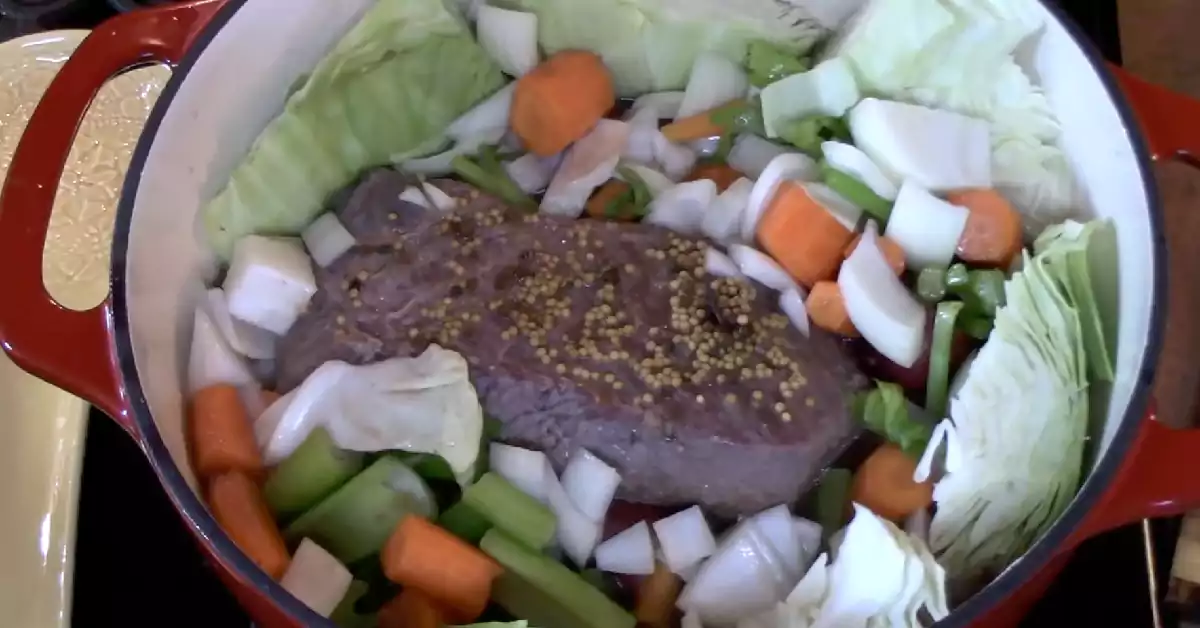
- Prepare the ingredients: Gather all your ingredients, including corned beef brisket, cabbage, potatoes, carrots, onions, garlic, and spices.
- Season the meat: Remove the corned beef from its packaging and rinse it under cold water. Please place it in the Dutch Oven and add the spice packet that usually comes with it. You can also blend your seasoning using black peppercorns, mustard seeds, coriander, and bay leaves.
- Add the vegetables: Peel and chop the potatoes, carrots, and onions into chunks. Cut the cabbage into wedges. Add these vegetables to the Dutch Oven along with some minced garlic.
- Add liquid: Pour enough water or beef broth into the Dutch Oven to cover the meat and vegetables.
- Cook: Place the Dutch Oven on the stove over medium heat until it reaches a simmer. Once simmering, reduce the heat to low and cover the pot. Allow the corned beef and vegetables to cook for about 2.5 to 3 hours or until the meat is fork-tender.
- Serve: Remove the corned beef from the Dutch Oven and let it rest for a few minutes before slicing. Serve the meat and vegetables together, drizzling some flavorful cooking liquid over the top.
Seasoning And Flavoring Options
Consider experimenting with different seasoning and flavoring options to elevate the flavors of your corned beef and cabbage. Here are a few ideas:
- Mustard glaze: Mix Dijon mustard, brown sugar, and a splash of apple cider vinegar. Spread this glaze over the corned beef before cooking for a tangy and slightly sweet flavor.
- Beer infusion: Replace some cooking liquid with your favorite beer for a unique twist. The malty flavors will infuse into the meat and vegetables, adding depth to the dish.
- Asian-inspired spice rub: Combine soy sauce, ginger, garlic powder, and Chinese five-spice powder to season your corned beef. This will give it a deliciously aromatic and slightly exotic taste.
Cooking Times And Temperature Recommendations
Cooking corned beef and cabbage in a Dutch Oven requires a low and slow approach to achieve that tender texture we all love. Here are some general cooking times and temperature recommendations to ensure success:
| Weight of Corned Beef | Cooking Time | Internal Temperature |
|---|---|---|
| 2-3 lbs | 2.5-3 hours | 145°F – 160°F (medium-rare to medium) |
| 3-4 lbs | 3-4 hours | 145°F – 160°F (medium-rare to medium) |
| 4-5 lbs | 4-5 hours | 145°F – 160°F (medium-rare to medium) |
Keep in mind that the cooking time may vary depending on the thickness of the meat and the efficiency of your stove. Using a meat thermometer to ensure that the corned beef reaches a safe internal temperature before serving is always a good idea.
Enhancing Flavor And Moisture
Using a Dutch oven enhances the flavor and moisture of your corned beef and cabbage, resulting in a delicious and tender dish. The Dutch oven’s slow and even cooking method enhances the natural flavors and keeps the meat moist throughout the cooking process.
Vegetables To Include (carrots, Potatoes, Onions)
Corned beef and cabbage in a Dutch oven is a classic dish loved by many for its hearty and comforting flavors. While the corned beef takes center stage, adding vegetables adds a delightful taste and texture. Choosing the right vegetables is key to enhancing flavor and moisture.
Carrots, potatoes, and onions are the perfect trio to accompany your corned beef. Carrots provide a natural sweetness, while potatoes add a creamy and starchy element. Onions, conversely, bring a savory and aromatic flavor to the dish. Together, they create a harmonious blend of flavors that complement the richness of the corned beef.
Adding Spices And Seasonings For Extra Taste
Adding the right spices and seasonings is essential to further elevate the flavor of your corned beef and cabbage in a Dutch oven. These ingredients will enhance the taste and infuse the meat and vegetables with irresistible aromas.
Start by adding the traditional pickling spice packet that often comes with corned beef. This combination of spices typically includes peppercorns, mustard seeds, coriander, bay leaves, and other ingredients. These spices combine to create a robust, slightly tangy flavor that complements the beef.
Additionally, feel free to experiment with your blend of spices and herbs. Some popular choices include garlic powder, thyme, rosemary, and paprika. These can be sprinkled over the meat and vegetables before cooking or added to the cooking liquid for a bolder infusion of flavor.
Tips For Preventing Dryness And Achieving Tenderness
Dry corned beef is the last thing you want in your Dutch oven masterpiece. To ensure the meat remains moist and tender, here are a few expert tips:
- Cook low and slow: Simmer the corned beef gently over low heat to prevent it from becoming tough and dry. This will allow the flavors to meld together and maintain the meat’s natural moisture.
- Keep it covered: Keep the lid on your Dutch oven throughout the cooking process. This will help retain flavor and moisture, ensuring a juicy and succulent result.
- Baste with the cooking liquid: Every so often, baste the corned beef with the cooking liquid to keep it moist and tender. This will also help the flavors penetrate the meat evenly.
- Rest before slicing: After the corned beef is cooked, let it rest for a few minutes before slicing. This redistributes the juices, resulting in more flavorful and tender slices.
By following these tips and incorporating suitable vegetables, spices, and seasonings, you can elevate your corned beef and cabbage Dutch oven to a new level of deliciousness. Enjoy the flavorful marriage of tender meat, perfectly cooked vegetables, and aromatic spices!
Serving And Enjoying The Dish
After you have prepared the mouthwatering corned beef and cabbage in your trusty Dutch oven, it’s time to serve and enjoy this delectable dish. Here are some suggestions to make your dining experience even more delightful.
Presentation And Plating Suggestions
To elevate the visual appeal of your corned beef and cabbage, consider these presentation and plating ideas:
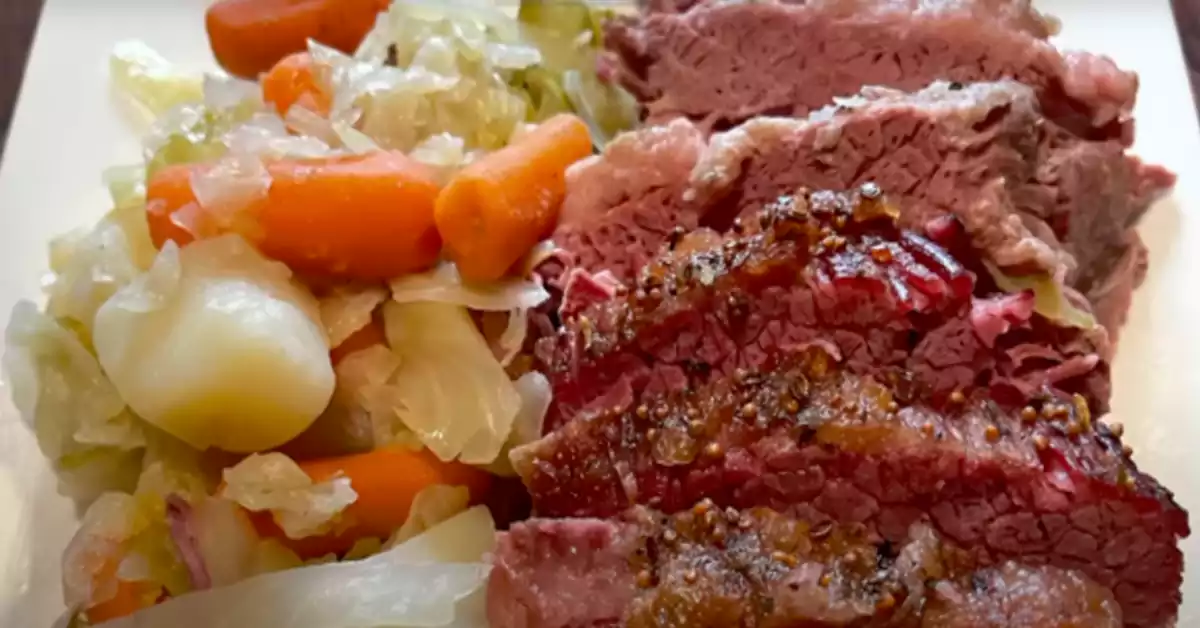
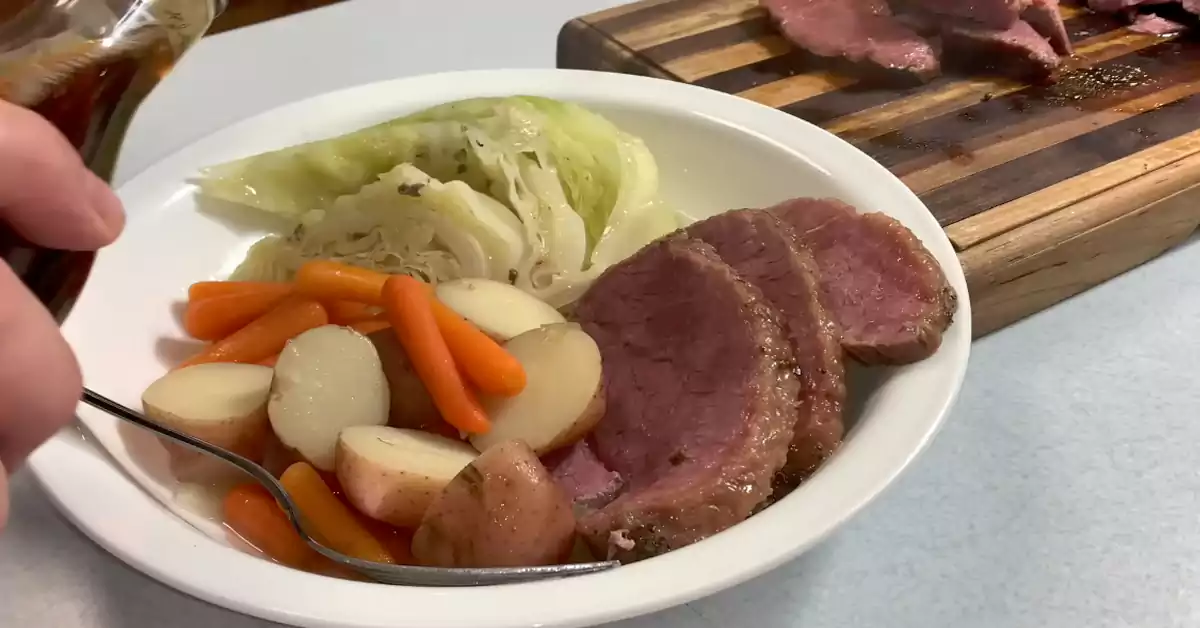
- Arrange thinly sliced corned beef in an overlapping pattern on a large platter
- Place the tender cabbage wedges around the corned beef
- Add some boiled potatoes alongside for a complete meal
- Garnish with freshly chopped parsley for a pop of color
Carefully placing your corned beef and cabbage will enhance their aesthetic appeal and demonstrate your culinary prowess.
Pairing With Beverages (beer, Irish Whiskey)
A traditional Irish meal, such as corned beef and cabbage, deserves a perfect beverage pairing to complement its flavors. Consider these options:
| Beverage | Flavor Profile |
|---|---|
| Irish Stout Beer | The rich and roasted flavors of an Irish stout complement the savory and smoky notes of the corned beef. |
| Irish Red Ale | This beer’s caramel sweetness balances the saltiness of the corned beef and enhances its overall taste. |
| Irish Whiskey | Irish whiskey’s smooth and oaky character pairs well with the hearty flavors of corned beef and cabbage. |
Whether you prefer the creamy goodness of a stout or the elegance of Irish whiskey, choosing the right beverage will elevate your dining experience.
Storing And Reheating Leftovers
You can enjoy another delicious meal with the flavorful leftovers of corned beef and cabbage. Here’s how to store and reheat them:
- Allow the cooked dish to cool completely before storing it to prevent bacterial growth.
- Place the leftovers in an airtight container and refrigerate for up to three days.
- To reheat, transfer a portion to a microwave-safe dish and heat on medium power in intervals, stirring occasionally.
- If using an oven, preheat to 350°F (175°C) and transfer the leftovers to an oven-safe dish. Cover with foil and heat for about 20 minutes or until warmed through.
By storing and reheating your leftovers properly, you can savor the delectable flavors of corned beef and cabbage for days.
Tips For Perfect Corned Beef And Cabbage Every Time
Discover the ultimate tips for perfect corned beef and cabbage using a Dutch oven every time. From selecting the best cut of meat to perfectly timing the cooking process, elevate your St. Patrick’s Day feast with these fail-proof techniques.
Troubleshooting Common Cooking Issues
Although cooking corned beef and cabbage in a Dutch oven is straightforward, some common issues may still arise. To ensure your meal turns out perfectly every time, here are some troubleshooting tips:
- Corned Beef is Tough: One of the most common issues with corned beef is its toughness. This can happen if it is undercooked or not simmered for a long enough time. To resolve this, cook the beef low and slow for an extended period. You can use a meat thermometer to check for doneness, aiming for an internal temperature of around 195°F.
- Cabbage is Mushy: If your cabbage turns out mushy, it has been overcooked. To avoid this, add the cabbage to the Dutch oven during the last 20-30 minutes of cooking. This way, it will retain its texture and vibrant green color.
- Too Salty: Corned beef can sometimes be salty, overpowering the dish’s flavors. Soak the corned beef in water for a few hours before cooking to reduce the saltiness. Alternatively, adding potatoes or carrots to the Dutch oven while cooking can help absorb the excess salt.
- Insufficient Seasoning: If your corned beef and cabbage lack flavor, it could be due to inadequate seasoning. Add spices, such as mustard seeds, garlic powder, or bay leaves, to enhance the taste. You can even experiment with different herbs and spices to give your dish a unique twist.
Variations And Creative Twists
While the traditional corned beef and cabbage recipe is undoubtedly delicious, you can try many variations and creative twists. Here are a few ideas to inspire your culinary experiments:
- Asian-Inspired: To give your corned beef and cabbage an Asian twist, add ginger, soy sauce, and sesame oil. Serve it with steamed rice or noodles for a fusion of flavors.
- Slow Cooker Magic: For a hands-off approach, prepare corned beef and cabbage in a slow cooker instead of a Dutch oven. Combine all the ingredients in the slow cooker and cook on low for 6-8 hours. The result will be tender and flavorful meat.
- Gourmet Upgrade: Elevate this classic dish by incorporating gourmet ingredients and techniques. Consider using grass-fed beef, adding wine or beer to the cooking liquid, or even smoking the corned beef before boiling it. These subtle changes can take your corned beef and cabbage to a new level.
- Vegetarian Twist: For a meatless alternative, you can replace the corned beef with tempeh, seitan, or firm tofu. Prepare them like beef and serve with the cabbage and other vegetables for a hearty vegetarian meal.
Frequently Asked Questions About Cooking Corned Beef And Cabbage In A Dutch Oven
Here are some frequently asked questions about cooking corned beef and cabbage in a Dutch oven:
| Question | Answer |
|---|---|
| Can I use frozen corned beef? | Yes, you can use frozen corned beef. However, make sure to thaw it thoroughly before cooking. This will ensure even cooking and prevent any food safety issues. |
| How long does cooking corned beef and cabbage in a Dutch oven take? | The cooking time can vary depending on the size and thickness of the corned beef. It takes 3-4 hours to cook the beef until it is fully tender. Adding the cabbage during the last 20-30 minutes of cooking time. |
| Can I cook corned beef and cabbage on the stovetop? | Yes, you can cook corned beef and cabbage on the stovetop if you don’t have a Dutch oven. Use a large pot with a lid and follow the exact cooking instructions. |
| What’s the best way to slice corned beef? | Allow tender and easy-to-slice corned beef to rest 10-15 minutes after cooking. Then, slice against the grain to ensure tender slices. |
FAQ on Corned Beef And Cabbage Dutch Oven
How Long Does It Take To Cook Corned Beef And Cabbage In A Dutch Oven?
Corned beef and cabbage cooked in a Dutch oven usually takes 3 hours. The meat must be tender, and the flavors need time to meld together. Simmer it on low heat for optimal results.
Can I cook corned beef and cabbage in a regular pot instead of in a Dutch oven?
You can cook corned beef and cabbage in a regular pot instead of a Dutch oven. Ensure the pot has a tight-fitting lid to retain the heat and allow for even cooking. Adjust the cooking time according to the pot you’re using.
What Is The Best Cut Of Meat For Corned Beef And Cabbage?
Brisket is the best cut of meat for corned beef and cabbage. The fat marbling adds flavor and moistens the meat during cooking. Look for a well-trimmed, flat-cut brisket for the best results.
Conclusion
To sum up, cooking corned beef and cabbage in a Dutch oven is a delicious and satisfying option for a hearty meal. This traditional dish can be easily prepared and enjoyed with family and friends. The Dutch oven enhances the flavors and creates tender and juicy meat.
So gather your ingredients, follow the recipe, and indulge in this mouthwatering culinary experience. Happy cooking!