Last Updated on February 14, 2026
Have you ever wondered what’s really in the water you drink every day? If you use a reverse osmosis (RO) system, you might be asking yourself, “Does RO water have minerals?” This question matters because minerals in water can affect your health, taste, and even how your body feels.
By the time you finish reading, you’ll know exactly what’s in your glass and how it impacts you. Let’s dive in and clear up the mystery about minerals in RO water.
Credit: waterfilterguru.com
What Is Ro Water
RO water is purified water made by removing impurities through a special filter. It usually has very few minerals because the process strips most of them away. Many people wonder if this water still contains minerals needed for health.
What Is Ro Water?
RO water stands for Reverse Osmosis water. It is water purified using a special filter system. This system removes many impurities and contaminants from the water.
The process pushes water through a tiny membrane. This membrane blocks large particles, chemicals, and harmful substances. It allows only clean water molecules to pass through.
RO water is often used where clean drinking water is hard to find. It tastes fresh and is free from many pollutants. But some wonder about the minerals in this type of water.

Credit: naturalhege.com
Mineral Content In Ro Water
Reverse Osmosis (RO) water often raises questions about its mineral content. People want to know if RO water contains minerals essential for health. Understanding the mineral content helps decide if RO water suits daily drinking needs.
How Ro Filtration Works
RO filtration pushes water through a fine membrane. This membrane blocks many impurities and particles. It removes contaminants like dirt, bacteria, and chemicals. The process also filters out dissolved solids and salts. This action makes the water very pure and clean.
Minerals Removed During Filtration
The RO membrane removes minerals along with impurities. Minerals like calcium, magnesium, and potassium get filtered out. These minerals are part of total dissolved solids (TDS). The removal reduces the water’s hardness and taste variations. The water becomes almost free of minerals.
Residual Minerals In Ro Water
Some minerals may still remain after filtration. Trace amounts can pass through the membrane. These small amounts vary based on water source and system quality. Most RO water has very low mineral levels. Many users add minerals back for taste and health.
Health Effects Of Drinking Ro Water
Drinking reverse osmosis (RO) water affects health in many ways. RO water is very pure. It removes many impurities and minerals. This purity can be good and bad for the body. Understanding these effects helps make smart choices about drinking RO water.
People often ask if RO water lacks minerals. The answer is yes. This lack may impact health over time. Let’s explore the main health effects of drinking RO water.
Potential Mineral Deficiencies
RO water removes important minerals like calcium and magnesium. These minerals are vital for body functions. Drinking only RO water might reduce your mineral intake. This can lead to minor deficiencies if your diet lacks these minerals.
Mineral deficiencies can cause fatigue, muscle cramps, and weak immunity. People who rely on RO water need to eat mineral-rich foods. Supplements may also help maintain proper mineral levels.
Hydration And Detoxification
RO water hydrates the body very well. It is free from contaminants that may affect hydration. Clean water helps kidneys flush out toxins efficiently. Drinking RO water supports detoxification and keeps the body clean.
Because it tastes fresh and pure, people drink more water. This improves hydration. Proper hydration boosts energy and supports all body functions.
Impact On Bone Health
Calcium and magnesium in water contribute to strong bones. RO water lacks these minerals, so it might affect bone health. Long-term use of RO water may lead to weaker bones if diet is poor.
Eating foods high in calcium and magnesium helps protect bones. Regular exercise also strengthens bones. Monitor your bone health if you drink RO water daily.
Comparing Ro Water With Other Water Types
Comparing RO water with other types helps us understand its mineral content better. Each water type has unique features and benefits. Knowing these differences helps choose the right water for health and taste.
Water minerals affect taste and nutrition. Some waters have natural minerals, while others remove most of them.
Tap Water Mineral Content
Tap water usually contains minerals like calcium and magnesium. These minerals come from natural sources underground. The amount varies by location and water treatment methods. Tap water often has fluoride added for dental health. Some people find tap water tastes different due to chlorine used for cleaning.
Mineral Water Benefits
Mineral water naturally contains minerals like calcium, magnesium, and potassium. These minerals support bone health and body functions. Mineral water is often bottled at the source to keep minerals intact. It can taste better because of its natural mineral content. Drinking mineral water provides extra nutrients missing in purified waters.
Distilled Water Vs Ro Water
Distilled water is boiled to remove all minerals and impurities. It is very pure but lacks minerals completely. RO water uses a membrane filter to remove most impurities and minerals. RO water keeps fewer minerals than tap or mineral water. Both types taste flat due to low mineral content. People often add minerals back to RO or distilled water for taste and health.
Enhancing Ro Water With Minerals
RO water is very pure but often lacks essential minerals. Enhancing RO water with minerals improves its taste and health benefits. It also helps restore the natural balance of nutrients. Different methods can add minerals back to the water safely and effectively.
Mineralization Techniques
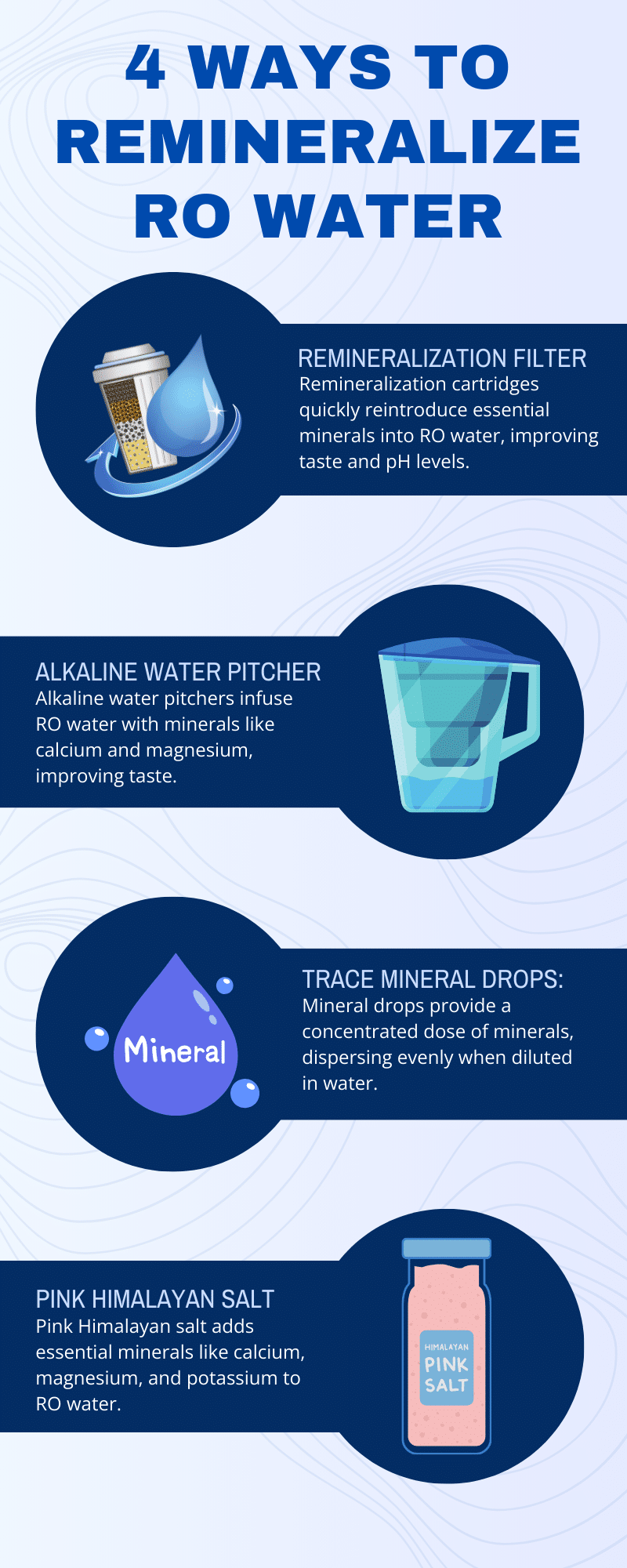
Mineralization adds essential minerals like calcium and magnesium. This process can improve water quality and taste. Many devices use mineral cartridges to release minerals gradually. These units are easy to install with RO systems. They help maintain healthy mineral levels in drinking water.
Using Mineral Drops Or Filters
Mineral drops are a simple way to enrich RO water. Just add a few drops before drinking. These drops contain concentrated minerals from natural sources. Mineral filters work by passing water through mineral-rich media. They slowly add minerals to the water as it flows. Both methods are convenient and cost-effective.
Natural Methods To Add Minerals
Natural methods use items like sea salt or mineral stones. Adding a pinch of sea salt can boost mineral content. Mineral stones in water bottles release minerals over time. These methods are gentle and chemical-free. They offer a natural way to improve mineral content in RO water.
Who Should Consider Mineral-rich Water
Mineral-rich water offers more than just hydration. It provides essential nutrients that support the body’s daily functions. Certain groups of people benefit greatly from drinking water with minerals. These minerals help maintain balance and support overall health. Identifying who should consider mineral-rich water can guide better hydration choices.
People With Specific Health Conditions
Some health conditions cause mineral loss in the body. Kidney issues, osteoporosis, and heart problems may require extra minerals. Mineral-rich water helps replenish these vital nutrients. It supports bone strength and heart health. Doctors sometimes suggest drinking water with minerals for better health management.
Athletes And Active Individuals
Exercise causes the body to lose minerals through sweat. Sodium, potassium, and magnesium are important for muscle function. Drinking mineral-rich water helps replace these lost minerals. It aids in faster recovery and better performance. Active people often need more minerals than others.
Elderly And Children
Both elderly people and children need minerals for growth and maintenance. Minerals support bone health and immune function. Older adults may lose minerals faster due to aging. Children require minerals for proper development. Mineral-rich water can help meet these daily needs easily.

Credit: theberkey.com
Frequently Asked Questions
Does Ro Water Contain Essential Minerals?
RO water typically lacks essential minerals because the filtration removes most dissolved solids. It mainly contains pure H2O with very low mineral content.
Can Minerals Be Added Back To Ro Water?
Yes, minerals can be added back using post-filtration mineral cartridges or by mixing with mineral-rich water for better taste and health benefits.
Is Ro Water Safe Without Minerals?
RO water is safe to drink but may lack taste and some health benefits due to the absence of minerals like calcium and magnesium.
How Does Ro Water Affect Mineral Intake?
Drinking only RO water might reduce mineral intake. A balanced diet or mineral supplementation is recommended to maintain adequate mineral levels.
Conclusion
RO water removes most minerals during purification. This means it lacks natural minerals found in regular water. Some people prefer adding minerals back for taste and health. Still, RO water is very pure and safe to drink. It helps remove impurities that cause health issues.
Choosing between RO and mineral water depends on your needs. Consider what matters more: purity or mineral content. Either way, understanding your water helps you make better choices. Clean water is important for good health.