Last Updated on December 17, 2025
Are your knives losing their edge and making cooking more frustrating than it should be? You’re not alone.
A dull knife slows you down and can even be dangerous. But what if you had one simple tool that could quickly restore your blades to perfect sharpness? That’s exactly what a 4 in 1 knife sharpener does. In this guide, you’ll discover easy steps to use this versatile tool to keep your knives razor-sharp.
Keep reading, and you’ll learn how to sharpen your knives like a pro—saving time, effort, and even money on replacements. Your kitchen deserves it.

Credit: www.amazon.com
Choosing The Right 4 In 1 Sharpener
Choosing the right 4 in 1 knife sharpener makes a big difference in knife care. This tool saves time and effort by combining several sharpening functions. Picking one that fits your needs helps keep knives sharp and safe. Understand the types, materials, and features before buying. This ensures the sharpener works well for your knives.
Types Of Sharpeners Included
Most 4 in 1 sharpeners have different sharpening options. They often include slots for coarse sharpening, fine honing, and sometimes a serrated blade sharpener. Coarse sharpening fixes dull blades. Fine honing smooths the edge for daily use. Some models add a ceramic or diamond rod for precise sharpening. Choose a sharpener with types that suit your knives.
Materials Supported
Knives come in many materials. Common ones include stainless steel, carbon steel, and ceramic. Not all sharpeners work on every type. Some sharpeners are better for steel blades but can damage ceramic knives. Check if the sharpener supports your knife’s material. Using the right sharpener protects your blade and keeps it sharp longer.
Key Features To Consider
Look for user-friendly features. A non-slip base offers safety during sharpening. Ergonomic handles make the process easier and more comfortable. Compact design is good for small kitchens. Some sharpeners have replaceable parts to last longer. Also, check for easy cleaning options. These features improve the sharpening experience and the sharpener’s lifespan.

Credit: www.amazon.com
Preparing Your Knife
Preparing your knife is an important step before sharpening it with a 4 in 1 knife sharpener. This process helps ensure the sharpening is safe and effective. Taking time to prepare the blade can protect both the knife and yourself.
Cleaning The Blade
Start by cleaning the knife blade thoroughly. Remove any food particles or grease using warm water and mild soap. Dry the blade completely with a soft cloth. A clean blade sharpens more evenly and prevents dirt from damaging the sharpener.
Checking For Damage
Examine the blade for any chips, cracks, or rust spots. Sharp edges with damage need careful attention. Small chips can often be sharpened out, but deep cracks may require professional repair. Do not sharpen a blade with severe damage as it can break during use.
Safety Precautions
Hold the knife firmly but carefully to avoid slips. Always point the blade away from your body and fingers. Use a stable surface to sharpen the knife. Wearing protective gloves can add extra safety. Keep children and pets away from the sharpening area.
Setting Up The Sharpener
Setting up a 4 in 1 knife sharpener is simple and fast. Proper setup helps you sharpen knives safely and effectively. Follow a few easy steps before using the sharpener for the best results.
Stable Placement Tips
Place the sharpener on a flat, dry surface. Avoid slippery or uneven spots. Hold the handle firmly if the sharpener has one. This keeps it steady during use. Stability prevents accidents and helps sharpen evenly.
Understanding Each Slot
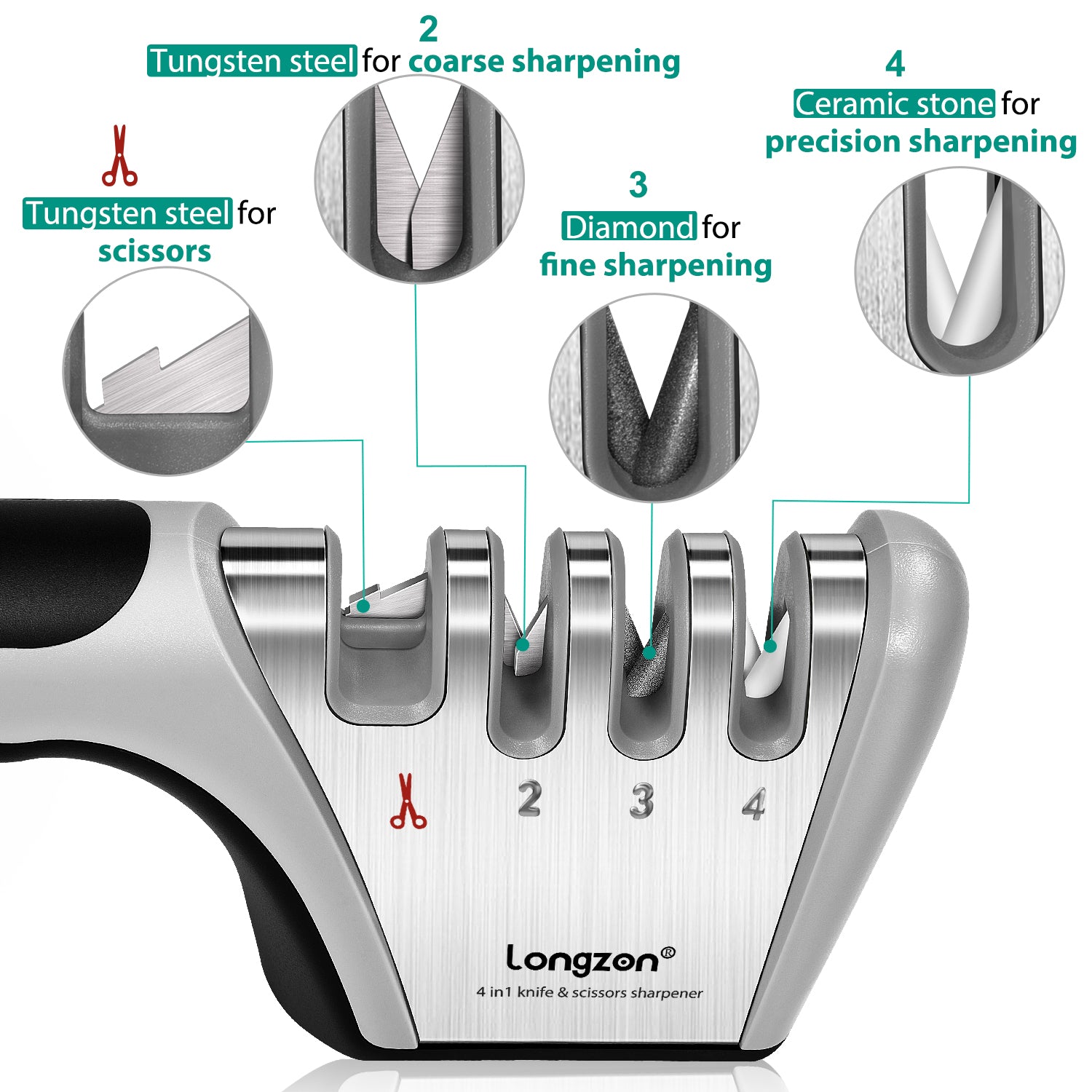
The sharpener has four slots for different tasks. One slot is for coarse sharpening, removing big chips. Another slot is for fine sharpening, smoothing the blade edge. There is a slot for honing to keep blades sharp daily. Some models have a slot for serrated knives, designed for teeth-like edges.
Adjusting For Blade Thickness
Check your knife blade thickness before sharpening. Thin blades need gentle pressure in the fine slot. Thick blades require stronger pressure in the coarse slot. Adjust your angle to match the blade shape. This protects the blade and sharpens it well.
Sharpening Process
The sharpening process with a 4 in 1 knife sharpener is simple and effective. It guides you through steps to restore your knife’s edge. Each slot has a special purpose. Follow the order for the best results. This method keeps your knives sharp and safe to use.
Using The Coarse Slot
Start with the coarse slot for very dull or damaged blades. Place the knife at the base of the slot. Pull the blade toward you with light pressure. Repeat this 3 to 5 times. This step reshapes the blade’s edge quickly.
Using The Medium Slot
Next, use the medium slot to refine the edge. It removes smaller burrs left by the coarse slot. Slide the knife through the slot 4 to 6 times. Keep the blade steady and apply gentle pressure. This step smooths the blade’s surface.
Using The Fine Slot
The fine slot polishes the knife edge. It makes the blade sharper and smoother. Pull the knife through 5 to 7 times. Use light, even strokes. This step helps the knife cut cleanly.
Using The Honing Rod
Finish with the honing rod to align the blade’s edge. Hold the rod vertically on a flat surface. Swipe the knife down the rod at a 15-degree angle. Do this 5 times on each side. This step keeps the blade straight and sharp.
Maintaining Your Sharpener
Maintaining your 4 in 1 knife sharpener helps keep it working well. Proper care extends its life and ensures safe sharpening. Small steps make a big difference in performance and durability.
Cleaning After Use
Wipe the sharpener with a dry cloth after each use. Remove any metal shavings stuck inside the slots. Use a soft brush for hard-to-reach areas. Avoid water unless the manual says it is safe. Keep the sharpening surfaces clean to sharpen knives properly.
Storage Tips
Store the sharpener in a dry, cool place. Avoid damp spots to prevent rust on metal parts. Keep it away from dust and dirt. Use a protective cover if available. Proper storage keeps the sharpener ready for use anytime.
When To Replace Parts
Check the sharpening stones or rods for wear regularly. Replace parts if they look smooth or cracked. Dull parts reduce sharpening quality. Follow the manufacturer’s advice on replacement timing. Using fresh parts ensures your knives get sharp edges every time.
Credit: www.longzon.com
Troubleshooting Common Issues
Using a 4 in 1 knife sharpener can make your knives sharp and safe. Sometimes, problems happen during sharpening. Knowing how to fix these issues helps you get the best results. Below are common problems and easy solutions.
Uneven Sharpening
Uneven sharpening happens when one side of the blade is sharper than the other. This can make cutting unsafe and hard. To fix this, use gentle, even strokes on both sides. Hold the knife at the right angle. Move the blade slowly through the sharpener slots. Check the blade often to see if it sharpens evenly.
Blade Damage Prevention
Sharp knives can break or chip if not handled well. Avoid pressing too hard during sharpening. Let the sharpener do the work. Do not use the wrong sharpening slot for your knife type. Clean the blade before and after sharpening to stop damage. Use light, smooth strokes to keep the blade safe.
Sharpener Wear And Tear
Over time, the sharpener parts can wear out. This lowers sharpening quality. Watch for cracks or worn edges in the sharpening slots. Clean the sharpener regularly to remove metal dust. Store it in a dry place to prevent rust. Replace the sharpener if it no longer sharpens well.
Tips For Long-lasting Sharp Blades
Keeping your blades sharp longer saves time and effort. Sharp knives cut better and safer. Using a 4 in 1 knife sharpener correctly helps maintain your blades. Follow simple tips to extend the sharpness of your knives.
Regular Maintenance Routine
Clean your knives after each use to remove food residue. Dry them well before sharpening to avoid rust. Use the coarse slot of your sharpener for dull blades. Finish with the fine slot to polish the edge. Sharpen regularly, even if blades seem fine. A sharp blade needs less force and lasts longer.
Proper Cutting Techniques
Cut on soft surfaces like wood or plastic. Avoid glass, stone, or metal boards that dull blades fast. Use smooth, even strokes while cutting. Do not twist or apply sideways force on the knife. Hold the knife firmly and cut with control. These habits protect the blade edge and keep it sharp.
Avoiding Common Mistakes
Do not use the sharpener on wet or dirty blades. Avoid pressing too hard on the sharpener slots. Too much pressure can damage the blade edge. Do not sharpen knives too often; it wears down the blade. Store knives properly, not loose in a drawer. Use blade guards or a knife block to protect edges.
Frequently Asked Questions
What Is A 4 In 1 Knife Sharpener Used For?
A 4 in 1 knife sharpener is designed to sharpen, hone, and polish knives. It often includes slots for different blade types and edges, ensuring versatile and efficient sharpening for various kitchen knives and tools.
How Do I Use The 4 In 1 Knife Sharpener Safely?
To use safely, place the sharpener on a flat surface. Hold the knife firmly and pull it through each slot with light pressure. Avoid forcing the blade to prevent damage or injury. Always follow the manufacturer’s instructions for best results.
Can The 4 In 1 Sharpener Sharpen Serrated Knives?
Yes, many 4 in 1 sharpeners have a dedicated slot for serrated knives. This slot carefully hones the serrations without dulling the edges, maintaining the knife’s cutting efficiency and prolonging its lifespan.
How Often Should I Sharpen Knives With A 4 In 1 Sharpener?
Sharpen knives every 1 to 3 months, depending on use. Regular honing between sharpening sessions keeps blades sharp longer. Frequent sharpening prevents dullness and maintains cutting precision for everyday kitchen tasks.
Conclusion
Using a 4 in 1 knife sharpener keeps your knives sharp and safe. It saves time and effort in the kitchen. The tool works on different blade types easily. Regular sharpening helps your knives last longer. Always follow the steps carefully for best results.
Keep your knives ready for any cooking task. A sharp knife makes cooking faster and more enjoyable. Try it today and see the difference yourself. Simple, quick, and effective knife care is possible. Sharp knives mean safer cutting and better meals.