Last Updated on February 13, 2026
Looking for a quick and easy meal? Try this delicious spaghetti skillet recipe.
With simple ingredients and easy preparation, it’s a perfect weeknight dinner solution. This recipe combines the classic flavors of spaghetti with the convenience of a one-pan meal. Whether you’re cooking for a family or just for yourself, this dish is sure to satisfy your cravings.
Plus, it’s a great way to use up any leftover vegetables or meats you have on hand. Let’s dive into the details of how to make this tasty and satisfying spaghetti skillet!
Introduction To Spaghetti Skillet
Spaghetti is a classic Italian dish that has been loved by people all around the world for generations. It’s simple, delicious, and easy to prepare. However, have you tried making it in a skillet? Skillet spaghetti is a one-pan wonder that makes cooking and cleaning up a breeze. In this blog post, we will take a glimpse into the world of skillet spaghetti and explore why it’s a great choice for your next meal.
Why Choose Skillet Spaghetti
Skillet spaghetti is a great choice for many reasons. Firstly, it’s a one-pan meal which means less clean-up and hassle in the kitchen. Secondly, it’s a quick and easy meal to make, perfect for busy weeknights. Thirdly, you can customize it to your liking by adding your favorite vegetables, meat, or spices. Lastly, it’s a crowd-pleaser that everyone in the family will love.
A Glimpse Into This One-pan Wonder
Skillet spaghetti is made by cooking the spaghetti in a skillet with sauce and other ingredients. The spaghetti cooks in the sauce, absorbing all the flavors and creating a delicious and satisfying meal. You can add vegetables like bell peppers, onions, and zucchini to make it a healthy and nutritious meal. You can also add meat like ground beef or Italian sausage to make it a heartier dish. The possibilities are endless with skillet spaghetti!
In conclusion, skillet spaghetti is a great option for a quick and easy meal that is both delicious and customizable. It’s a one-pan wonder that saves time and energy in the kitchen, making it a perfect choice for busy weeknights. Try making skillet spaghetti today and enjoy a delicious and satisfying meal!
Essential Ingredients
When it comes to making a delicious spaghetti skillet, having the right ingredients is essential. Each component plays a crucial role in creating a flavorful and satisfying dish. Let’s explore the essential ingredients required to prepare a mouthwatering spaghetti skillet.
The Pasta Foundation
Spaghetti forms the foundation of this delectable dish. Choose a high-quality spaghetti that will hold up well when combined with the other ingredients. Opt for whole wheat spaghetti for a healthier twist.
Sauce And Seasonings
The sauce is a key element in the spaghetti skillet recipe. Use a rich tomato sauce as the base, complemented by aromatic seasonings such as garlic, oregano, and crushed red pepper flakes to add depth and flavor to the dish.
Protein And Vegetables
Enhance the nutritional profile of the dish by incorporating lean ground beef or turkey as the protein component. Additionally, include an assortment of fresh vegetables such as bell peppers, zucchini, and mushrooms to infuse the dish with texture and color.
Choosing Your Skillet
When it comes to making the perfect spaghetti skillet recipe, choosing the right skillet is essential. From the size to the material, each aspect plays a role in the outcome of your dish. In this article, we will explore the factors to consider when selecting a skillet for your spaghetti recipe.
Size Matters
When it comes to skillets, size matters. The size of your skillet will determine the amount of pasta you can cook at once and how evenly it will cook. A skillet that is too small can lead to overcrowding, resulting in uneven cooking and potential sticking. On the other hand, a skillet that is too large may cause your pasta to spread out too thinly, affecting the texture and overall taste.
It is recommended to choose a skillet that is just the right size for your recipe. For a family-sized spaghetti skillet, a 12-inch skillet is generally a good choice. This size allows for sufficient space for the pasta to cook evenly without overcrowding the pan.
Material Magic: Cast Iron Vs. Non-stick
The material of your skillet is another important factor to consider. Two popular options are cast iron and non-stick skillets, each with its own advantages and considerations.
Cast Iron: Cast iron skillets are known for their excellent heat retention and even heat distribution. They are durable and can withstand high temperatures, making them ideal for searing and browning the ingredients in your spaghetti recipe. Additionally, cooking with cast iron can add a unique depth of flavor to your dish. However, cast iron skillets require special care, including seasoning and hand washing to maintain their non-stick properties.
Non-Stick: Non-stick skillets offer the convenience of easy food release and effortless cleanup. They require less oil or butter for cooking, making them a healthier option. Non-stick skillets are also less prone to sticking, which is particularly useful when working with pasta. However, they may not retain heat as well as cast iron skillets and may need to be replaced more frequently.
Ultimately, the choice between cast iron and non-stick comes down to personal preference and cooking style. Consider your cooking needs and preferences to determine which material will best suit your spaghetti skillet recipe.
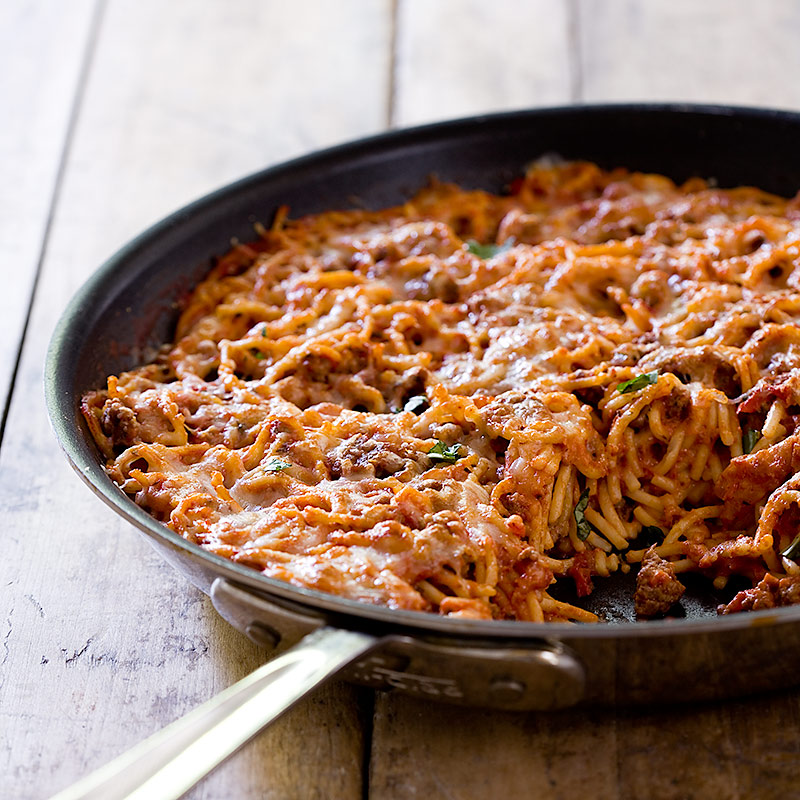
Credit: www.americastestkitchen.com
Preparation Before Cooking
Before diving into the deliciousness of the spaghetti skillet recipe, it’s important to prepare all the ingredients and ensure your skillet is properly seasoned and cared for. By following these simple steps, you’ll set yourself up for a successful and enjoyable cooking experience.
Ingredient Prep
Start by gathering all the ingredients you’ll need for the spaghetti skillet recipe. This includes:
- 1 pound of spaghetti
- 1 tablespoon of olive oil
- 1 small onion, finely chopped
- 2 cloves of garlic, minced
- 1 pound of ground beef
- 1 can of diced tomatoes
- 1 can of tomato sauce
- 1 teaspoon of dried basil
- 1 teaspoon of dried oregano
- 1/2 teaspoon of salt
- 1/4 teaspoon of black pepper
- 1 cup of shredded mozzarella cheese
- 1/4 cup of grated Parmesan cheese
- Fresh basil leaves for garnish (optional)
Once you have all the ingredients ready, it’s time to move on to preparing your skillet.
Skillet Seasoning And Care
Properly seasoning and caring for your skillet is essential to ensure optimal cooking results and longevity of your cookware. Follow these steps to season and care for your skillet:
- Wash the skillet with warm, soapy water and dry it thoroughly.
- Apply a thin layer of vegetable oil or shortening to the entire surface of the skillet, including the handle.
- Place the skillet in a preheated oven at 350°F (175°C) for about an hour.
- Remove the skillet from the oven and let it cool completely.
- Use a paper towel to wipe off any excess oil.
- Before each use, lightly coat the skillet with oil to prevent sticking.
- After each use, clean the skillet with a mild detergent and a soft sponge or brush.
- Ensure the skillet is completely dry before storing it to prevent rusting.
By following these simple steps, your skillet will be ready for the spaghetti skillet recipe and many more delicious meals to come.
Cooking Method
When it comes to creating a delicious spaghetti skillet, the cooking method is crucial. Mastering the art of sautéing, layering flavors, and employing the right pasta cooking techniques can elevate your dish to a whole new level.
Sautéing Basics
Begin by heating a skillet over medium heat and adding olive oil. Sauté the onions and garlic until fragrant and translucent to build a flavorful base for your spaghetti skillet.
Layering Flavors
Next, layer the flavors by adding bell peppers, mushrooms, and Italian sausage to the skillet. Allow the ingredients to caramelize and develop a rich depth of flavor.
Pasta Cooking Techniques
For the perfect pasta, bring a large pot of salted water to a rolling boil. Add the spaghetti and cook until al dente, ensuring a firm yet tender texture. Drain the pasta and add it to the skillet, allowing it to absorb the savory flavors of the dish.
Customizing Your Dish
Variations For Dietary Restrictions
For those with dietary restrictions, this spaghetti skillet recipe offers adaptable options.
- Gluten-free: Substitute regular pasta with gluten-free spaghetti.
- Vegan: Replace ground beef with plant-based protein like lentils or tofu.
Adding A Personal Touch
Make this dish your own by adding unique flavors and ingredients.
- Spice it up: Add crushed red pepper flakes for a kick.
- Fresh herbs: Garnish with basil or parsley for a pop of color.
Serving Suggestions
Enhance your spaghetti skillet recipe with these creative serving suggestions. Elevate your dish by adding a sprinkle of Parmesan cheese, a drizzle of olive oil, or a handful of fresh basil leaves for a burst of flavor. Get ready to impress your guests with these simple yet delightful twists on a classic favorite.
Pairing With Sides
For a balanced meal, pair spaghetti skillet with:
- Garlic bread for a flavorful crunch
- Fresh green salad with vinaigrette dressing
- Steamed vegetables like broccoli or asparagus
Garnishing For Impact
Elevate the presentation with these garnishing ideas:
- Sprinkle freshly grated parmesan cheese
- Add a dash of chopped fresh basil on top
- Drizzle extra virgin olive oil for a touch of richness
Storage And Reheating Tips
For optimal storage and reheating of the delicious Spaghetti Skillet Recipe, it’s important to follow a few simple tips. Store leftovers in an airtight container in the refrigerator for up to three days, and when reheating, add a splash of water or broth to maintain moisture and prevent drying out.
Enjoy the flavors of this mouthwatering dish whenever you desire!
Keeping Leftovers Fresh
- Store in airtight containers to maintain freshness
- Refrigerate within 2 hours of cooking
- Consume within 3-4 days for best taste
Best Practices For Reheating
- Reheat in microwave for quick results
- For stovetop, add a bit of water to prevent sticking
- Oven heating ensures even distribution of heat
Common Pitfalls To Avoid
When preparing a spaghetti skillet recipe, be sure to avoid overcooking the pasta, as this can result in a mushy texture. Also, steer clear of adding too much salt initially, as the flavors can intensify during cooking. Finally, be mindful not to overcrowd the skillet, as this can prevent proper browning and cooking of the ingredients.
Overcooking The Pasta
Overcooking pasta can lead to a mushy texture.
Balancing Sauce Consistency
Ensure the sauce is not too thick or watery.
:max_bytes(150000):strip_icc()/skillet-spaghetti-481948-final-hero-01-340363d6ed1c402a9a10b0a176e2a649.jpg)
Credit: www.thespruceeats.com
Final Thoughts
Creating a delicious and comforting meal like the Spaghetti Skillet is a rewarding culinary adventure. Let’s recap the journey, and explore how this dish encourages home chef creativity.
Recap Of The Skillet Adventure
The Spaghetti Skillet recipe has taken us on a flavorful journey through simple ingredients and easy cooking techniques. The combination of spaghetti, savory meat, and rich tomato sauce has delighted the taste buds and brought joy to the dinner table. It’s a versatile dish that can be customized to suit individual preferences, making it a go-to recipe for busy weeknights or casual gatherings.
Encouraging Home Chef Creativity
This recipe serves as a canvas for culinary creativity, allowing home chefs to experiment with various ingredients and flavors. Whether it’s adding a sprinkle of fresh herbs for a pop of color or incorporating different types of cheese for a unique twist, the Spaghetti Skillet encourages innovation in the kitchen. Embracing creativity while preparing this dish can lead to delightful surprises and personalized touches that elevate the dining experience.
:max_bytes(150000):strip_icc()/1104502-ad7ea01462ca4442a5bda2e76bd83cec.jpg)
Credit: www.allrecipes.com
Frequently Asked Questions
What Are The Ingredients Needed For The Spaghetti Skillet Recipe?
To make Spaghetti Skillet, you will need spaghetti, ground beef, diced tomatoes, tomato sauce, garlic, onion, Italian seasoning, and shredded cheese.
How Long Does It Take To Make Spaghetti Skillet Recipe?
The Spaghetti Skillet recipe takes approximately 30 minutes to prepare and cook.
Can I Use Turkey Or Chicken Instead Of Ground Beef In The Spaghetti Skillet Recipe?
Yes, you can substitute ground beef with ground turkey or chicken in the Spaghetti Skillet recipe.
Can I Make Spaghetti Skillet Recipe In Advance?
Yes, you can make the Spaghetti Skillet recipe in advance and store it in the refrigerator for up to three days. Reheat it in the microwave or oven before serving.
Conclusion
Incorporate this flavorful spaghetti skillet recipe into your weekly meal rotation for a delicious and convenient dinner option. With simple ingredients and easy steps, this dish is sure to satisfy your cravings while saving you time in the kitchen. Enjoy a tasty meal without the hassle tonight!