Last Updated on February 17, 2026
Stir fry pans and woks are both versatile cooking tools. However, there are some key differences between the two.
Stir fry pans and woks are famous for cooking stir-fry dishes and other Asian-inspired recipes. While they may seem similar, there are some important distinctions to consider when choosing between the two. A stir fry pan typically has a flat bottom and sloping sides, making it ideal for tossing and stirring ingredients quickly and evenly.
On the other hand, a wok has a round bottom and higher sides, allowing for deep frying and cooking food at high temperatures. A wok may be the better option if you frequently cook stir-fry dishes and want a pan that can easily accommodate more significant quantities of food. However, a stir-fried pan with a flat bottom may be more suitable if you prefer a pan that heats up quickly and evenly. Choosing a stir fry pan and a wok depends on your cooking style and personal preferences.
Table of Contents
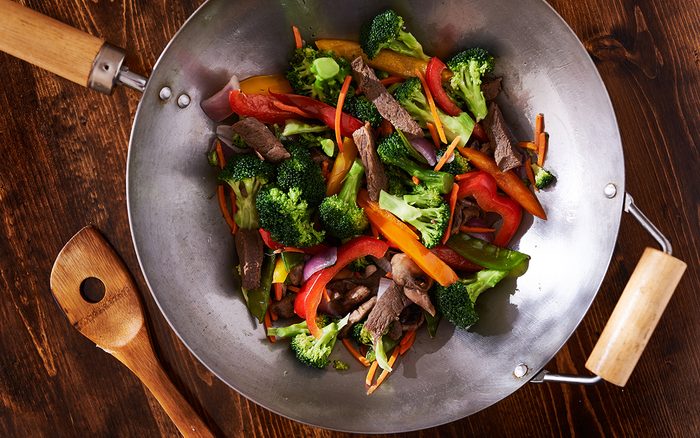
Credit: www.tasteofhome.com
Key Characteristics Of Stir Fry Pans And Woks
Stir fry pans and woks have distinct characteristics that make them suitable for different cooking techniques. The materials used in their construction play a crucial role in their performance. Stir fry pans are typically made of materials like stainless steel, aluminum, or cast iron, which provide even heat distribution and heat retention. Woks, on the other hand, are traditionally made from carbon steel, which is known for its high heat conductivity.
The shape and size of stir fry pans and woks also differ. Stir fry pans typically have a flat bottom and sloped sides, allowing for easy tossing and turning of ingredients. They come in various sizes to accommodate different cooking portions. Woks, on the other hand, feature a rounded bottom and deep bowl-like shape, which promotes better heat distribution and allows food to be easily moved around with a stir-fry spatula or pair of chopsticks.
Pros And Cons Of Stir Fry Pans
Stir fry pans offer quick and even heat distribution due to their flat bottom and wide cooking surface. This allows for efficient cooking, especially when stir-frying vegetables and proteins. The construction of these pans ensures that heat reaches all parts of the pan, resulting in evenly cooked food.
One of the main advantages of stir fry pans is their versatility in cooking styles. They can be used for not only stir-frying but also sautéing, searing, and shallow frying. With their high sides, stir fry pans can contain liquids and prevent splattering, making them suitable for various cooking techniques.
However, stir fry pans have limitations for certain ingredients or cooking techniques. The high sides can make it challenging to toss and flip food, which is essential for achieving the characteristic wok hei flavor in stir-fried dishes. Additionally, some recipes may require deeper pans or woks to accommodate larger quantities of ingredients.
Pros And Cons Of Woks
Woks are known for their efficiency when it comes to high-heat cooking. They are ideal for stir-frying and tossing food due to their deep, sloping sides that allow for easy stirring and flipping. The concentrated heat distribution in a wok ensures that food is cooked quickly and evenly.
However, it is important to consider the challenges that may arise when using a wok on certain stovetops. Some stovetops may not provide a stable base for a round-bottomed wok, which can pose a risk of tipping over.
To overcome this challenge, stovetop options like induction cooktops provide a more stable surface for woks. Another alternative is to use a flat-bottomed wok, which is suitable for most stovetops.
Construction And Materials
When it comes to stir fry cooking, having the right pan is essential. There are two popular options to choose from: stir fry pans and woks. Both have their own unique features and construction materials.
Stir Fry Pans: These pans are specifically designed for stir frying dishes. They are typically made of heavy-duty materials such as cast iron or carbon steel, which helps distribute heat evenly and retain it for a longer duration. Some modern versions also come with a non-stick coating, making them easier to clean and use with less oil.
Woks: Traditional woks are made of carbon steel and have a round-bottomed shape, which allows for easy tossing and stirring of ingredients. They are designed to be used with a high heat source, such as a gas stove. However, in modern times, there are variations available, such as flat-bottomed woks that can be used on electric stoves as well.
Both stir fry pans and woks have their pros and cons, and it ultimately depends on personal preference and cooking style. Whether you choose a stir fry pan or a wok, having a well-constructed and suitable material is crucial for achieving delicious stir fry dishes.
Shape And Size Variations
Shape and size variations play a crucial role in the functionality of stir fry pans and woks. Flat-bottom stir fry pans are designed with a flat and wide bottom surface, making them suitable for use on all types of stovetops. This design ensures that the heat is evenly distributed across the entire surface area, allowing for efficient cooking.
On the other hand, round-bottom woks are specifically designed for gas stoves. The rounded shape allows for excellent heat distribution and retention, enabling quick and high-temperature stir frying. The sloping sides of the wok also make tossing and flipping ingredients easier, ensuring even cooking.
Both flat-bottom stir fry pans and round-bottom woks have their advantages and are suitable for different cooking styles and stovetop configurations. It ultimately depends on the individual’s cooking preferences and the type of stove being used. Consider factors such as heat distribution, cooking techniques, and convenience when choosing between a stir fry pan and a wok.
Handles And Weight Distribution
The handles and weight distribution of stir fry pans and woks significantly affect their usability and maneuverability in the kitchen. Ergonomic handles are a key feature of stir fry pans, providing a comfortable grip for extended cooking sessions. These handles are designed with user comfort in mind, allowing for easy maneuvering and tossing of ingredients. On the other hand, woks may have long handles and helper handles that aid in lifting and moving the pan when it’s filled with food.
Weight distribution is also an important consideration. Stir fry pans are typically lighter in weight compared to woks, making them easier to handle and control. This lighter weight allows for faster and more precise movements, which is crucial for achieving the perfect stir fry. Woks, on the other hand, have a heavier build, ensuring heat retention and even distribution throughout the cooking process.
Ultimately, the choice between a stir fry pan and a wok depends on personal preferences and cooking style. Whether it’s the ergonomic handles of a stir fry pan or the long handles and weight of a wok, both options offer unique advantages for creating delicious stir fry dishes.
Heat Distribution And Cooking Time
Stir fry pans and woks are both versatile tools for cooking delicious stir fry dishes. When it comes to heat distribution and cooking time, they each have their own advantages.
Stir fry pans are designed with a flat bottom and slightly curved sides, allowing for even heat distribution throughout the cooking surface. This ensures that all ingredients are cooked evenly and prevents any hot spots from developing. The wide cooking surface of a stir fry pan also provides ample space for ingredients to spread out, enabling them to cook quickly and retain their natural flavors and textures.
On the other hand, woks are known for their intense heat concentration. The rounded bottom and high sides of a wok enable heat to be concentrated in the center, making it ideal for high-heat cooking techniques such as stir frying, deep frying, and searing. The sloping sides of a wok also allow for easy tossing and stirring of ingredients, ensuring they are cooked evenly and quickly.
Ultimately, the choice between a stir fry pan and a wok depends on your personal preferences and cooking style. Both tools can yield delicious stir fry dishes, so experiment and find the one that suits you best.
Stir Frying In A Pan
When stir frying in a pan, it is important to have the ideal pan temperature. Heat the pan over high heat until it is hot but not smoking. This will ensure that the ingredients cook quickly and evenly. Tossing the ingredients is another important technique in stir frying. Use a spatula or a pair of tongs to toss the ingredients in the pan, allowing them to cook on all sides. This will result in a deliciously charred and flavorful stir fry.
Stir Frying In A Wok
Stir frying in a wok offers a versatile and efficient way to cook delicious meals. Compared to a stir fry pan, the wok’s high and sloping sides allow for better heat distribution and faster cooking times. Perfect for creating flavorful dishes with a crispy texture.
Stir frying in a wok
Stir frying is a popular cooking technique that requires the right cookware. When it comes to stir frying, two options commonly come to mind – the stir fry pan and the wok. Both have their unique features, but the latter is often preferred for its versatility and traditional cooking style.
Proper wok seasoning and maintenance is crucial for achieving the best stir fry results. Before using a new wok, it should be thoroughly washed, dried, and then seasoned with oil. This process creates a non-stick surface and enhances the wok’s heat retention properties. Additionally, proper wok maintenance involves avoiding harsh cleaning agents, drying thoroughly after each use, and occasionally re-seasoning to maintain its performance.
Mastering the wok toss is another essential skill to stir fry like a pro. The tossing motion allows for even heat distribution and quick cooking, giving dishes that distinct wok hei flavor. It may take some practice, but once mastered, the wok toss becomes an impressive technique that adds visual appeal to the cooking process.
Overall, when it comes to stir frying, a well-seasoned wok and a mastery of the wok toss can elevate your cooking to the next level. So, whether you’re a novice or a seasoned chef, embracing the wok for stir frying will undoubtedly enhance your culinary adventures.
| Advantages | Disadvantages |
|---|---|
| Excellent heat distribution | Requires seasoning and proper maintenance |
| Traditional cooking style | Requires practice to master the wok toss |
| Versatile for various cooking techniques | May require additional storage space |
Other Cooking Techniques With Stir Fry Pans And Woks
Deep-frying in a wok or deep stir fry pan is an excellent way to achieve crispy and golden results. The high sides of both the wok and stir fry pan help contain the oil, preventing any splattering. With their wide surfaces and even heat distribution, you can easily fry larger quantities of food at once.
Sauteing and browning in a stir fry pan are perfect for quickly cooking small pieces of meat, vegetables, or seafood. The high heat and sloped sides allow for efficient tossing and flipping without worrying about food sticking to the surface. The non-stick coatings available on many stir fry pans further enhance the ease of this technique.
Steaming in a wok is a wonderful way to cook vegetables and dumplings while retaining their nutrients and flavors. The wide base of the wok allows for the placement of a steaming rack, ensuring that the food sits above the water level. The domed lid helps trap the steam, creating a moist cooking environment. Additionally, woks can be used for smoking food, infusing dishes with delightful smoky aromas.
Optimal Cooking Scenarios For Stir Fry Pans
Stir fry pans and woks are both versatile cooking tools that are commonly used for stir frying vegetables and proteins as well as sauteing and browning meats. The main difference between the two lies in their design and shape. Stir fry pans typically have a flat bottom and slightly sloped sides, which makes them ideal for quick and even cooking. They often come with a non-stick surface, allowing for easy food release and cleanup. On the other hand, woks have a rounded bottom and high, sloping sides, which enables tossing and stirring ingredients without spilling over the edge.
When it comes to stir frying vegetables and proteins, both stir fry pans and woks can be used effectively. The flat surface of a stir fry pan provides ample space for ingredients to be spread out, allowing for even cooking and browning. Woks, on the other hand, are great for stir frying as their high sides prevent ingredients from flying out as they are tossed and stirred. The rounded bottom of a wok also ensures that the heat is concentrated at the bottom, allowing for faster and more efficient cooking.
In conclusion, both stir fry pans and woks have their advantages and can produce delicious stir fry dishes. Ultimately, the choice between the two depends on personal preference and the type of cooking one intends to do. Whether you opt for a stir fry pan or a wok, it is important to choose a quality cooking utensil that suits your needs and preferences.
Traditional And Modern Wok Dishes
Classic stir-fried noodles are a staple in Chinese cuisine. The wok, known for its unique shape and high heat retention, is perfect for creating the smoky flavor and crisp textures that make these noodles so irresistible. Authentic Chinese stir fry recipes often include a combination of ingredients like soy sauce, ginger, garlic, and various vegetables and proteins. The wok’s wide surface area allows for quick and even cooking, resulting in dishes that are full of flavor and pleasing to the eye.
Fusion and international wok-based recipes, on the other hand, incorporate influences from different cuisines. They offer a creative twist to traditional stir-fry dishes. Combining flavors and ingredients from different cultures, these recipes can result in unique and exciting dishes. With the versatility of the stir fry pan, you can experiment with diverse flavors and techniques, showcasing a fusion of culinary styles.
Accompanying Equipment And Tools
In stir fry pan cooking, having the right equipment and tools is essential for achieving the best results. Let’s take a look at some of the essential tools for stir fry pan cooking:
| Tools | Description |
|---|---|
| High-quality stir fry pan | A stir fry pan with a flat bottom, sloping sides, and a non-stick surface is ideal for stir frying. It allows quick and even heat distribution. |
| Long-handled spatula or wok turner | A long-handled spatula or wok turner is necessary for tossing and flipping ingredients in the pan without spilling or burning yourself. |
| Cutting board and knife | A sturdy cutting board and a sharp knife are essential for prepping ingredients like vegetables, meats, and seafood. |
| Ingredients | Having fresh, high-quality ingredients is crucial for a flavorful stir fry. Choose a variety of vegetables, proteins, sauces, and spices. |
| Oil and seasonings | Use a high smoke point oil like peanut or sesame oil for stir frying. Additionally, have seasonings like soy sauce, garlic, ginger, and chili flakes on hand. |
While these tools are essential for stir fry pan cooking, you may also consider traditional and specialized wok accessories if you plan to explore wok cooking in the future. These may include a wok ring, wok lid, bamboo spatulas, and a wok brush for cleaning.
Factors To Consider Before Purchasing
When considering purchasing a stir fry pan or wok, there are several important factors to keep in mind. First, it’s essential to think about the available heat sources in your kitchen. Woks typically work well with gas stoves due to their round bottom design, which allows for better heat distribution. On the other hand, stir fry pans are more versatile as they can be used on various heat sources, including electric and induction stoves.
Cooking preferences and style also play a significant role in the decision-making process. Woks are excellent for high-heat stir-frying, making them perfect for quick cooking techniques. However, if you often prepare other dishes besides stir-fry, a stir fry pan might provide more versatility for sautéing, deep frying, and even cooking soups or stews.
Lastly, budget and storage space should be considered. Woks are generally affordable and can be found at reasonable prices. They are also lightweight and easier to store due to their smaller size. Conversely, stir fry pans come in a range of prices depending on the brand and material. Additionally, their larger size may require more storage space in your kitchen.
Finding The Perfect Balance
Stir frying is a popular cooking method that requires the right tools to achieve that perfect balance of flavors and textures. Two common options for stir frying are a stir fry pan and a wok. Both have their strengths and can bring out the best in your dishes.
The stir fry pan is a versatile option that works well for smaller portions and is often suitable for everyday cooking. Its wide, flat surface allows for even heat distribution and quick cooking. On the other hand, a wok is a traditional cooking vessel that offers high heat retention and can handle larger quantities of food. Its curved shape and deep sides make it ideal for tossing and stirring ingredients.
While owning both a stir fry pan and a wok can provide you with more options in the kitchen, there are alternatives if you don’t have access to these specific tools. For example, a large skillet can serve as a substitute for a stir fry pan, while a deep-sided sauté pan can work in place of a wok. The key is to ensure that the pan you use has a wide base to allow for efficient heat distribution.
Ultimately, the choice between a stir fry pan and a wok depends on your cooking style, the amount of food you typically prepare, and your personal preferences. Experimenting with different tools and techniques can help you find the perfect balance in your stir frying adventures.
Frequently Asked Questions Of Stir Fry Pan Vs Wok
Is A Wok The Same As A Stir Fry Pan?
A wok and a stir fry pan are similar but not exactly the same. A wok has high, sloping sides and a round bottom, while a stir fry pan has straight sides and a flat bottom. Both are used for cooking stir-fry dishes but a wok allows for more efficient stirring and tossing of ingredients.
Why Is A Wok Better Than A Frying Pan For Stir Fry?
A wok is better than a frying pan for stir fry because its shape allows for even heat distribution, quick cooking, and better tossing of ingredients. The high, sloping sides prevent overcrowding and help to keep the food from sticking.
Is It Best To Cook Stir Fry In A Wok?
Yes, it is best to cook stir fry in a wok. The shape of the wok allows for even heat distribution and quick cooking. Its high, sloping sides also help in tossing and stirring the ingredients easily, ensuring they cook evenly.
Using a wok can enhance the flavors and textures of your stir fry dishes.
Do You Need A Stir Fry Pan?
A stir fry pan is essential for making stir fry dishes. Its high, sloping sides and wide surface area allow for quick and even cooking, ensuring that your ingredients are perfectly cooked. It’s a versatile and convenient tool for any kitchen.
Conclusion
When it comes to choosing between a stir fry pan and a wok, it ultimately depends on your cooking style and preferences. Both have their advantages and can create delicious meals. While a stir fry pan offers versatility and even heat distribution, a wok provides high heat retention and deeper capacity for tossing ingredients.
Consider your needs and experiment with both to find the perfect fit for your culinary adventures. Happy cooking!