Last Updated on September 24, 2026
When choosing a blender, one key factor you might overlook is wattage. But why does wattage matter?
It directly affects how powerful your blender is and how well it handles tough ingredients. Whether you want silky smoothies, creamy soups, or crushed ice, understanding blender wattage helps you pick the right machine for your needs. Keep reading, and you’ll discover how wattage impacts performance, what wattage range fits your kitchen tasks, and how to get the most from your blender every time.
Your perfect blend is just a few watts away!

Credit: www.cookingforengineers.com
Why Blender Wattage Matters
Blender wattage is more important than many think. It affects how well the blender works and how much power it uses. Knowing why wattage matters helps you pick the right blender for your needs.
Impact On Performance
Higher wattage means stronger power. This helps blend tough ingredients faster. A blender with low wattage may struggle with hard items. It can take longer or leave chunks. Wattage affects how smooth your drinks and meals become.
Energy Efficiency
Blenders with higher wattage use more electricity. But they finish tasks quicker. This can save energy in the long run. Low watt blenders run longer and may waste power. Choosing the right wattage helps balance energy use and performance.
Noise Levels
Higher wattage blenders often produce more noise. Strong motors create louder sounds. Quiet blenders usually have lower wattage. Noise can be a problem in small homes or early mornings. Wattage impacts how loud your blender sounds while working.
Wattage Ranges Explained
Understanding blender wattage helps pick the right machine for your needs. Wattage shows the power of the blender’s motor. Different watt levels suit different tasks in the kitchen.
Blenders come in low, mid, and high wattage ranges. Each range offers unique benefits and limits. Knowing these ranges makes choosing easier and saves time.
Low Wattage Blenders
Low wattage blenders usually have motors under 300 watts. They work well for soft fruits and light tasks. These blenders are quiet and use less electricity. They struggle with hard ingredients or ice. Best for smoothies, milkshakes, and simple blends.
Mid-range Wattage Blenders
Mid-range blenders have motors between 300 and 700 watts. They handle tougher ingredients better than low watt models. Good for crushing ice and blending frozen fruits. Suitable for everyday kitchen use. These blenders balance power and energy use well.
High Wattage Blenders
High wattage blenders have motors above 700 watts. They can crush nuts, ice, and fibrous vegetables easily. Great for heavy-duty tasks and thick mixtures. These blenders often last longer due to stronger motors. Ideal for serious cooking and frequent use.
Matching Wattage To Usage
Choosing the right blender wattage depends on how you plan to use it. Different tasks require different power levels. Picking the correct wattage helps your blender work well and last longer.
Understanding wattage needs makes your kitchen tasks easier. It also saves energy and avoids appliance damage. Below are guidelines for matching wattage to your blending needs.
For Simple Tasks
Simple tasks like making smoothies or mixing soft fruits need low wattage. A blender with 300 to 500 watts is enough. It handles soft ingredients without much effort. This saves electricity and keeps the blender quiet.
For Heavy-duty Blending
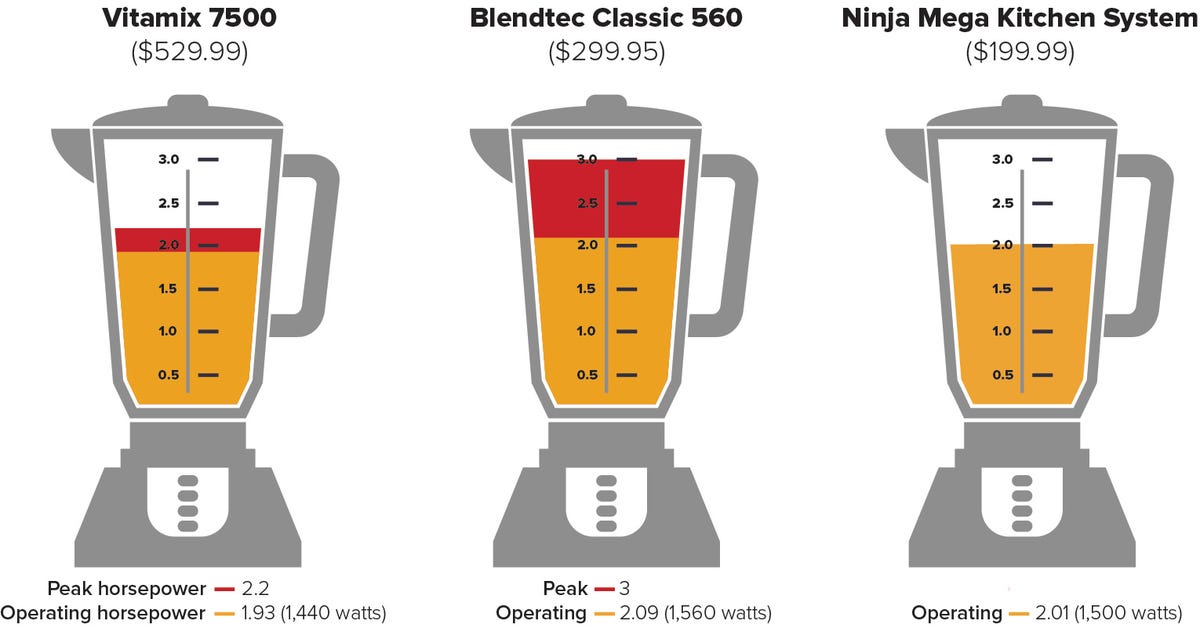
Heavy tasks such as crushing ice or blending nuts need more power. Choose blenders with 700 watts or higher. These can handle tough ingredients easily. They prevent motor strain and produce smooth results faster.
For Frequent Use
Blenders used daily need a balance of power and durability. A model with 600 to 800 watts fits well. It is strong enough for most tasks and built to last. Frequent users get better performance and reliability this way.
Credit: www.cnet.com
Other Factors Affecting Blender Power
Blender wattage is not the only factor that decides how well a blender performs. Several other parts play a key role in its power and efficiency. Understanding these parts can help you pick the right blender for your needs.
Blade Design
The shape and sharpness of the blades affect how well a blender cuts and mixes. Blades that are sharp and angled can crush ice and tough ingredients easily. Some designs create a strong vortex, pulling food down for even blending. Blades made from strong materials last longer and stay sharp.
Motor Type
The type of motor inside a blender impacts its power and noise level. Brushless motors run smoother and last longer than brushed motors. Some motors provide steady power without overheating. A good motor handles thick mixtures without slowing down.
Jar Material
The material of the blender jar also affects performance. Glass jars are heavy but resist stains and odors. Plastic jars are lighter but may scratch or absorb smells. Stainless steel jars keep ingredients cold but do not let you see inside. Each material has benefits for different uses.
Common Myths About Blender Wattage
Blender wattage often sparks many questions. People hear different claims and get confused. Some think higher wattage means a better blender. Others believe low wattage blenders cannot crush hard ingredients. These are common myths that need clearing up.
Understanding blender wattage helps choose the right device. Wattage shows how much power the motor uses. But power alone does not decide performance. Many factors affect how well a blender works.
Higher Wattage Always Means Better
More wattage does not always mean better blending. A blender with high wattage can be strong. Yet, other parts like blades and design matter too. A low watt blender with sharp blades might blend better than a high watt one with dull blades.
Also, high wattage models can use more electricity. Not always the best choice for light tasks. Choose wattage based on what you blend most.
Low Wattage Can’t Handle Tough Ingredients
Low wattage blenders can crush many tough ingredients. Ingredients like fruits, vegetables, and ice can blend well. Blade sharpness and blender speed affect this more than wattage.
For light use, low wattage is enough. Heavy use or large batches may need more power. But low wattage is not useless or weak by itself.

Credit: www.hestiaappliances.com
Tips For Choosing The Right Blender
Choosing the right blender can be tricky. Many factors affect how well it works for you. Wattage is important, but not the only thing to think about. Here are some tips to help pick the best blender for your kitchen.
Assess Your Blending Needs
Think about what you will blend most often. Soft fruits need less power than nuts or ice. A low watt blender works for smoothies and soups. High watt blenders handle tough ingredients better. Match the blender’s power to your daily use.
Consider Budget And Durability
Set a budget before shopping. Blenders with higher wattage usually cost more. Cheaper models might break faster. Look for sturdy parts and strong motors. A good blender lasts longer and saves money over time.
Check Warranty And Brand Reputation
Check the warranty length and what it covers. A longer warranty shows confidence in the product. Choose brands known for quality and customer service. Read reviews to see other buyers’ experiences. It helps avoid poor choices.
Frequently Asked Questions
What Wattage Is Ideal For A Kitchen Blender?
An ideal blender wattage ranges from 300 to 700 watts. Higher wattage means better performance and faster blending. For tough ingredients, choose blenders with 600 watts or more. Lower wattage is suitable for smoothies and light tasks.
How Does Blender Wattage Affect Blending Performance?
Higher wattage offers stronger motor power for smoother blends. It handles tough ingredients like ice and nuts easily. Lower wattage blenders may struggle with thick mixtures. Wattage directly influences blending speed and efficiency.
Can Low-wattage Blenders Crush Ice Effectively?
Low-wattage blenders usually cannot crush ice well. They may overheat or produce uneven blends. For crushing ice, a blender with at least 600 watts is recommended. This ensures durability and consistent performance.
Does Higher Wattage Mean More Electricity Consumption?
Higher wattage blenders consume more power but blend faster. Quick blending offsets longer run time, balancing electricity use. Using a high-wattage blender efficiently won’t drastically raise your electricity bill.
Conclusion
Choosing the right blender wattage affects your blending results. Higher wattage means stronger power and smoother blends. Lower wattage blenders work well for simple tasks like smoothies. Think about what you will blend most often. This helps pick the best wattage for your needs.
Remember, wattage is just one part of a good blender. Consider other features too, like blade quality and speed settings. A balanced choice leads to better kitchen results and happy blending.