
Last Updated on November 15, 2026
The 30-Second Answer: Diamond plates vs sharpening stones, in short:
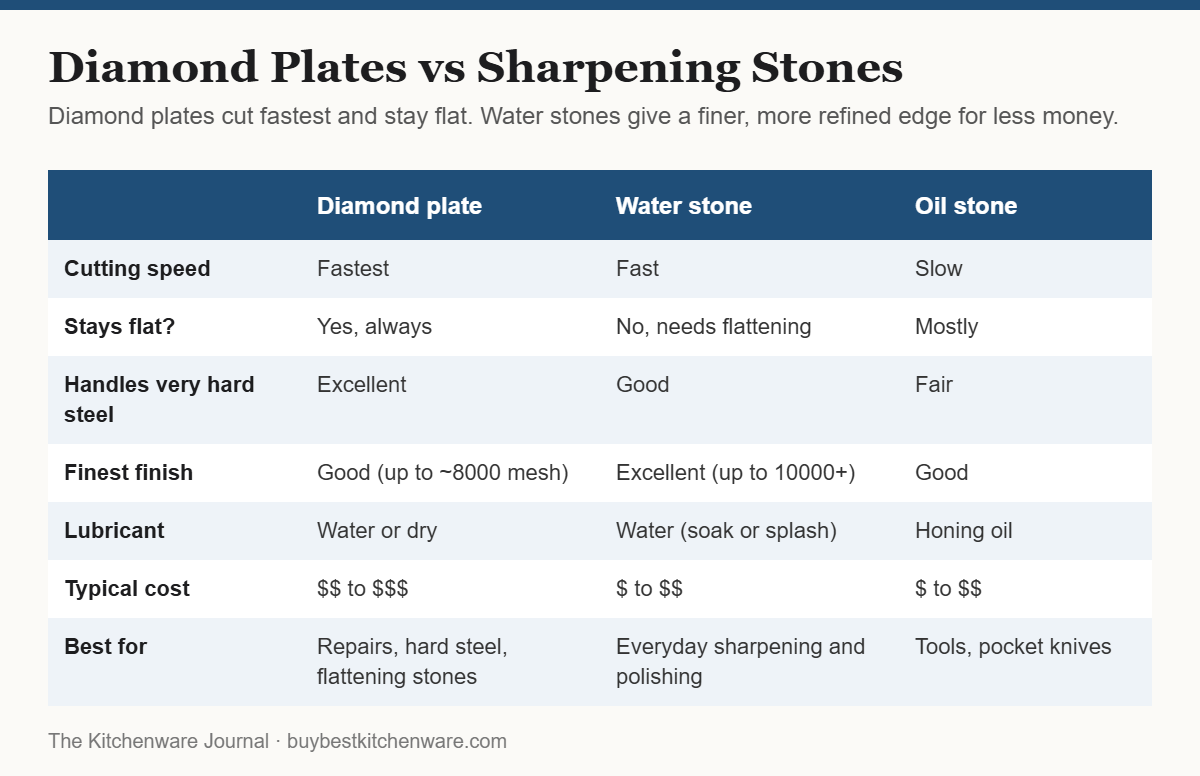
- Diamond plates cut the fastest, never wear out of flat and handle super-hard steels.
- Water stones leave a finer, more polished edge and cost less, but need regular flattening.
- Oil stones are slow and traditional, better for tools and pocket knives.
- Best combo for many cooks: a diamond plate for repairs and flattening, plus a fine water stone for finishing.
- Only buying one? A 1000/6000 water stone for most kitchens; a diamond plate if you own very hard knives or sharpen often.
New diamond plates feel aggressive for the first few sessions; they smooth out a little after break-in.
Research note: This comparison follows standard references on sharpening stones and common maker grit ratings. Diamond grit and stone grit scales don’t line up exactly, so treat equivalents as approximate.
Walk into any knife forum and the diamond-vs-stone debate is waiting. Both sharpen well. The real difference is how fast they cut, how they wear and what kind of edge they leave.
This guide compares diamond plates, water stones and oil stones side by side so you can pick based on your knives, budget and patience.
In this guide
How Diamond Plates Work
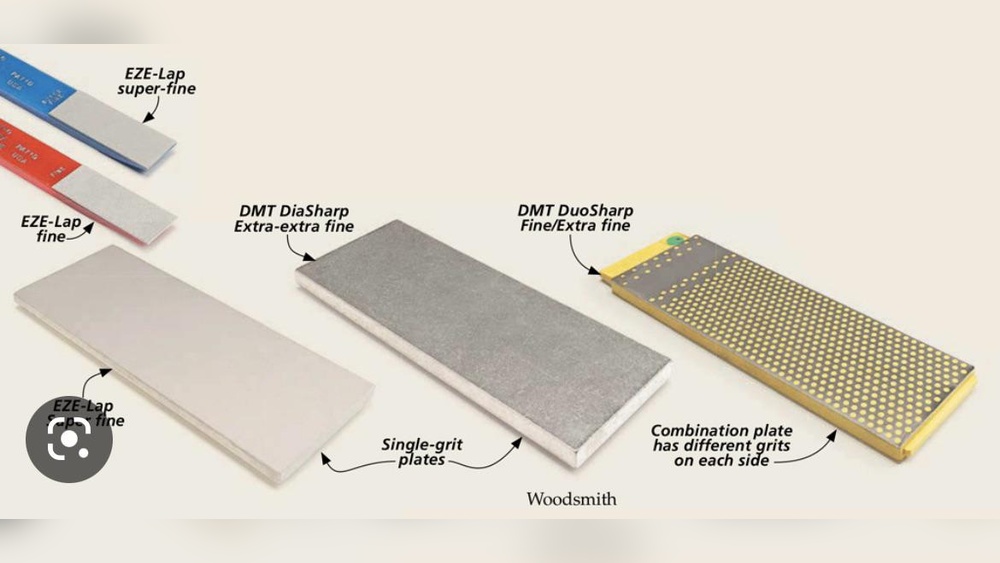
A diamond plate is a flat steel plate bonded with industrial diamond particles. Diamond is harder than any knife steel, so it cuts quickly and evenly. Because the plate itself doesn’t wear down, it stays flat for its whole life. Many sharpeners use a coarse diamond plate to flatten their water stones.
How Sharpening Stones Work
Water stones and oil stones are abrasive particles held in a binder. As you sharpen, the surface wears and releases fresh abrasive, which keeps cutting efficiently and creates a slurry that helps polish. The trade-off is that the stone dishes over time and needs flattening. New to stones? Start with what is a whetstone.
Diamond Plates vs Sharpening Stones: Which Suits Your Knives?
| Your situation | Best choice |
|---|---|
| Mostly German or budget knives | Water stone (1000/6000) |
| Hard Japanese or powder steels | Diamond plate for sharpening, fine water stone to finish |
| Chipped or very dull knives | Coarse diamond plate |
| Sharpen often, hate flattening | Diamond plates |
| Want a mirror polish | High-grit water stone |
| Pocket knives and tools | Diamond or oil stone |
Technique Differences
- Pressure: use lighter pressure on diamond; it cuts fast and can leave deeper scratches.
- Lubricant: diamond needs only water or nothing; water stones need soaking or splashing; oil stones need oil.
- Break-in: new diamond plates shed loose particles and feel rough for a few sessions.
- Cleaning: rinse diamond plates; flatten and rinse water stones.
For holding the right angle on either surface, see our knife sharpening angle guide.
Diamond Plates and Stones Worth Buying
Here are picks on both sides, so you can choose one or combine them.
1. S SATC 400/1000 Diamond Sharpening Plate (best value diamond plate)

A double-sided diamond plate with 400 and 1000 grit faces.
Why We Like It
Covers repair and sharpening in one plate, stays flat and doubles as a stone flattener.
Flaws to Know
- Not fine enough for a polish
- Aggressive when new
Buy it if: you want a do-it-all diamond plate. Skip it if: you want a mirror finish.
2. 5-Piece Diamond Sharpening Stone Set (multi-grit kit)
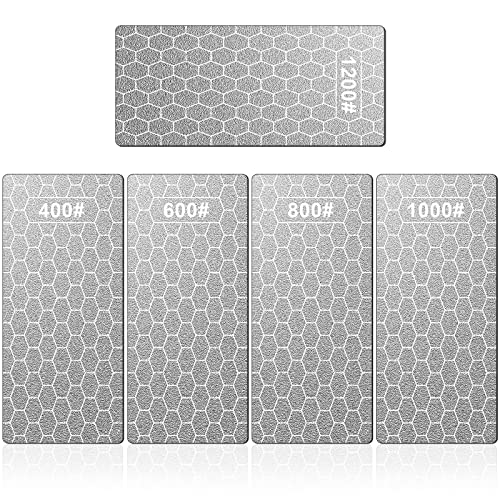
A set of diamond plates from coarse to extra fine.
Why We Like It
Lets you progress through grits entirely on diamond, great for very hard steels.
Flaws to Know
- Smaller plates
- More pieces to store
Buy it if: you sharpen hard steel often. Skip it if: you sharpen once or twice a year.
3. DMT Dia-Sharp Fine Bench Stone (premium diamond)

A continuous diamond surface bench stone in fine grit.
Why We Like It
A long-trusted diamond plate with an even, continuous surface that’s gentle on knife tips.
Flaws to Know
- Pricier
- Single grit
Buy it if: you want a top-tier diamond plate. Skip it if: you need several grits on a budget.
4. Sharp Pebble 1000/6000 Water Stone (best water stone)
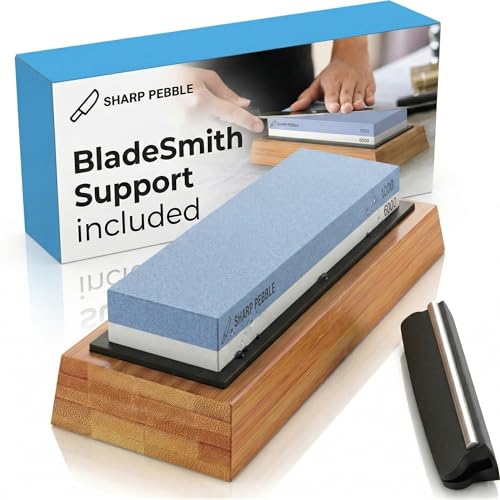
A dual-grit water stone with a bamboo base and angle guide.
Why We Like It
Delivers the refined, polished edge water stones are known for at a friendly price.
Flaws to Know
- Needs soaking
- Needs flattening
Buy it if: you want the classic whetstone experience. Skip it if: you hate maintenance.
Looking for more ways to sharpen? Our sandpaper method is another always-flat option. For knife styles in general, see our guide to the types of kitchen knives.
Notes for the UK, Canada and EU
Diamond plates are often labeled in microns or mesh outside the US; Japanese water stones use the JIS grit scale. Equivalents are approximate, so compare within one brand where you can. Both types are widely available across the UK, EU and Canada.
Frequently Asked Questions
Are diamond plates better than whetstones?
They’re faster and stay flat. Water stones usually give a finer finish and cost less.
Do diamond plates wear out?
Slowly. The diamond coating can wear after years of heavy use, but the plate stays flat.
Can I flatten a water stone with a diamond plate?
Yes. A coarse diamond plate is one of the best tools for flattening.
Do diamond plates need water?
They can be used dry, but water keeps metal particles from clogging the surface.
Are diamond plates good for Japanese knives?
Yes, especially for hard steels, but finish on a fine stone for the best edge.

Reviewed by Samantha Hickel, Kitchenware Reviewer & Cookware Expert. Samantha has cooked for more than ten years, has reviewed kitchenware for The Kitchenware Journal since 2022, and covers stock pots, saucepans, canning, cake and bread pans, cutting boards and everyday kitchen tools. Our lab tests kitchenware, cutting boards and serving pieces for capacity, durability, stain resistance and ease of care. How we test.
Related guides: Large sharpening stones · Sharpening steel vs whetstone · Coarse vs fine sharpener · How to sharpen a Benchmade knife