
Last Updated on November 15, 2026
The 30-Second Answer: Lysol vs Clorox is closer than most people think. Their disinfecting wipes and sprays use similar quaternary ammonium disinfectants, and both kill 99.9% of listed germs when used as directed.
- Choose Clorox for bleach products: tough stains, mold and mildew, and whitening grout.
- Choose Lysol for aerosol spray on soft surfaces like couches and mattresses, and for odor control.
- For everyday kitchen wipes, either brand works. Buy whichever is cheaper per wipe and scent you prefer.
Whatever you choose, keep the surface wet for the full contact time on the label, and never mix bleach with other cleaners. See the side-by-side comparison.
A note on this guide: This comparison is based on product labels, manufacturer claims and CDC guidance. Disinfectant claims are specific to each product, so always check the label of the exact product you buy.
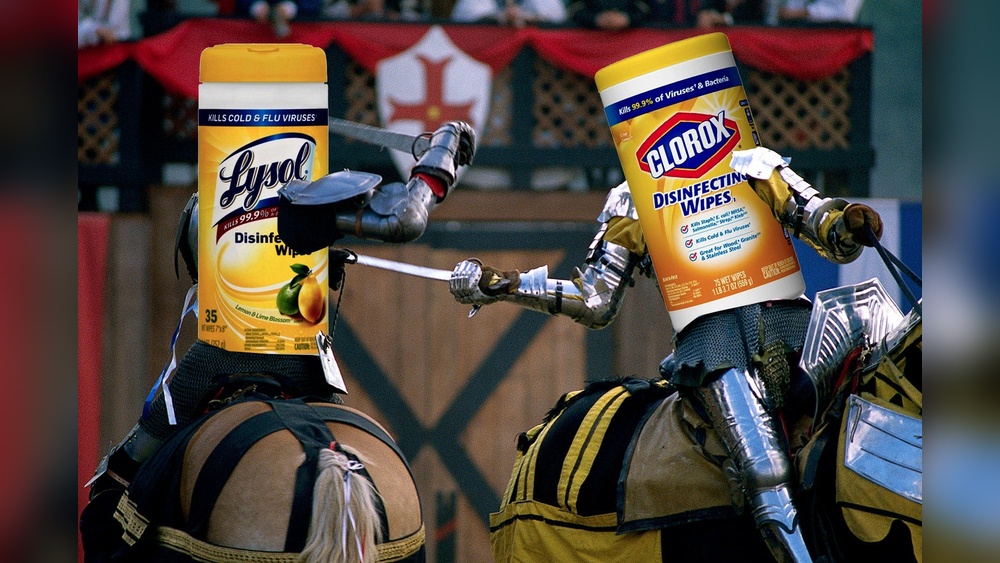
Lysol and Clorox are the two biggest names in household disinfectants. Shoppers often assume Clorox means bleach and Lysol means spray, but both brands now sell wipes, sprays and all-purpose cleaners, and many of their formulas work in similar ways.
This Lysol vs Clorox comparison covers active ingredients, which product suits which job, safety rules, kitchen use, price, and what to buy if you live outside the US.
In this guide
Lysol vs Clorox at a Glance
| Lysol | Clorox | |
|---|---|---|
| Parent company | Reckitt (UK-based) | The Clorox Company (US) |
| Best known for | Disinfectant aerosol spray | Bleach |
| Disinfecting wipes | Quaternary ammonium, bleach-free | Quaternary ammonium, bleach-free |
| Bleach products | Few | Wide range (sodium hypochlorite) |
| Soft surfaces | Aerosol spray sanitizes many fabrics | Bleach can discolor fabric |
| Mold and mildew stains | Some products | Bleach sprays excel |
| Scent | Strong, many scent options | Fresh scents; bleach smell on bleach products |
| Best for | Spray, odors, soft surfaces | Stains, mold, grout, laundry whitening |
Active Ingredients: How Each Brand Kills Germs
- Quaternary ammonium compounds (quats): the main disinfectant in both Lysol and Clorox disinfecting wipes and many all-purpose sprays. They break down germ cell walls.
- Ethanol: combined with quats in Lysol Disinfectant Spray. It helps the aerosol dry quickly on soft surfaces.
- Sodium hypochlorite (bleach): the active ingredient in Clorox bleach and Clorox Clean-Up. It disinfects, whitens and removes mold and mildew stains.
- Hydrogen peroxide: used in some newer products from both brands as a gentler alternative.
Disinfectants only work if the surface stays visibly wet for the contact time printed on the label, often several minutes. A quick swipe that dries in seconds cleans, but may not disinfect.
Which Is Better for Each Job
| Job | Better pick | Why |
|---|---|---|
| Kitchen counters | Either brand’s wipes | Similar quat formulas; rinse food-contact surfaces after |
| Couches, mattresses, backpacks | Lysol Disinfectant Spray | Aerosol is made to sanitize many soft surfaces |
| Grout, mildew, tile stains | Clorox Clean-Up with Bleach | Bleach removes and whitens stains |
| Bathroom odors | Lysol Spray | Strong odor control |
| Cutting boards and sinks | Diluted Clorox bleach | Cheap, effective sanitizer when diluted per label |
| Electronics and touch screens | Neither by default | Follow the device maker’s cleaning advice |
Best Lysol and Clorox Products
1. Clorox Disinfecting Wipes (Best Everyday Wipes)
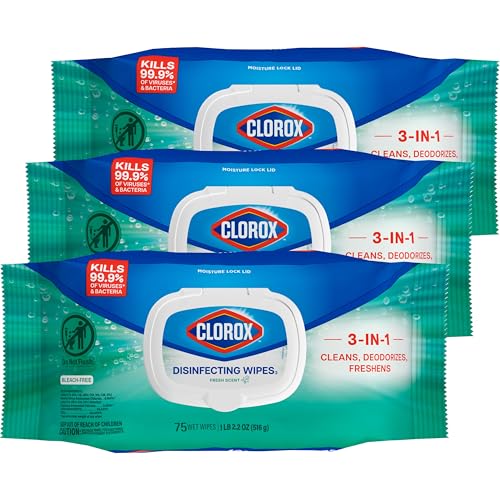
Clorox’s bleach-free wipes are the classic grab-and-go disinfectant. The listing says they are safe on over 100 surfaces, including finished wood, sealed granite, glass and stainless steel.
Why We Like It
Quick, easy and widely available. They clean and disinfect in one step on hard, non-porous surfaces.
Flaws to Know
- Single-use wipes create waste
- Food-contact surfaces need a rinse after disinfecting
Buy it if: you want fast everyday disinfecting. Skip it if: you want a low-waste routine.
2. Lysol Disinfecting Wipes (Best for Germ Claims)
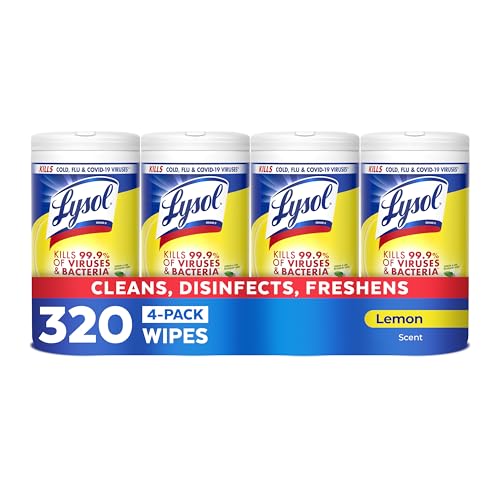
Lysol’s multi-surface wipes are tested to kill 99.9% of viruses and bacteria, including COVID-19 and eight cold and flu viruses, according to the listing.
Why We Like It
The label lists a wide range of germs, and the wipes also remove allergens and deodorize.
Flaws to Know
- Scented formulas can be strong
- Not for unsealed wood or soft surfaces
Buy it if: you want a long list of germ claims. Skip it if: you are sensitive to fragrance.
3. Lysol Disinfectant Spray (Best for Soft Surfaces)
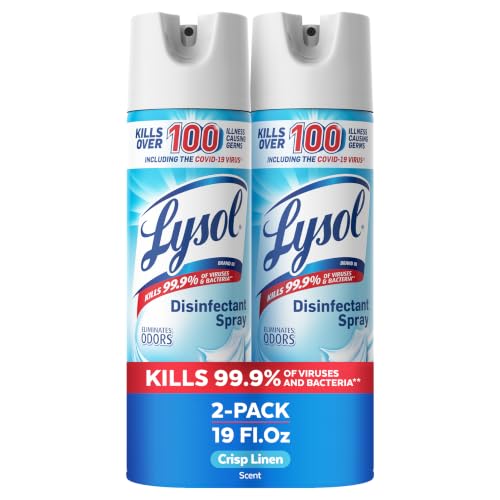
Lysol’s aerosol spray is the brand’s signature product. It disinfects hard surfaces and sanitizes many soft surfaces such as upholstery, mattresses and bags.
Why We Like It
Nothing in Clorox’s range covers soft surfaces and odors quite as easily.
Flaws to Know
- Aerosol mist is easy to inhale; ventilate the room
- Not for food-contact surfaces without rinsing
Buy it if: you need to freshen and sanitize fabrics. Skip it if: you mostly clean counters.
4. Clorox Clean-Up Multi-Surface Cleaner with Bleach (Best for Stains and Mildew)
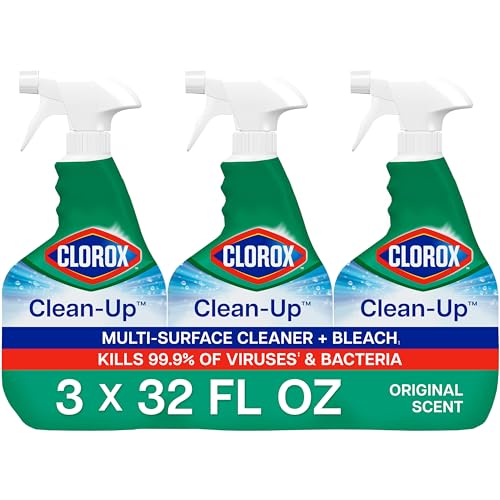
Clorox Clean-Up combines a cleaner with bleach, so it removes stains, mold and mildew discoloration while it disinfects.
Why We Like It
For grout, white sinks and mildew in showers, bleach outperforms quat cleaners.
Flaws to Know
- Can bleach clothes, rugs and colored surfaces
- Never mix with ammonia, vinegar or other cleaners
Buy it if: you fight stains and mildew. Skip it if: you need a fabric-safe cleaner.
5. Lysol All Purpose Cleaner Spray (Best Budget Spray)
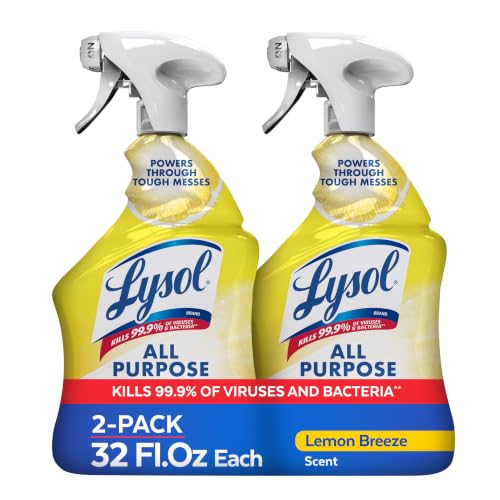
Lysol’s 32 oz all-purpose trigger spray cleans and disinfects kitchens and bathrooms without bleach.
Why We Like It
A refillable trigger spray costs less per use than wipes and creates less waste.
Flaws to Know
- Needs a cloth or paper towel
- Strong lemon scent
Buy it if: you want bleach-free disinfecting on a budget. Skip it if: you need stain removal.
Safety Rules for Lysol and Clorox
- Never mix bleach with ammonia, vinegar or other cleaners: the combination releases toxic gases. The CDC warns against mixing cleaning products.
- Ventilate: open a window or run a fan, especially with aerosol sprays and bleach.
- Rinse food-contact surfaces: after disinfecting counters, cutting boards or high chair trays, rinse with clean water if the label says so.
- Keep away from children and pets: let surfaces dry fully before kids or pets touch them.
- Wear gloves: both quats and bleach can irritate skin with frequent use.
For food-safe kitchen sanitizing, follow University of Illinois Extension guidance. For gentler everyday cleaning, see our guides to vinegar on stainless steel, cleaning a microwave with vinegar and cleaning a dishwasher with vinegar.
Lysol vs Clorox: Price and Value
Prices are close. Store brands and bulk packs often cut the cost per wipe noticeably. Sprays and diluted bleach cost far less per use than wipes, so most households save money by using wipes only for quick jobs.
UK, Canada and EU Buyer Notes
- UK and Ireland: Lysol is rarely sold; Reckitt sells its disinfectants under the Dettol brand instead. Clorox products are rare; search for “bleach spray” or “antibacterial wipes” instead. Domestos is the leading UK bleach brand.
- Canada: both Lysol and Clorox are widely sold. Canadian products carry a Drug Identification Number (DIN) on approved disinfectants.
- Germany, France, Italy and Spain: Reckitt sells its disinfectants as Sagrotan in Germany. Bleach is Chlorbleiche (DE), eau de Javel (FR), candeggina (IT) and lejía (ES). Search for Desinfektionstücher (DE) or lingettes désinfectantes (FR) for wipes.
- Concentration: household bleach strength varies by country, so follow the dilution on your local bottle.
Frequently Asked Questions
Is Lysol or Clorox better?
Neither is better overall. Their disinfecting wipes work in similar ways. Clorox is better for bleach jobs like stains and mildew; Lysol is better for soft surfaces and odors.
Do Clorox wipes contain bleach?
No. Clorox Disinfecting Wipes are bleach-free and use a quaternary ammonium disinfectant. Clorox bleach products are sold separately.
Which kills germs faster, Lysol or Clorox?
It depends on the product, not the brand. Each label lists its own contact time; keep the surface wet for that long.
Can I use Lysol or Clorox on kitchen counters?
Yes, on sealed hard surfaces. Rinse food-contact surfaces with water afterward if the label says to.
Are Lysol and Clorox safe around kids and pets?
They are safe when used as directed and allowed to dry. Store them out of reach, and keep kids and pets away from wet surfaces.
Can I mix Lysol and Clorox?
No. Never mix disinfectants, and never mix bleach with any other cleaner.

Reviewed by Darren Kelly, Kitchenware Reviewer & Food Prep Tools Specialist. Darren has cooked for more than ten years, has reviewed kitchenware for The Kitchenware Journal since 2022, and covers peelers and choppers, water dispensers, tableware, cleaning tools and waffle makers. Our lab tests glassware and tableware for true capacity, balance, thermal shock and dishwasher durability. How we test.
Related guides: Kitchen Cleaning Checklist · Dish Soap vs Hand Soap · Eco-Friendly Dish Soaps · Vinegar on Stainless Steel