
Last Updated on November 15, 2026
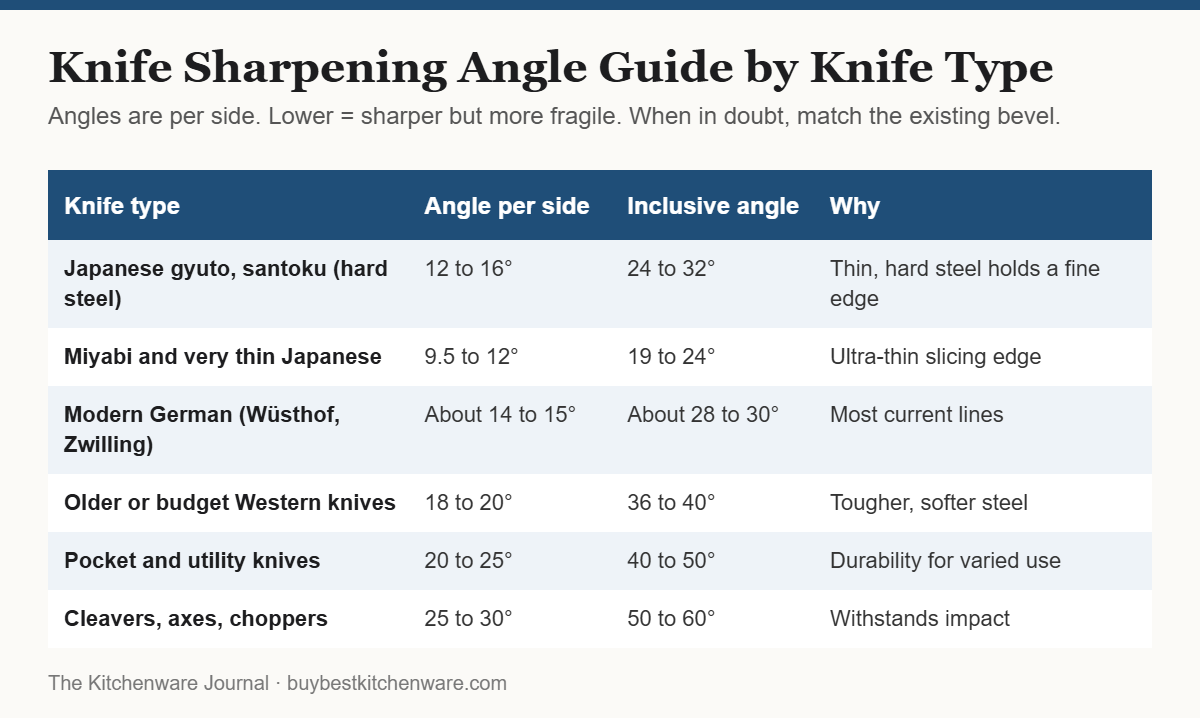
The 30-Second Answer: Use this knife sharpening angle guide as a starting point (angles are per side):
- Japanese knives: 12 to 16 degrees; very thin lines like Miyabi as low as 9.5 to 12.
- Modern German knives: about 14 to 15 degrees.
- Older or budget Western knives: 18 to 20 degrees.
- Pocket and outdoor knives: 20 to 25 degrees.
- Cleavers and choppers: 25 to 30 degrees.
The safest rule: match the bevel your knife already has. Color it with a marker, make one light pass and see where the ink comes off.
Research note: Ranges reflect common manufacturer specifications and standard knife sharpening practice. Individual knives vary, so check your maker’s recommendation when you can.
The angle you sharpen at decides how a knife cuts and how long it stays sharp. Too steep and it feels dull out of the gate; too shallow and the edge chips or rolls on the first squash.
This guide gives the right angle for each type of knife, explains per-side versus inclusive angles, and shows simple ways to find and hold your angle on any sharpener.
In this guide
Per-Side vs Inclusive Angle
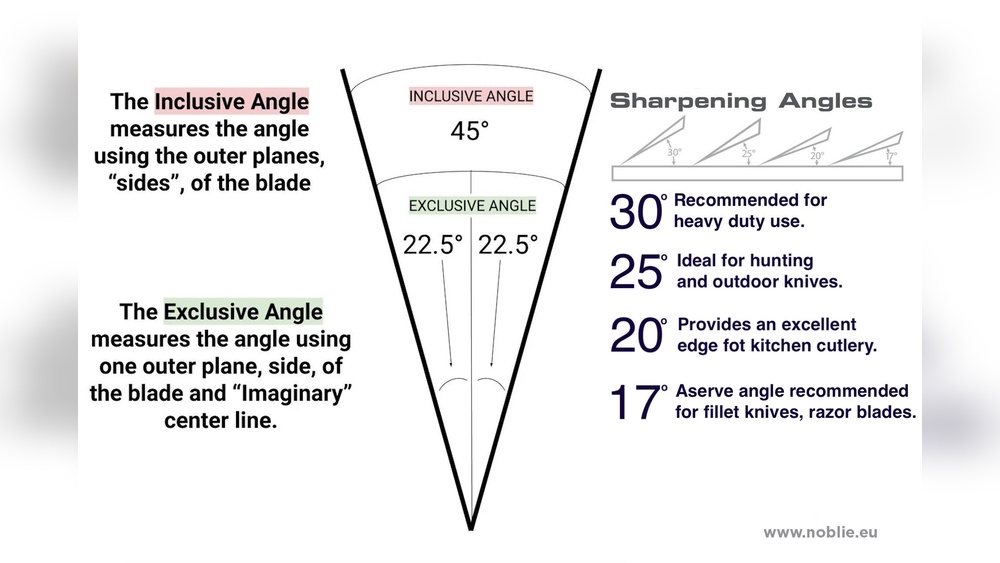
Most guides quote the angle per side. A knife sharpened at 15 degrees per side has a 30-degree inclusive angle (both sides added together). Some electric sharpeners and Japanese makers list the inclusive number, so always check which one you’re reading.
Knife Sharpening Angle Guide: Trade-Offs
| Lower angle (10 to 15°) | Higher angle (20 to 30°) |
|---|---|
| Feels sharper, slices easily | Feels less sharp |
| Edge is thinner and more fragile | Edge is tougher and lasts under impact |
| Best on hard steel | Works on softer steel |
| Ideal for slicing, fish, vegetables | Ideal for chopping, bone, outdoor use |
How to Find Your Knife’s Current Angle
- Color the edge bevel with a permanent marker.
- Make one or two light strokes on your stone at your best guess.
- Look at the bevel. Ink gone only at the very edge means your angle is too high; ink gone only at the shoulder means too low.
- Adjust until the ink comes off evenly across the bevel.
How to Hold an Angle Consistently
- Coin trick: a stack of coins under the spine approximates an angle; for a 2-inch-tall blade, about 3/8 inch of lift is roughly 10 to 11 degrees and 1/2 inch is roughly 15.
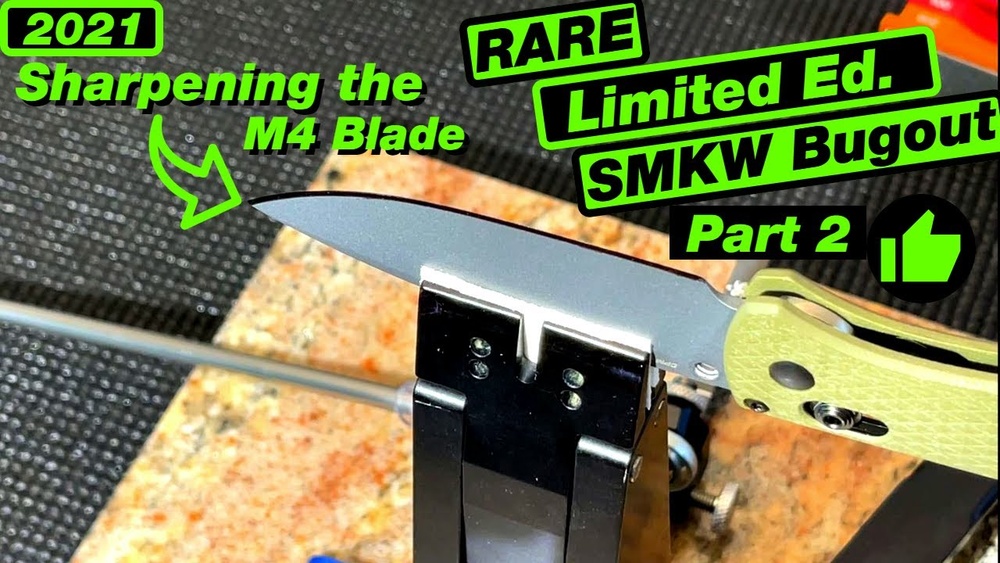
- Angle guides: clip-on guides or pyramid blocks show a fixed angle.
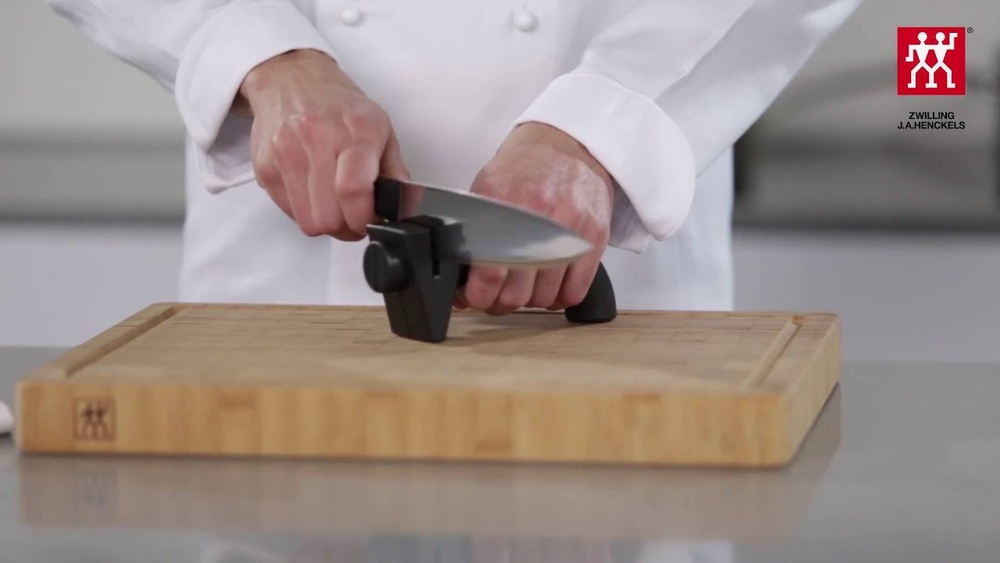
- Guided systems: clamp sharpeners lock the angle for you.
- Digital angle gauge: measure the stone and blade for exact numbers.
- DIY guide: build a simple wedge; see how to make a knife sharpening angle guide.
Angles for Specific Brands
Shun knives are typically sharpened near 16 degrees per side (see how to sharpen Shun knives), Miyabi much lower (see how to sharpen a Miyabi knife), and modern Wüsthof and Zwilling about 14 to 15 degrees.
Tools to Find and Hold the Right Angle
These help you hit the angles in the chart consistently.
1. SHARPAL 196N Angle Pyramid Guide (14°, 17°, 20°, 25°) (quick visual check)

Small pyramid blocks with four common sharpening angles.
Why We Like It
Rest the blade against the right face before each set of strokes to calibrate your hand.
Flaws to Know
- Doesn’t hold the angle for you
- Only four angles
Buy it if: you sharpen freehand. Skip it if: you use a guided system.
2. Koja Fixed Angle Whetstone Blade Guide (clip-on guide)
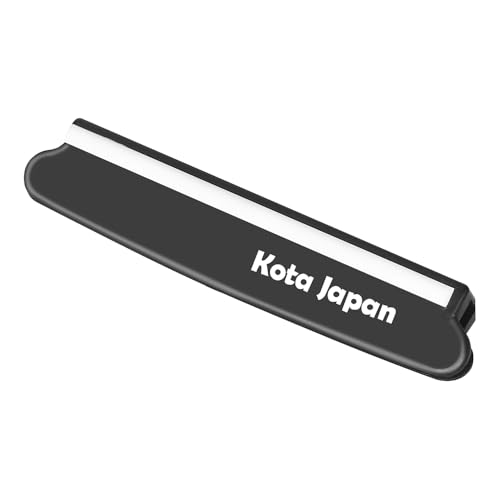
A guide that attaches to the knife spine and rides on the stone.
Why We Like It
Holds a consistent angle while you build muscle memory.
Flaws to Know
- Can scratch the blade face
- Fixed angle
Buy it if: you’re learning to use a whetstone. Skip it if: you’re confident freehand.
3. SHAHE Digital Angle Gauge (exact measurements)

A magnetic digital angle cube with a zero function.
Why We Like It
Zero it on the stone, then set it on the blade to read your exact angle, great for guided systems and checking your technique.
Flaws to Know
- Needs a flat steel surface or tape
- Battery powered
Buy it if: you want precise numbers. Skip it if: you prefer feel over measurement.
4. Work Sharp Precision Adjust Sharpener (locks the angle)
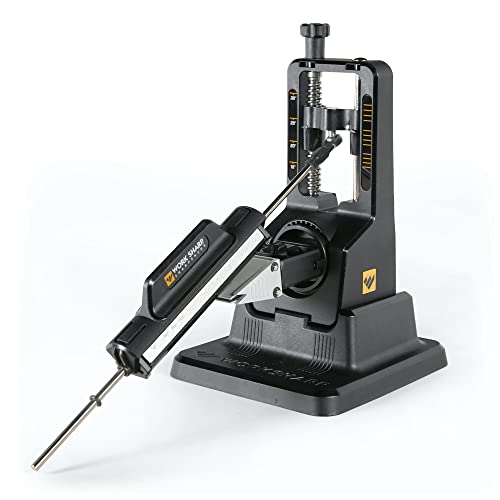
A guided sharpener adjustable from 15 to 30 degrees.
Why We Like It
Set the angle from the chart and the system holds it for every stroke.
Flaws to Know
- Bottoms out at 15°, too steep for very thin Japanese knives
- Slower than pull-throughs
Buy it if: you want repeatable angles without skill. Skip it if: you sharpen ultra-thin Japanese blades.
For more on knife styles, see our guide to the types of kitchen knives.
Notes for the UK, Canada and EU
Angles are universal, but terminology varies: some European makers list inclusive angles (for example 30 degrees), while US guides usually list per-side angles (15 degrees). Japanese makers sometimes describe edges as a ratio like 70/30 for asymmetrical bevels, which means one side is sharpened more than the other.
Frequently Asked Questions
What angle should I sharpen my kitchen knife?
About 15 degrees per side for most modern kitchen knives; 12 to 16 for Japanese; 18 to 20 for older Western knives.
Is 15 or 20 degrees better?
15 is sharper for slicing; 20 is more durable for heavy chopping.
What does inclusive angle mean?
Both sides added together. A 15-degree-per-side edge has a 30-degree inclusive angle.
How do I know my knife’s angle?
Color the bevel with a marker, make a light pass and adjust until the ink comes off evenly.
Can I change my knife’s angle?
Yes, but going lower takes time on a coarse stone and makes the edge more fragile.

Reviewed by Samantha Hickel, Kitchenware Reviewer & Cookware Expert. Samantha has cooked for more than ten years, has reviewed kitchenware for The Kitchenware Journal since 2022, and covers stock pots, saucepans, canning, cake and bread pans, cutting boards and everyday kitchen tools. Our lab tests kitchenware, cutting boards and serving pieces for capacity, durability, stain resistance and ease of care. How we test.
Related guides: How to sharpen a knife with a rod · What is a whetstone? · Knife sharpness chart · German knives