Last Updated on December 29, 2025
Your kitchen cabinets are one of the busiest spots in your home. Over time, they collect grease, dust, and stains that dull their appearance.
Cleaning them might seem like a big chore, but it doesn’t have to be. Imagine opening your cabinets and seeing them sparkling clean—how good would that feel? You’ll discover simple and effective ways to clean your kitchen cabinets, step by step.
By the end, your cabinets will look fresh and inviting, and you’ll have the confidence to keep them that way. Ready to give your kitchen a quick makeover? Let’s get started!
Credit: www.fooddolls.com
Gathering Cleaning Supplies
Gathering the right cleaning supplies is the first step to cleaning kitchen cabinets well. Having everything ready makes the job easier and faster. Knowing what tools and cleaners to use helps protect your cabinets. It also ensures a thorough clean without damage.
Essential Tools And Materials
Start with soft cloths or microfiber towels. These remove dirt without scratching surfaces. A soft sponge helps clean sticky spots gently. Use a bucket to hold warm water and cleaners. A small brush or old toothbrush reaches tight corners. Gloves protect your hands from harsh chemicals. Paper towels come in handy for drying. Prepare a step stool for high cabinets.
Choosing The Right Cleaners
Select mild soap or dish detergent for most cabinet types. Avoid strong chemicals that can ruin finishes. White vinegar mixed with water works well on grease. Baking soda makes a gentle scrubbing paste. For wooden cabinets, use wood cleaner or polish. Test any cleaner on a small hidden spot first. This prevents unwanted damage or discoloration.
Credit: www.thekitchn.com
Preparing The Cabinets
Preparing the cabinets is the first step to a thorough clean. It sets the stage for easy and effective work. Without proper prep, dirt and dust can spread or hide in corners.
Taking time to prepare helps avoid damage and keeps your kitchen neat. Start with clearing the space and removing loose dust.
Removing Items And Dusting
Take all items off the cabinet shelves and doors. This includes dishes, spices, and decorative pieces. Empty cabinets make cleaning faster and more efficient.
Use a soft cloth or duster to remove dust from the cabinet surfaces. Start from the top and work downwards to catch falling dust. Pay attention to corners and edges where dust collects.
Protecting Surrounding Areas
Cover countertops and the floor near the cabinets with old towels or plastic sheets. This prevents cleaning sprays or water from causing stains or damage.
Remove or cover nearby appliances and items that may get wet or dirty. Protecting these areas keeps your kitchen safe during cleaning.
Cleaning Techniques For Different Materials
Kitchen cabinets come in various materials. Each type needs a special cleaning method. Using the right technique keeps cabinets safe and looking fresh. This guide covers easy steps for wood, laminate, and painted cabinets.
Wood Cabinets
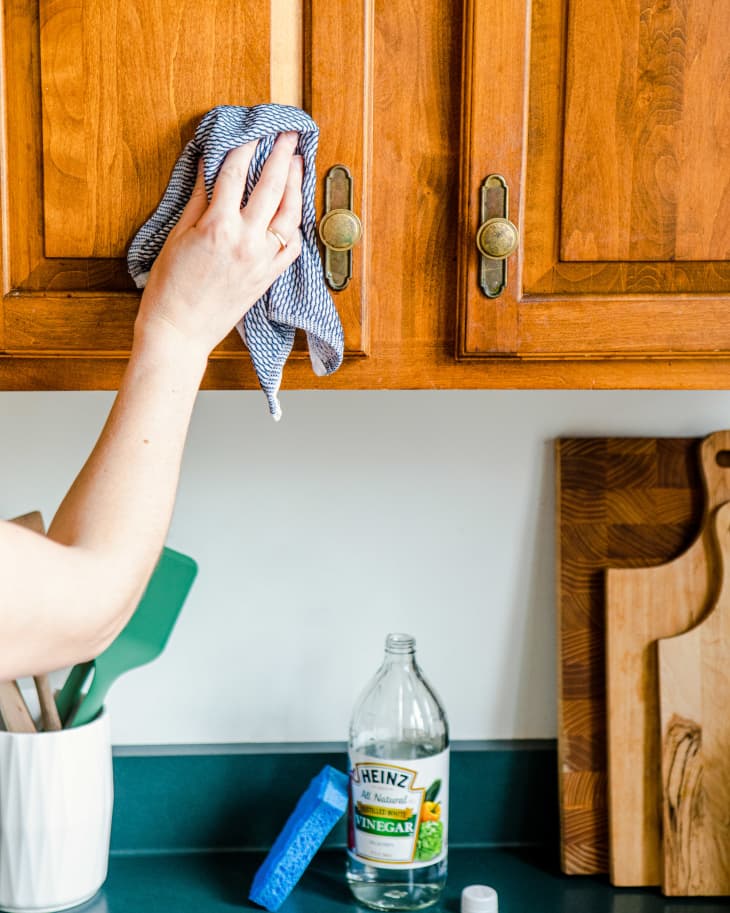
Wood cabinets need gentle care. Start with a soft cloth to dust the surface. Use a mix of warm water and mild dish soap for cleaning. Avoid soaking the wood. Wipe with a damp cloth, then dry immediately. For stubborn stains, try a paste of baking soda and water. Test in a hidden spot first. Polish with a wood conditioner to keep the shine.
Laminate Cabinets
Laminate cabinets handle water better than wood. Clean with warm soapy water and a soft sponge. Avoid abrasive scrubbers that can scratch the surface. Rinse with a clean damp cloth to remove soap. Dry with a towel to prevent streaks. For tough spots, use a baking soda paste gently. Avoid harsh chemicals that can damage the laminate finish.
Painted Cabinets
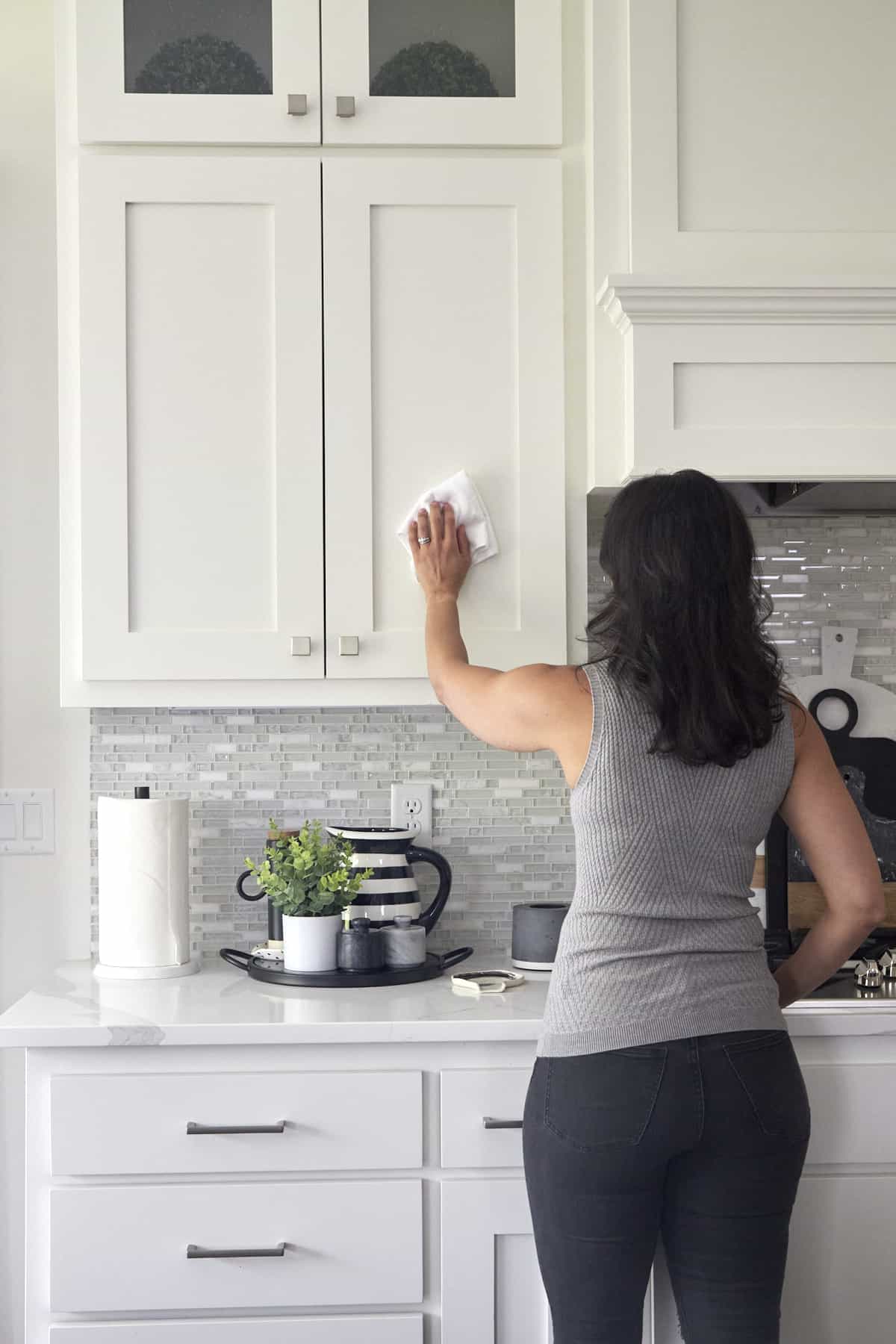
Painted cabinets need a careful touch. Dust with a microfiber cloth regularly. Clean with mild soap and warm water. Use a soft cloth to wipe gently. Avoid scrubbing too hard to protect the paint. Dry with a clean towel to avoid water marks. For marks or grease, use a magic eraser lightly. Test first to prevent paint damage.
Tackling Stubborn Stains And Grease
Stubborn stains and grease build-up make kitchen cabinets look old and dirty. Removing these marks can seem tough. With the right methods, cleaning becomes easier and more effective.
Focus on gentle but strong cleaning solutions. This protects your cabinets while removing grime. Use the right tools and techniques to keep wood or laminate surfaces safe.
Homemade Cleaning Solutions
Mix equal parts of warm water and white vinegar in a spray bottle. Spray on greasy spots and let it sit for a few minutes. Wipe with a soft cloth to lift dirt.
Baking soda also works well. Make a paste with water and apply to stains. Gently scrub with a sponge or toothbrush. Rinse with a damp cloth to remove residue.
For tough grease, add a few drops of dish soap to the vinegar mix. This boosts cleaning power without harsh chemicals.
Using Commercial Cleaners Safely
Choose cleaners made for kitchen cabinets or wood surfaces. Read labels to avoid harsh chemicals that can damage finishes.
Test a small area before full use. This prevents discoloration or damage. Use gloves to protect your hands from strong cleaners.
Apply cleaner with a soft cloth, not a scrub brush. Wipe gently to avoid scratching. Rinse with a damp cloth and dry well.
Drying And Polishing
Drying and polishing kitchen cabinets is the final step after cleaning. Proper drying stops water from harming the wood or finish. Polishing brings back the cabinet’s natural shine and protects the surface. Both steps help keep cabinets looking fresh and new for a long time.
Preventing Water Damage
Water left on cabinets can cause stains and swelling. Use a soft, dry cloth to wipe every surface. Focus on corners and edges where water hides. Avoid harsh rubbing that may scratch the finish. Make sure cabinets are fully dry before moving to the next step.
Restoring Shine
Polishing makes cabinets look bright and healthy. Use a polish made for wood or laminate, depending on your cabinets. Apply a small amount to a clean cloth. Rub gently in circular motions to spread polish evenly. Let the polish sit for a few minutes, then buff with a dry cloth. This step improves the cabinet’s appearance and adds a protective layer.
:max_bytes(150000):strip_icc()/steps-to-clean-kitchen-cabinets-1900630-final-5bbcde064cedfd0026eeec24.png)
Credit: www.thespruce.com
Maintenance Tips For Lasting Cleanliness
Keeping kitchen cabinets clean takes regular care. Small habits protect the finish and stop dirt build-up. Follow simple steps to keep cabinets fresh and neat over time.
Consistent cleaning saves effort later. It keeps your kitchen looking bright and tidy. Here are key tips for lasting cleanliness.
Regular Wiping Habits
Wipe cabinets often using a soft cloth. Dry cloths work best to avoid water spots. Use warm water mixed with mild soap for dirt. Clean spills right away to stop stains.
Focus on handles and edges where grease gathers. Clean these areas twice a week for best results. Avoid soaking cabinets; just a damp cloth is enough.
Avoiding Common Cleaning Mistakes
Never use harsh chemicals or abrasive pads. They damage the cabinet surface and cause fading. Avoid scrubbing too hard; it wears down finishes.
Skip using too much water. It can seep into wood and cause swelling. Do not use bleach or ammonia cleaners; they harm cabinet materials.
Test any new cleaner on a small hidden area first. This prevents unexpected damage or discoloration.
Frequently Asked Questions
How Often Should I Clean Kitchen Cabinets?
Clean kitchen cabinets every two weeks to prevent grease buildup. Wipe them with a damp cloth and mild cleaner. Regular cleaning maintains their appearance and hygiene.
What Is The Best Cleaner For Kitchen Cabinets?
Use a gentle, non-abrasive cleaner like dish soap mixed with water. Avoid harsh chemicals that can damage cabinet finishes. Test any cleaner on a small area first.
How Do I Remove Grease From Kitchen Cabinets?
Mix equal parts vinegar and water in a spray bottle. Spray the solution on greasy spots and wipe with a soft cloth. Repeat if needed for tough grease.
Can I Use Natural Products To Clean Cabinets?
Yes, natural products like vinegar, baking soda, and lemon work well. They are safe, eco-friendly, and effective for most cabinet surfaces. Always rinse and dry after cleaning.
Conclusion
Cleaning kitchen cabinets is simple with the right steps. Use gentle cleaners to protect the wood or paint. Wipe regularly to avoid buildup and stains. Pay attention to handles and corners where dirt hides. Small efforts keep your kitchen fresh and neat.
Clean cabinets make cooking more enjoyable and your space look brighter. Keep these tips handy for quick, easy cleaning next time. A tidy kitchen starts with clean cabinets every day.