
Last Updated on November 15, 2026
The 30-Second Answer: a wheat straw cutting board is a composite of wheat straw fiber and plastic resin (usually polypropylene). It is light, cheap and dishwasher safe, but it is not plastic-free or compostable.
- Best set: FLYINGSEA 3-piece wheat straw board set with anti-skid feet.
- Best reversible: AXIOM CREATIONS 2-piece reversible wheat straw boards.
- Best hybrid: double-sided stainless steel and wheat straw board.
To avoid plastic entirely, choose a hardwood board instead. Compare board materials.
A note on this guide: Reviewing a product properly is not easy, and real testing takes time. For now, this guide is research-based, built on manufacturer specs, product details and verified owner feedback. Our team is testing these products in The Kitchenware Journal lab, and we will update this guide with our hands-on results and photos very soon.
Wheat straw cutting boards are marketed as eco-friendly because they reuse straw left over from wheat farming. That part is true, but the straw is bound together with plastic resin, so the board behaves much like a plastic cutting board.
This guide explains what a wheat straw cutting board is made of, its real pros and cons, how it compares with wood, bamboo and plastic, and the best sets to buy.
In this guide
What Is a Wheat Straw Cutting Board?
Wheat straw boards mix ground wheat straw fiber with a food-grade plastic binder, most often polypropylene (PP). The ratio of straw to plastic varies by brand, and many listings do not state it. The straw replaces part of the plastic, which reduces the amount of new plastic used.
Pros and Cons
| Pros | Cons |
|---|---|
| Lighter and cheaper than wood | Still contains plastic resin |
| Usually dishwasher safe | Not compostable or easily recyclable |
| Does not need oiling | Scratches over time and can harbor bacteria in deep cuts |
| Gentle on knife edges, like plastic | Can warp with very hot water or heat |
| Reuses an agricultural by-product | Can shed tiny plastic particles when cut, like plastic boards |
Wheat Straw vs Other Cutting Board Materials
| Material | Knife-friendly | Dishwasher safe | Plastic-free | Lifespan |
|---|---|---|---|---|
| Wheat straw composite | Yes | Usually | No | 1 to 3 years |
| Plastic (polypropylene) | Yes | Yes | No | 1 to 3 years |
| Hardwood (maple, walnut) | Yes | No | Yes | Many years |
| Bamboo | Fair | No | Glue may contain resins | Several years |
| Silicone | Yes | Yes | No (silicone polymer) | Several years |
| Stainless steel | Hard on knives | Yes | Yes | Decades |
For the best natural option, see our guide to the best wood for cutting boards, and compare butcher block vs cutting board.
The Best Wheat Straw Cutting Boards
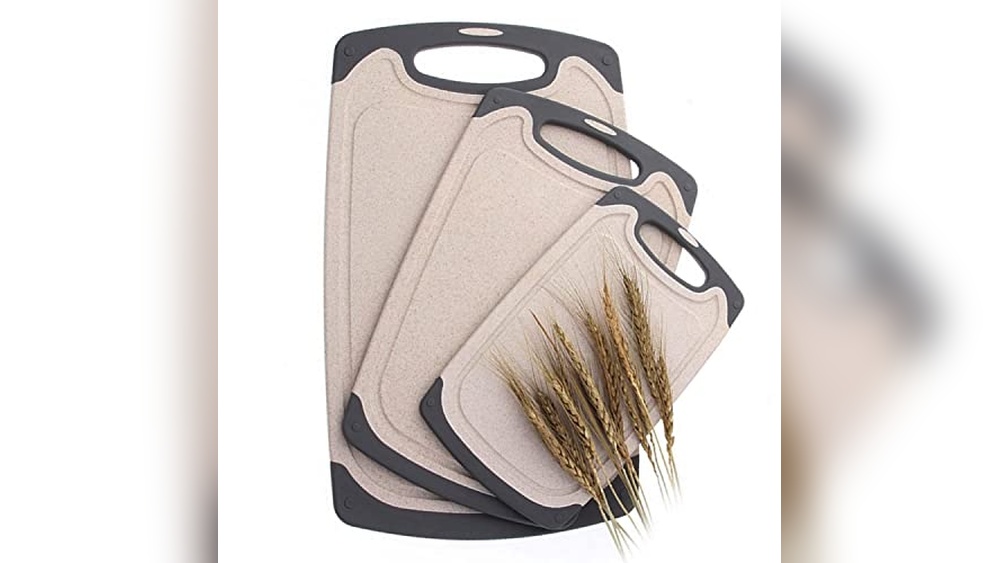
1. FLYINGSEA Wheat Straw Cutting Board Set (3 Pcs) (Best Set)

FLYINGSEA’s three wheat straw boards come in different sizes with anti-skid edges, and the listing says they are dishwasher safe.
Why We Like It
Three sizes let you separate raw meat, vegetables and bread at a low price.
Flaws to Know
- Contains plastic resin
- Shows knife marks over time
Buy it if: you want a cheap, light set. Skip it if: you want plastic-free boards.
2. AXIOM CREATIONS 2-Piece Reversible Wheat Straw Boards (Best Reversible)
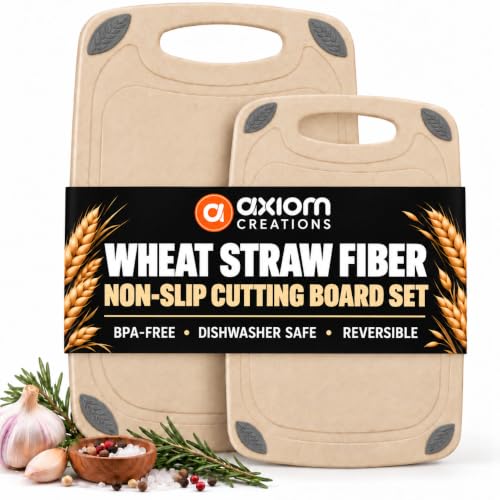
AXIOM CREATIONS makes reversible boards from natural wheat straw fiber, sold as a pair.
Why We Like It
Two usable sides per board double the cutting surface before replacement.
Flaws to Know
- Composite material
- Only two boards
Buy it if: you want reversible boards. Skip it if: you need several sizes.
3. Double-Sided Stainless Steel and Wheat Straw Cutting Board (Best Hybrid)
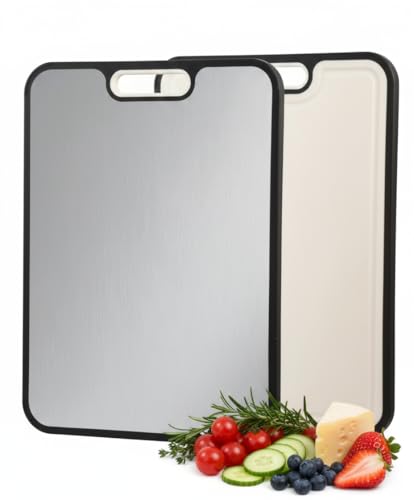
This board has a stainless steel side for raw meat and dough, and a wheat straw PP side for vegetables and general prep.
Why We Like It
The steel side is easy to sanitize; the straw side protects your knives.
Flaws to Know
- Do not cut on the steel side; it dulls knives
- Heavier than straw-only boards
Buy it if: you want a meat-safe side and a knife-friendly side. Skip it if: you want something light.
4. Chef Craft Wheat Straw Flexible Cutting Board Set (3 Pcs) (Best Flexible)

Chef Craft’s color-coded boards are thin and flexible with a durable plastic backing.
Why We Like It
Bend the board to funnel chopped food into a pot, and use colors to keep raw meat separate.
Flaws to Know
- Thin boards slide without a damp towel underneath
- Wear faster than thick boards
Buy it if: you want flexible, color-coded boards. Skip it if: you want a thick, stable board.
5. Zzsbrm Wheat Straw Cutting Board with Juice Groove (Best for Meat)
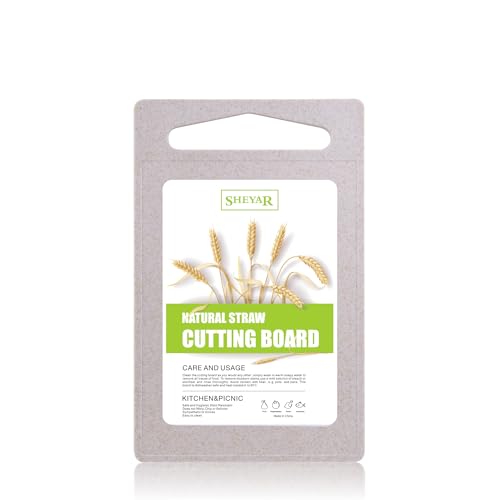
Zzsbrm’s wheat straw board has a juice groove to catch liquids and an easy-grip handle, and is dishwasher safe.
Why We Like It
The groove keeps meat juices off the counter.
Flaws to Know
- Single board
- Composite material
Buy it if: you carve meat often. Skip it if: you mostly chop vegetables.
How to Clean and Care for Wheat Straw Boards
- Wash after each use: hot soapy water or the dishwasher, if the label allows.
- Sanitize after raw meat: follow University of Illinois Extension guidance.
- Use separate boards: keep one for raw meat, as the USDA Kitchen Companion advises.
- Replace when deeply scarred: deep grooves are hard to clean.
- Keep away from heat: do not use as a trivet for hot pans.
Prefer flexible silicone? Read our Liflicon silicone cutting boards review. Pair any board with the right blade from our types of knives guide.
UK, Canada and EU Buyer Notes
- UK and Ireland: search for “wheat straw chopping board”. The UK Food Standards Agency has warned about plastic composites made with bamboo and other plant fibres, so check the binder and food-contact compliance.
- Canada: the same boards are sold; check recycling rules locally, since composite boards are rarely accepted in curbside recycling.
- Germany, France, Italy and Spain: search for Weizenstroh Schneidebrett (DE), planche à découper en paille de blé (FR), tagliere in paglia di grano (IT) or tabla de cortar de paja de trigo (ES).
- EU food contact: under EU rules for plastic food-contact materials, plant fibres such as bamboo or wheat straw are not authorised fillers, so these boards are generally not sold for food use in the EU. A wooden board is the safer choice there.
Frequently Asked Questions
What are wheat straw cutting boards made of?
Ground wheat straw fiber bound with a food-grade plastic resin, usually polypropylene.
Are wheat straw cutting boards safe?
Boards made with food-grade polypropylene are generally considered food safe. Replace them when deeply scarred.
Are wheat straw cutting boards eco-friendly?
Partly. They reuse agricultural waste and replace some plastic, but they still contain plastic and are not compostable.
Are wheat straw cutting boards dishwasher safe?
Most are. Check the listing, and avoid very high heat settings to prevent warping.
Are wheat straw boards better than wood?
They are lighter, cheaper and dishwasher safe. Hardwood lasts longer, is plastic-free and can be sanded and refinished.

Reviewed by Samantha Hickel, Kitchenware Reviewer & Cookware Expert. Samantha has cooked for more than ten years, has reviewed kitchenware for The Kitchenware Journal since 2022, and covers stock pots, saucepans, canning, cake and bread pans, cutting boards and everyday kitchen tools. Our lab tests kitchenware, cutting boards and serving pieces for capacity, durability, stain resistance and ease of care. How we test.
Related guides: Best Wood for Cutting Boards · Butcher Block vs Cutting Board · Noodle Boards · Types of Knives