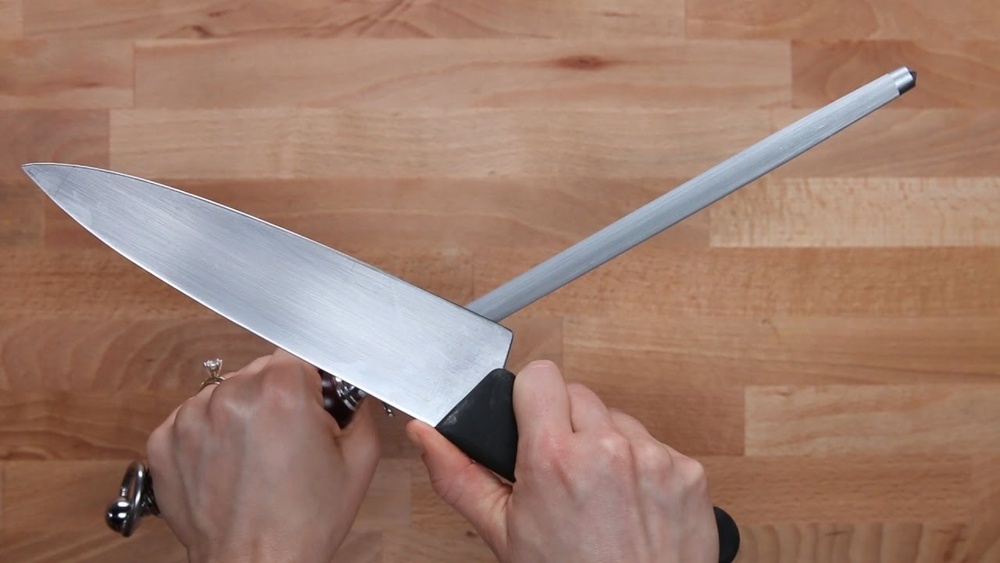

Last Updated on November 23, 2026
The 30-Second Answer: Here’s how to sharpen a blunt knife and actually bring it back, not just touch it up:
- Confirm It’s Blunt: if it tears paper or slips on tomato skin even after honing, it needs metal removed.
- Start Coarse: a 400 to 1000 grit whetstone (or the coarse slot of a sharpener) to form a new edge.
- Sharpen at a steady 15 to 20 degree angle until you feel a burr along the whole opposite side, then switch sides.
- Refine on a finer grit (3000 to 6000) to smooth and sharpen the edge.
- Hone and test on paper; repeat the fine stage if it still drags.
Blunt knives take longer than you expect on the coarse stage. Most of the work happens there; the fine stage is quick.
Research note: Methods follow standard knife sharpening practice. Check your knife maker’s recommended angle before you start.
There’s a difference between a knife that’s a bit off and one that’s truly blunt. A quick swipe on a steel fixes the first. The second needs a new edge ground into it.
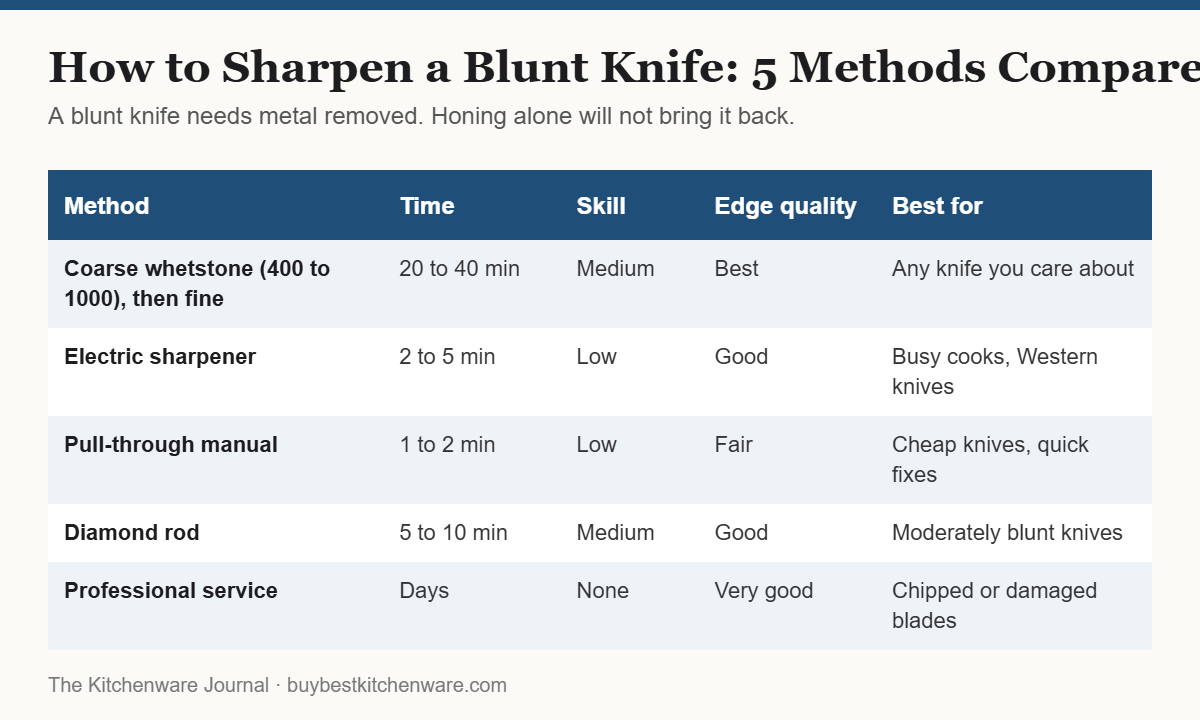
This guide compares the ways to do that, walks through the whetstone method step by step, and covers what to do if the edge is chipped.
In this guide
Is Your Knife Blunt or Just Rolled?
Hone it first. If a few strokes on a steel bring it back, the edge was only rolled. If it still tears paper, the edge is worn round and needs sharpening. Our knife sharpness chart helps you rate where it stands.
How to Sharpen a Blunt Knife on a Whetstone
- Prep the stone: soak or wet a 400/1000 stone and set it on a non-slip base, coarse side up.
- Mark the bevel with a permanent marker. It shows where you’re removing metal.
- Set the angle: about 15 degrees for Japanese knives, 18 to 20 for German.
- Sharpen side one in sweeping strokes, heel to tip, until the marker is gone and a burr runs along the whole edge.
- Repeat on side two until the burr flips back.
- Move to 1000 grit (if you started at 400), then 3000 to 6000 with lighter pressure.
- Remove the burr with a few alternating feather-light strokes or a strop.
- Test on paper.
New to stones? Read what is a whetstone first, and our coarse vs fine sharpener guide explains which grit does what.
Faster Options
- Electric sharpener: run through the coarse slot until sharp, then the fine and honing slots. Fast and consistent for Western knives.
- Pull-through: 5 to 10 pulls in the coarse slot, then the fine. Removes more metal and leaves a rougher edge.
- Diamond rod: works for moderately blunt knives; follow with a fine ceramic rod.
What If the Knife Is Chipped?
Small chips need a coarse stone (200 to 400 grit) to grind the edge back past the damage, then the usual progression. Large chips or a broken tip are best left to a professional sharpener, who can reprofile the blade without overheating it.
Keep It From Going Blunt Again
- Hone every few uses.
- Cut on wood or soft plastic, not glass or stone.
- Hand wash and dry; dishwashers knock edges against other items.
- Store in a block, on a magnetic strip or in edge guards.
Sharpeners for Blunt Knives
From the best edge to the fastest fix, here are tools that can restore a blunt knife.
1. KEENBEST 400/1000 Whetstone (best for blunt knives)

A coarse 400/1000 combination stone.
Why We Like It
400 grit removes metal quickly to rebuild a blunt edge; 1000 sharpens it. The ideal first stone for neglected knives.
Flaws to Know
- No polishing grit
- Needs flattening over time
Buy it if: your knives are truly blunt. Skip it if: they just need a refresh.
2. Chef’sChoice 15XV EdgeSelect Electric Sharpener (fastest great edge)

A three-stage electric sharpener with diamond abrasives that converts knives to a 15-degree edge.
Why We Like It
Restores blunt Western and Asian-style knives in minutes with consistent results.
Flaws to Know
- Removes more metal than stones
- Not for single-bevel Japanese knives
Buy it if: you want speed and consistency. Skip it if: you prefer hand sharpening.
3. Amazon Basics 4-in-1 Knife Sharpener (budget pull-through)
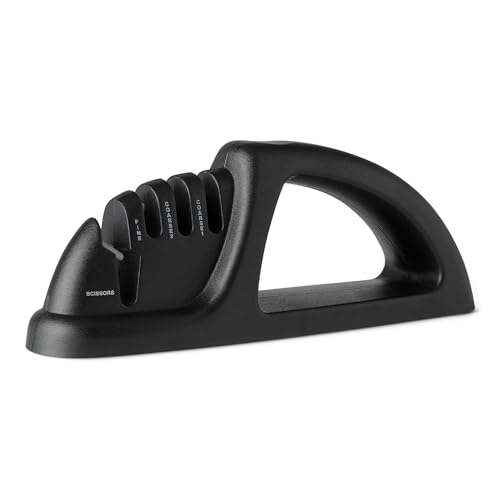
A pull-through sharpener with coarse, medium and fine slots for knives plus a scissor slot, with a cut-resistant glove in the box. It holds 4.5 stars and was selling 3,000+ a month when we checked.
Why We Like It
Fast and simple for everyday knives that have gone blunt, with a non-slip silicone base that keeps it steady while you pull.
Flaws to Know
- Leaves a rougher edge than a whetstone
- Fixed angle
Buy it if: you want a quick fix for everyday knives. Skip it if: you own premium Japanese knives.
4. Longzon 4-Stage Sharpener With Cut-Resistant Glove (safety included)

A four-stage manual sharpener that comes with a cut-resistant glove.
Why We Like It
The glove makes sharpening safer for beginners, and multiple stages go from coarse to fine.
Flaws to Know
- Pull-through limitations
- Light build
Buy it if: you’re new to sharpening. Skip it if: you use whetstones.
For more on knife styles, see our guide to the types of kitchen knives.
Notes for the UK, Canada and EU
In the UK, “blunt” is the everyday word for a dull knife. Electric sharpeners are sold in 230V versions for the UK and EU. Many kitchen shops and cutlers offer sharpening services, often for a small fee per knife. UK knife purchases online require age verification at delivery.
More Knife Sharpening Guides
This page is our starting point for knife sharpening questions. When you need a specific answer, these guides go deeper:
- Sharpening Steel vs Whetstone: Which Your Knife Needs
- How to Sharpen Shun Knives: 16° Whetstone Method in 7 Steps
- Sharpening Steel vs Ceramic Rod: 6 Key Differences
- How to Sharpen a Miyabi Knife: Low-Angle Whetstone Guide
- How to Sharpen a Knife With a Rod: Safe 7-Step Method
- How to Use a Work Sharp Knife Sharpener (Every Model)
- How to Use a Henckels Knife Sharpener in 5 Easy Steps
- How to Sharpen Cutco Knives: Straight and Double-D Edges
- Honing Rod vs Sharpening Rod: 6 Differences Explained
- How to Make a Knife Sharpening Angle Guide (3 DIY Ways)
- How to Use a Wüsthof Knife Sharpener: Every Model Explained
- Diamond Plates vs Sharpening Stones: Which Is Better?
- How to Sharpen a Benchmade Knife: 5 Methods by Steel
- Chef’s Choice Knife Sharpeners: 5 Models Compared
- Large Sharpening Stones: 7 Best Picks and How to Choose
- Japanese Knife Sharpening Angle: Degrees by Knife Type
Frequently Asked Questions
What is the fastest way to sharpen a blunt knife?
An electric sharpener or a pull-through on the coarse setting. A whetstone takes longer but gives a better edge.
Can a honing rod fix a blunt knife?
No. Honing realigns an edge; a blunt knife needs metal removed.
What grit should I use on a very blunt knife?
Start at 400, move to 1000, then finish at 3000 to 6000.
How do I know when I’m done with the coarse grit?
When a burr forms along the entire length of the opposite side.
Should I sharpen a chipped knife myself?
Small chips, yes, with a coarse stone. Large chips or broken tips are best sent to a professional.

Reviewed by Samantha Hickel, Kitchenware Reviewer & Cookware Expert. Samantha has cooked for more than ten years, has reviewed kitchenware for The Kitchenware Journal since 2022, and covers stock pots, saucepans, canning, cake and bread pans, cutting boards and everyday kitchen tools. Our lab tests kitchenware, cutting boards and serving pieces for capacity, durability, stain resistance and ease of care. How we test.
Related guides: DIY knife sharpener · Knife sharpening angle guide · How to sharpen a knife with sandpaper · How to use a 4-in-1 sharpener